

I compile hedge fund pitches Database: 3000 pitches & 2000 fund letters ↓ https://xitter.cf/t.co/P8lwLZf1zW Newsletter : https://xitter.cf/t.co/uZjksJmJOO
Paris
Joined August 2023
- Tweets4.8K
- Following816
- Followers10.6K
- Likes1.6K




Pinned Tweet
Q3 fund letters are starting to come out. 170 new letters are already on the site since Oct 1.
Good time to show what I've built to save you hours of reading fund research 🧵


📊 U.S. Data Centers Could Face a 57 GW Power Shortfall
Source: Tema ETFs

ALT Chart: U.S. Data Centers Could Face a 57 GW Power Shortfall — from a research article by Tema ETFs.


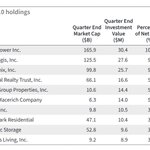
Longleaf Partners Small-Cap Fund's latest quarterly letter — key takeaways:
• The manager is sticking with a contrarian, concentrated value approach despite severe 2026 underperformance, arguing that underlying value-per-share growth has generally outpaced stock-price performance.
• The portfolio ended the quarter at a historically low 50% price-to-value ratio, which the team sees as a compelling margin of safety even as it says short-term market sentiment has become irrational and highly theme-driven.
• The manager says higher interest rates, geopolitical developments, immigration policy, AI, and satellite competition have all pressured sentiment, but believes the portfolio’s financially strong companies can withstand those headwinds.
• The portfolio remains split between companies facing temporary earnings disappointments that the market has extrapolated too far and businesses with solid value growth that are still undervalued or “stuck.”
• The fund added one new position during the quarter: a strong free-cash-flow generator in an industry the team knows well. No positions were exited.
• Mattel remains a major engagement focus after management lowered the quality of near-term guidance and its CEO departed. The manager says reported acquisition interest from Authentic Brands and Zuru, plus shareholder pressure, could accelerate value realization.
• TripAdvisor’s Viator segment has deteriorated because of weaker growth, margins, execution, macro conditions, and possible Google-related pressures. The manager still sees asset monetization potential, but reduced the position.
• Empire State Realty’s observatory business has weakened due to increased competition, fewer international budget travelers, and a more bifurcated economy. The manager believes the stock decline has exceeded the impact on long-term value and points to growing activist involvement.
• The manager remains constructive on telecom holdings Liberty Capital and Shenandoah Telecommunications, citing improving capital allocation, insider buying, fiber build completion, and resilience against what he views as exaggerated Starlink and AI-related competitive concerns.
• Other value drivers include Clearwater Paper’s improving pricing and refinancing, Gruma’s temporary U.S. demand weakness alongside increased buybacks, and Rayonier’s long-term asset value despite interest-rate and lumber-price sensitivity.
Read the full letter → hfbestideas.com/letters?open…

Distillate Capital's latest quarterly letter — key takeaways:
• Distillate argues the Russell 1000’s recent market-cap gains have been extraordinarily concentrated: roughly $20 trillion of the $30–32 trillion increase came from the 20 largest AI-related stocks, even as their aggregate forward free cash flow remained broadly flat.
• The firm is openly skeptical on the AI complex: it says the largest AI stocks are trading around 100x next-twelve-month free cash flow, hyperscaler capex is at historically extreme levels, and the amount of revenue and profit growth required to justify current prices is unprecedented.
• Distillate says hyperscaler free cash flow has deteriorated as data-center and compute spending accelerates, and it does not expect the group to return to positive aggregate free cash flow until around 2029. It also warns that financing links among hyperscalers, frontier AI labs, chipmakers and infrastructure providers increasingly resemble late-1990s vendor financing.
• The letter lays out a cluster of AI-specific risks: power shortages, data-center construction constraints, large financing needs, low switching costs, open-source competition, falling model costs, and the possibility that edge computing will reduce demand for centralized infrastructure.
• More broadly, Distillate views rising global bond yields as a bigger danger to equities through multiple compression than through higher corporate interest expense, and says stocks look unusually expensive versus bonds, real estate and historical free-cash-flow yields.
• Portfolio positioning remains focused on stability over excitement: the firm prefers businesses with durable cash generation, modest leverage and much lower free-cash-flow valuations than the major benchmarks, while keeping limited exposure to the large AI trade.
• In U.S. large caps, Distillate is emphasizing health care, industrials and non-AI technology, with lower exposure to mega-cap technology and financials than the S&P 500 and Russell 1000 Value. Recent FSV additions included Lowe’s, AppLovin, PACCAR, UnitedHealth, Deckers and Booking Holdings; trims included Abbott, Workday, Global Payments, Salesforce, Accenture and Merck.
• The SMID book stays selective despite attractive valuations because many smaller companies still carry high leverage, negative free cash flow and meaningful refinancing risk. Distillate says its SMID strategy has no negative-FCF holdings and materially lower leverage than the Russell 2000.
• Internationally, Distillate also sees cheap valuations but is wary of benchmark concentration in semis/tech equipment and banks. Its international strategy deliberately limits those exposures and favors financially stable, cash-generative companies across Europe, Asia and emerging markets.
Read the full letter → hfbestideas.com/letters?open…

Eagle Equity Strategy is long MercadoLibre ($MELI) — their thesis in 6 points:
• MELI is Latin America’s largest ecommerce business and second-largest fintech, with Brazil, Mexico, and Argentina about 95% of revenue and #1 ecommerce positions in all of those countries.
• Revenue has increased by at least 30% for 30 consecutive quarters, most recently up 50% year over year, bringing trailing annual revenue to approximately $35 billion.
• The market is focused on the scale of MELI’s ecosystem investments, but Eagle says the benefits are mostly future-facing; since the current investment cycle began in mid-2025, the stock has fallen 30%, creating an entry point.
• Ecommerce penetration in Latin America is approximately 15% versus almost 30% in the U.S., and MELI’s 3P fulfillment scale is at least 4x greater than any competitor in Brazil and Mexico.
• MELI’s fintech leverage comes from Mercado Pago and cards: it processed approximately 5.2 billion transactions in the second quarter, or 20 per user per month, and issued 2.6 million cards in 2Q26.
• Eagle thinks current investments can drive high 20s revenue growth through 2031, operating margins to ~10%, EPS more than 40% annually, with the stock worth just under 30x near-term earnings but a little over 5x on five-year earnings.
Source → hfbestideas.com/letters?open…

📊 The recent bond bear market in historical context
Source: W1M Asset Management

ALT Chart: The recent bond bear market in historical context — from a research article by W1M Asset Management.


WS Lindsell Train UK Equity Fund is long Sage ($SGE) — their thesis in 5 points:
• Sage is in the debate over whether incumbent, business-critical software companies are winners or losers from AI; the chair said: “AI is an extraordinary tailwind for Sage”.
• Management says Sage must keep innovating and sees itself as an “orchestrator of AI” for its millions of small and mid-sized customers, using data generated within its product ecosystem.
• The fund cites the case for enterprise software from SAP and Peel Hunt: AI agents don’t replace enterprise software, they rely on it; trusted software inside businesses can access proprietary data that LLMs trained on public data cannot.
• Sage’s in-house AI agents are already being used: Copilot delivered 75 million insights to customers over the year, and Accounts Payable Agent processed three times more invoices, saving customers an aggregate five million hours of work.
• Those initiatives helped accelerate revenue growth to 11%, led by 14% growth in the US, Sage’s biggest market.
Source → hfbestideas.com/letters?open…


Columbia Threadneedle Investments' latest research, "Pyrspectives – Profits are at record highs – Are markets too optimistic?" — key points:
Record corporate profits are masking fragile fiscal and household-spending foundations, leaving equities vulnerable as bond yields and geopolitical risks rise.
• MSCI ACWI forward 12-month earnings have risen 38% over the past year, trailing EPS has grown 30%, and 92% of constituents are expected to report positive earnings growth next year versus an 80% historical average.
• The US profit share of GNP is at a record high, driven chiefly by a 6% fiscal deficit and falling household savings; 100% bonus depreciation in the One Big Beautiful Bill Act may amplify the eventual fiscal tightening when capital expenditure slows.
• The AI investment boom is transferring profits from hyperscalers to equipment suppliers, while Nvidia A100 and H100 GPU rental prices peaked in September; the durability of hyperscaler earnings depends partly on GPU useful lives and depreciation.
Full article → hfbestideas.com/research/pyr…