







Stipe retweeted

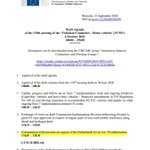
Revolut services are back online after yesterday’s outage.
The disruption began shortly after 7am BST on 20 Oct, when a power event hit Google Cloud’s London region (europe-west2-b). Failures interrupted services for hours. Most Google Cloud issues were mitigated by early afternoon; Revolut later confirmed the issue was fixed and services restored. Customer money and data remained safe throughout.
The impact was significant. Revolut has about 70m customers in Europe, and it seems most were affected. Reports came from the UK, Ireland, France, Spain and elsewhere. Card payments, transfers, ATMs, currency exchange and app access were affected. Revolut Business (850k+ companies) was also disrupted, hitting payments and operations.
Lloyds Banking Group, HSBC, Halifax, UK courts, Rightmove, DPD, and others also reported problems. Customers described abandoned purchases at tills and petrol stations, couldn't pay for travel, and businesses couldn't process payments.
This was a clear concentration-risk event. One cloud zone became a single point of failure for critical payment and banking services used by millions. The UK's FCA said it was engaging with Google and affected firms. The PRA and Bank of England were also reported to be in contact under the critical third-party regime (Google Cloud was designated in July 2026).
Revolut had previously signalled plans to move to multi-cloud by adding Amazon Web Services (AWS), with a roadmap to 2027. The outage indicates those measures were not yet sufficiently in place for core European operations. Some rivals, such as Monzo, were not widely reported as affected.
Google will investigate and publish a fuller report on the power event. That will clarify the technical details, but not the strategic questions: how quickly firms can reduce single-cloud and single-region dependence, and whether workable contingencies are actually ready. An event at one data centre near London was enough to disrupt millions of people and significant commercial activity.

Stipe retweeted

And after voting that out too...
🇪🇺 ChatControl is back with a vengeance
The Conservatives (EPP) are attempting to force a new vote TODAY (March 26) seeking to reverse the European Parliament's NO on indiscriminate scanning of ALL your private messages, emails and photos
This is a direct attack on democracy and blatant disregard for your right to privacy
If you're European contact your representatives now, with this handy form:
fightchatcontrol.eu/?foo=bar…
If not, please share this tweet so more people see it and we can block the vote
It's crazy they keep just bringing back whatever they want until it's passed!
Obviously now we see the European Commission is controlled by powerful evil lobbying groups 👺


Just a month later and...
🇪🇺 ChatControl is back!
Now they're trying to pass an even more far reaching ChatControl law through the back door, in a form even more intrusive than the originally rejected plan, without needing any of the EU countries votes
The new proposal:
- total mandatory surveillance of ALL text chats, emails and social media in the EU
- obligatory registration of your ID/passport to your chat, email or social media account
- minimum age requirement for chat, email and social media apps of 16 (!)
The only way to stop this law is if EU countries veto it
Read more here by @echo_pbreyer:
patrick-breyer.de/en/chat-co…

Stipe retweeted
In North America, black bears are apex predators.
Except that one time one met Chuck Norris.
That bear is now a rug.
RIP to the legend.
Stipe retweeted

Together with RDW, we have officially completed the final vehicle testing phase for Full Self-Driving (Supervised) and have submitted all documentation required for the UN R-171 approval + Article 39 exemptions. The RDW team is now reviewing the documentation and test results package internally. They have communicated the expected approval for Netherlands date of 4/10, shifting from 3/20 previously and we look forward to successful completion of this cooperation.
Following the Netherlands’ approval, European countries will be able to recognize this approval nationally. We are anticipating a possible EU-wide approval during the summer.
Over the past 18 months, this approval has involved a series of intense documentation, development, testing, research & audits. Including but certainly not limited to:
– 1,600,000+ km of FSD (Supervised) testing on EU roads
– 13,000+ customer sales ride-alongs
– 4,500+ track test scenario executions
– Thousands of pages of written documentation for 400+ compliance requirements
– Dozens of research studies into safety performance/results
We're extremely proud of the work conducted with the RDW team up until this point.
We very much look forward to the approval in April, and sharing FSD (Supervised) with our patient EU customers!
Stipe retweeted

The current capital flight to Florida & Texas is one of the most incredible migrations of wealth in the history of the United States. 🇺🇸
People have a hard time adjusting to new realities and just assume California and New York dominance is a kind of law of nature.
But the phenomenon is very real and is just getting started.



Stipe retweeted

Installing the redesigned fuel transfer tube into the first next generation Super Heavy booster.
Roughly the same size as the first stage of a Falcon 9 rocket, the new transfer tube is responsible for channeling cryogenic fuel from Super Heavy's main tank to its 33 Raptor engines and will enable faster, more reliable flip maneuvers and the ability for simultaneous engine startup


Stipe retweeted

The Overlooked Engineering Reality of the LiDAR Debate
One of the least discussed aspects of the LiDAR debate is the actual engineering process behind it.
People who haven’t been deep in the weeds of complex systems tend to wave it off: “Just throw on LiDAR. Problem solved. System safer.”
That’s nowhere close to any engineering reality I’ve ever seen. Not once.
Back in college, I took a robotics course as part of my computer science degree. On day one, the professor walked to the chalkboard and wrote four large letters:
KISS (Keep It Simple, Stupid.)
He explained that every engineer learns this lesson—either the hard way or the easy (smart) way. Then he gave us an assignment that threw us right into a classic KISS problem (which I detail below*).
Anyone paying attention will recognize that KISS is embedded deep in Elon Musk’s five-step process**:
“Delete, delete, delete.”, “Make the requirements less dumb.”, “The best part is no part.” ..all KISS principles.
Adding LiDAR to a self-driving system violates KISS at nearly every level. It introduces massive complexity—not just in engineering, but in testing, in systems integration, and across the organizational structure.
Let me explain.
Sensor Conflict: Where’s Ground Truth?
When two sensors disagree, which one is right?
How big is that object? How far away is it? Is it moving? In which direction, and at what speed?
Now add weather. Fog, rain, snow. Good luck getting reliable output from LiDAR in changing conditions—like when it's clear one second and raining the next.
LiDAR emits light, and light scatters in moisture. Are we deprioritizing LiDAR mid-drive? Dynamically adjusting sensor weights? These aren’t hypotheticals— they’re engineering realities.
Fusion Hell: Early or Late?
You now face a fundamental systems question: early fusion or late fusion? Multiple sensors, you have to combine them!
Early fusion means merging raw data from all sensors before any interpretation. Late fusion means interpreting data from each sensor independently, then fusing the results.
Pick your poison. You can spend man-years on late fusion and end up switching to early. Or vice versa. There's no clear “right” answer— and attempts to combine both just explode KISS entirely (that was a little joke).
Organizational Drag: The LiDAR Silo
Add a new modality like LiDAR and you’ll usually hire specialists for it. That’s where the next trap lies.
These engineers tend to become territorial advocates for their sensor— whether or not it’s the right tool for the problem. And their go-to solution when things don't work? “We just need more engineers.”
That’s how a technical issue becomes an organizational problem.
(My approach. Hire a subject matter expert (SME) if you must, but never build an isolated team around them. Keep the whole engineering team intact and make everyone work the full problem. Look for “smart”, not “expert.” Be wary of anyone who leads with their resume and won’t learn something new.)
Testing, Integration, and the Iceberg Below the Surface
With multiple sensor teams, you now have to test both in isolation and fully integrated. But full integration is where things break— technically and organizationally. Integration done late leads to broken assumptions and finger-pointing. The solution? Integrate early and often. Yes, it slows you down. But it pays off in the end.
The Vendor Problem
Many LiDAR units come with heavy vendor-side abstraction. You're not getting raw data— you’re getting interpreted data. And that’s a problem. Your engineers will want to strip it down and get to the hardware. Vendors will push back, hard.
Why? Because if you’re using raw data, you can swap them out. They lose lock-in. They’ll guard that abstraction layer fiercely.
Meanwhile, your team is probably thinking, “Should we just build the damn sensor ourselves?” And now you’re neck-deep in the build vs. buy debate. Another layer of complexity.
Complexity Kills
So now you’ve got:
-A potentially bloated, complex system
-Interdependencies across multiple teams and vendors
-Difficult-to-verify behavior
-Slow response to change or failures (which in itself is a safety issue)
-A much longer path to delivery
If you're betting that all this complexity adds safety, ask yourself: What happens when something goes wrong? Can you fix it fast? Can you verify the fix? Or are you stuck because nobody really owns the whole stack anymore?
It’s not just that the system is complex. It’s fragile. And that fragility shows up in the real world.
Real engineering is hard. Few learn the lessons of KISS. And armchair engineers and media pundits offering “solutions” are clueless about the real complexities under the hood. They’re spectators mistaking commentary for contribution, with an inflated ego or agenda or both.
—
*The robotic assignment was, on the surface, quite simple. Two robots had to communicate with each other—actually, even simpler: one robot had to "speak," and the other had to receive the message accurately. The assignment had two goals: communicate as accurately as possible (the first-order goal), and as fast as possible (the second-order goal).
Each robot had a speaker and a microphone. The speaker could generate tones in a certain frequency range for specified durations. The microphone could pick up those waveforms, your code got to interpret.
We teamed up in pairs—me and my highly intelligent roommate, Jack. We knocked it out in two hours. How? Using KISS.
While other teams spent hours in the lab tweaking frequency ranges and experimenting with complex encodings, we kept it simple: fixed-frequency Morse code. Duration was our only variable— the length of each tone.
We coded it up in no time and had 100% accuracy right out of the gate. Then we wrote a test program to gradually shorten the tone durations (both long and short Morse tones) until the receiver started making errors. We backed off and fixed it to the last 100% accurate setting.
We won the competition with the most accurate and fastest communication— and spent most of our time on the racquetball court instead of the computer lab.
KISS.
**Elon’s 5-step Engineering Process:
1. Make the requirements less dumb
2. Try very hard to delete parts or processes
3. Simplify or optimize the design
4. Accelerate cycle time
5. Automate

Sensor confusion abound.
Is Tesla considering LiDAR or other sensors? Is Tesla mapping cities like Waymo?
I think no is the answer. I think this is validation. As discussed previously Tesla has employed LiDAR to create a baseline and establish a ground truth (it's in a well-known patent, US 11,048,999 B2).
This allows them to validate their vision system. It is their technique for factoring out multi-sensor systems in the production system by calibrating the vision model.
What I suspect is happening is this: certain roadways are "mapped out" with precise data, then the trajectories of the Robotaxi are compared to this data.
This does not need to be done for all roadways. In fact, quite the opposite, by adjusting their calibrations to an assumed ground truth, it allows the vision system to scale as intended.
Mapping all roadways is not scalable and not even correct, roadways can change day to day. Its far better to build a generalized system like FSD, that works like a human does with unseen roadways (in fact, its trained on that very data). Think carefully about what I am saying: its how a human operates. For those who think humans are better drivers than robots, would you not agree that training on actual human data is then the way to go?
I know this sounds rather counterintuitive to some. Some might argue, then just use LiDAR. Flip the argument on its head: if LiDAR was the dominate system it might use camera data or radar or some manual measurement to establish a ground truth. How the heck can we know the LiDAR is telling us the truth? Its not some "God sensor", its just a sensor with advantages and disadvantages and MUST BE validated.
Then the argument might flow: then use both, fuse the sensor data and you'll have a "running ground truth". I think that argument is wrong: what is ground truth? How do you know what sensor is correct? If you always thought it was the LiDAR then ask yourself, when fuse any sensors, just go with LiDAR.
Tesla FSD, as a data-driven AI model relying on vision for its production sensor model, is the winning strategy for both scale and safety.

Stipe retweeted

Posted this last year. Elon Musk on EV subsidies: “I would delete it.”
“I’m literally saying get rid of all subsidies. If we don’t cut government spending something bad is gonna happen. It’s crazy. Our spending is so far in excess of revenue it’s insane.”
Stipe retweeted

To Trump supporters: if he can treat Elon—who campaigned for him, spent $300M, worked nights, and slept in a federal building to save taxpayers billions—like this, imagine how he’ll treat you tomorrow.
Stipe retweeted

I took Tom Homan to get his White House credentials before the inauguration.
@elonmusk just happened to be in the room getting his credentials when we got there.
The only people there were the few people printing credentials, Elon (+ security detail), and Tom (+ security detail).
Elon was smiling from ear to ear talking about how excited he was about DOGE.
He told Tom he would help him with whatever he needs to close the border and deport illegals.
His exact words were, “consider me your personal IT guy.”
What better IT guy could you have?
My point is, I saw firsthand how excited this dude was about helping America. It wasn’t an act, it was genuine. There was nobody there to put on a front for.
I don’t think he’s the enemy.
Stipe retweeted

11.9 Light-years from home.
6th grade science teacher.
1 chance to save us all.
Watch the trailer for Project Hail Mary – based on the novel by Andy Weir, starring Ryan Gosling, and directed by filmmakers Phil Lord and Christopher Miller. Only in theaters and IMAX - 3.20.26
Stipe retweeted

On the topic of subsidies: a large sum of public funds flows to already well established companies that aren't inventing new technologies, rethinking infrastructure, or advancing the national interest. They're mostly just milking their decaying dominance.
Threatening to pull subsidies from the few companies driving American progress will only stall innovation, slow national competitiveness, and discourage future founders.
Elon’s companies aren’t even in the top 15 recipients of subsidies. Compared to others, the subsidies his companies receive are peanuts, and they’re among the few that have actually benefited the American people.


Stipe retweeted

Most importantly, the entire vehicle structure has gone through highest standard crash testing.
There’s no external structural modification that would void the crash testing results.
Stipe retweeted

I can think of at least 5 hardware startups that would literally reshape the world with a $2b seed round like Thinking Machines just raised. Shall I start listing them?
Stipe retweeted
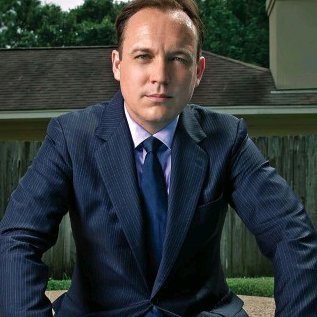
Simple advice:
Get your teenager a Tesla.
You can set a maximum speed limit, restrict acceleration, lock in safety features, set a curfew, and activate parental notifications.
Also one of the safest cars on the road, and most affordable.
