

Professor @PolyMTL reinventing MRI and academic publishing. Creator of @qmrlab, @MRM_highlights, foundation @qantarot and @NeuroLibre reproducible preprints
Joined April 2009
- Tweets5.6K
- Following1.4K
- Followers3.9K
- Likes9.5K





Pinned Tweet
Announcing the third annual Evidence Day, coming to Macedonia on October 15!
Following two successful days in Montreal (2024) and Abu Dhabi (2025), I am very proud that my home city of Skopje will welcome the people revolutionizing academic publishing.

Wow!
More than 100 people from 30 countries registered for our qMRI mini Open Online Course (mOOC). More than 50 institutions are participating in the course, and we have a wide range of clinical and academic backgrounds.
Thank you to @polymtl for funding this mOOC


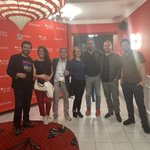
The third Evidence Day was truly special! 100+ attendees from 10 countries gathered in Macedonia to discuss the future of academic publishing.
Among them was my mentor and dear friend Stephen Boyd, who who inspired us all with his brilliant plenary on the power of open science.


My ears perked up when I heard OpenAI had sped up the FFT algorithm. Then I read this post by @beenwrekt
Turns out it is sloppy galactic algorithms all the way down. What a world!
argmin.net/p/faster-fourier-…

Website and registration link:
day.evidencepub.io/

Time for a special announcement I've been hinting at all semester
For the past ten years we have been developing an online course on quantitative MRI, and we are ready to share it with the world.
To register click the link below or scan the QR code 1/2


Link to register: forms.gle/aojqD5ovVoXoPj296

Nikola Stikov retweeted

Two pieces of advice for students doing cold outreach:
1. Read the professor's page and follow directions about their preferred outreach method. 90% of students who email me do not follow the directions on my page.
2. Hand-write your messages from your heart. We can tell.

I’ve pointed out that AI is killing cold outreach. Let’s check in on how that’s going. We’re months away from the Fall *2027* PhD admissions cycle and I’ve gotten about 75 inquiries. I expect this to increase exponentially until December. And this is just one of 10-15 categories of unsolicited email I get. Sadly I’m long past the point of being able to open all mail. On top of that, there is a new wave of spam / attempted extortion from a company called iLands that lets people run unmonitored agents. tedium.co/2026/09/11/ilands-…
One response to my previous post — what’s wrong with needing introductions for outreach? Why am I sad about the death of cold emails? It doesn’t affect me much, because I’m well established in my career. But once upon a time I was the one writing cold emails. Growing up in India, I didn’t have many connections to rely on for reaching out to prominent researchers. Without cold emails, I wouldn’t have ended up where I am today.
Of course this is far from a catastrophe, but there was something magical about the egalitarian potential of the internet, and we lose something when we go back to clubby hierarchies.


Nikola Stikov retweeted

Good thread. Incidentally, a (subtle) recent appearance of MRI in pop culture was in Backrooms, where an MRI startup founded by physicists accidentally opens a portal to another dimension†.
†Not we would ever do that of course 😇

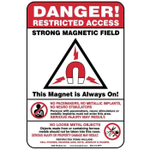
For years I have been documenting the depiction of magnetic resonance imaging (MRI) in pop culture. The technology seems to fascinate the public, but it is often portrayed with errors, particularly when it comes to the underlying physics. From computed tomography (CAT) scans being confused for MR images, to metallic objects flying across hospital hallways, entertainment media routinely override real physics for dramatic effect. So I thought to myself, what if I could turn pop culture’s fascination with MRI into a teaching moment for my MRI class this year? 1/n

For years I have been documenting the depiction of magnetic resonance imaging (MRI) in pop culture. The technology seems to fascinate the public, but it is often portrayed with errors, particularly when it comes to the underlying physics. From computed tomography (CAT) scans being confused for MR images, to metallic objects flying across hospital hallways, entertainment media routinely override real physics for dramatic effect. So I thought to myself, what if I could turn pop culture’s fascination with MRI into a teaching moment for my MRI class this year? 1/n
I know that debunking the science of a horror movie is silly, but it is also a lot of fun. While researching this article I discovered a podcast discussing this very scene, and I found out that this podcast has 20+ episodes dedicated to magnetic forces. I also found a website dedicated to movie cliches and tropes where the Bloodlines MRI scene is very well-explained. Talk about going down a rabbit hole… 15/n
invisibleforcepodcast.com/
tvtropes.org/pmwiki/pmwiki.p…
I hope my students will do something equally silly for their assignment, going down a rabbit hole in pursuit of MRI knowledge. After all, there is no better way to get excited by science than by finding out how badly Hollywood gets it wrong.
And now the entire scene!
youtube.com/watch?v=mteTrEuU…
