

enthusiastic architect in NC | long time advocate for the original "⌽" diameter and "⎅" square symbols | https://xitter.cf/t.co/Bvq71w6s0o
Cary, NC
Joined October 2013
- Tweets1.6K
- Following940
- Followers1.2K
- Likes1.7K








The stuff has been continually used since 1983 efforts in:
• VCT (vinyl composition tile), those 12" square flooring tiles you see *everywhere*
• textured paint
• vermiculite building insulation
• auto brake pads (the dust is everywhere there's traffic)
1
24
Granular compacted fill is 0% organic, clay, or silt per ACI 302. 10%–30% fines, so sand, gravel, recycled concrete, etc.
concretenetwork.com/concrete…

1
42
2-map auto-scaling:
joshuahhh.com/projects/same-…
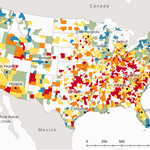
For example, compare NC + SC with UK—about the same area.
39


Terrific classical Chicago skyscraper photography here:
chicagomag.com/chicago-magaz…
47
Triangle▲rchitecture retweeted
What the hell is an ampersand and why does it look like that?!
The first thing you need to know is that "&" used to be the 27th letter of the alphabet...
But there are three parts to this story. And the first begins over two thousand years ago in Ancient Rome with a single word: et. It's the Latin for "and". At some point Roman scribes started combining the two letters of et into a single symbol, which was the ancestor of our modern &.
The earliest example of the "et" symbol is actually from graffiti in Pompeii. In any case, it did not disappear with the fall of the Roman Empire.
Latin survived as the language of the Catholic Church and of scholarship in Medieval Europe. Scribes during the Dark Ages continued to use the & symbol. It evolved down the centuries, in places losing any semblance of the letters e and t whatsoever.
The second part of the story is that during the 18th and 19th centuries, as education and the teaching of literacy spread, & was added to the end of the alphabet as a sort of 27th letter.
On a related note, although "et cetera" is now usually just abbreviated as etc., for a long time it was instead abbreviated as "&c". The & was for et and the c for cetera.
The third and final part of the story is about how the alphabet was taught to children — and how it was read out loud.
As this 1822 Glossary of Words and Phrases explains, it had been normal during the Renaissance, when speaking the alphabet, to add "per se" before any letter which could also be a word on its own — "per se" means "by itself" in Latin.
Take the letter A, which can also be a word of its own. When reading out the alphabet people would say "A, per se A, B, C, D, E, F, G, H, I, per se I..." and so on. O was also considered a word of its own.
Which means, when people got to the end of the alphabet, with & being the 27th letter, they would say: "S, T, U, V, W, X, Y, Z, and per se &."
When this old way of reading the alphabet was taught to children in the 18th century and they were reciting it aloud, they would garble "and per se " into what eventually became... ampersand.
A Dictionary of Slang and Colloquial English from 1905 relates some of the many other pronunciations school children apparently came up with:
"Ampersand. The sign &; ampersand. Variants: Ann Passy Ann; anpasty; andpassy; anparse; apersie; per-se; ampassy; am-passy-ana; ampene-and; ampus-and; ampsyand; ampazad; amsiam; ampus-end; apperse-and; empersiand; amperzed; and zumzy-zan."
Well, of all the many pronunciations that might have stuck, it was "ampersand" which came to be accepted and is now the official name for &... rather than zumzy-zan. So, from hurried Roman scribes to unruly school children, that's where "&" came from.


Other architects get #tinyhouse or #shippingcontainerhouse requests? I love them—designed prototypes even—but they don't meet code and they can't get a mortgage:
stevehallarchitecture.com/pr…
50
They told us not to read AD in school, but this piece on Googie architecture (diner > drive in > space age) by Michael Wyetzner is a terrific summary of mid-century US optimism:
youtube.com/watch?v=fYSfG_6S…
63
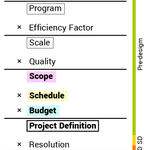
In my experience, labor+materials runs about 60% a total project budget. That fat 11% design contingency is all savings... if nobody adds anything to the initial scope. Which never happens. #construction #cost #architect

1
62
Materials cost barely 1/4 the whole. Unfortunately, this is what I call the "HGTV cost". Labor is bigger. And the contractor's trash collection, equipment, fences, and supervision that you don't get to keep (general conditions) aren't free, either.
1
30