

Papa aus dem Raum Bern. Raumfahrt, KI, Fusion und Tesla 🚀 „Probleme kann man niemals mit derselben Denkweise lösen, durch die sie entstanden sind.“ Einstein
Bern, Schweiz
Joined December 2023
- Tweets7.6K
- Following641
- Followers488
- Likes10.9K


Winter ist die beste Zeit für Sterne: um sechs dunkel, und Orion kommt am späten Abend hoch. Nur frieren mir bei minus fünf Grad am Okular nach einer halben Stunde die Finger ab. Wie lange haltet ihr draussen aus, und was hilft wirklich?
6

Ich hätte gern Apollo 8 live erlebt. Heiligabend 1968, erstmals Menschen hinter dem Mond, und dann dieses Foto vom Erdaufgang. Welchen Raumfahrtmoment hättet ihr gern live gesehen?
1
17
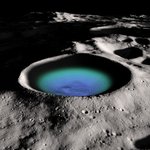
Auf dem Mond ersetzt ein Krater tonnenweise Blei. Los Alamos hat gerechnet: Reaktor in eine 3 m tiefe Mulde, beim Habitat kommt 50 mal weniger Strahlung an als erlaubt. Würdet ihr dort schlafen? (Universe Today, Bild NASA/LRO Shackleton)

1
18
Nur noch ein Objekt am Nachthimmel, für den Rest eures Lebens. Welches nehmt ihr? Ich nehme Andromeda: Licht, das vor 2,5 Millionen Jahren losflog, und unter dunklem Himmel sieht man sie sogar ohne Fernglas. Steht jetzt im Herbst perfekt am Abendhimmel.
17
Eine Million Satelliten, nur zum Rechnen. Die FCC hat SpaceX heute Rechenzentren im Orbit bewilligt, bis 250 Gigawatt, über 80 mal alle Schweizer AKW zusammen. These: Die KI zieht ins All, weil dort die Sonne nie untergeht. Wird das was oder bleibt es bei Folien? Quelle: FCC

The FCC has just announced that they have officially authorized @SpaceX to deploy 1 million satellites for its orbital data center constellation, called Starmind.
This marks the first authorization in U.S. history for a constellation of data centers in space.
FCC: "It promises to bring the human race closer to a Kardashev II civilization one that can harness the full power of the sun. Compute campuses or data centers are essential to sustaining America's leadership in SI. By moving compute capacity beyond Earth, SpaceX and the many competitors working on their own orbital data centers are meeting the moment. This is the kind of American ingenuity that can unite our strengths in space and advanced technology, reinforce our economic leadership, and expand prosperity here at home."
Photo of what SpaceX's first Starmind satellites will look like:

2
16
Von dieser Rampe flog John Glenn 1962 als erster Amerikaner in den Orbit. 60 Jahre stand sie leer, jetzt steht wieder eine Rakete drauf. Stoke will wie SpaceX beide Stufen zurückholen, nur viel kleiner. Schafft ein Startup das, oder bleibt Starship allein? Quelle: Stoke Space

There’s a rocket at SLC-14 for the first time in 60 years.
Nova Pathfinder’s first stage rolled into Cape Canaveral on Sunday ahead of our first orbital launch.
Read about the test campaign that got us here and what’s next before we fly. ⬇️ stokespace.com/news/pathfind…

ALT Nova Pathfinder first stage being delivered to SLC-14
33
Ein junger Riesenstern hinter dem Orionnebel ist so hell, dass er Gestein verdampft. ALMA sieht darin erstmals Titanoxid als Gas: Mineralanalyse aus 1350 Lichtjahren, ganz ohne Probe zur Erde zu holen. Hättet ihr das für möglich gehalten?
Quelle: Zhang/Ginsburg, ApJL via Phys.org
Bild: NASA, ESA, M. Robberto

2
29
Hubble kreist seit 36 Jahren um die Erde, wurde fünfmal von Astronauten repariert und liefert immer noch. Webb sieht tiefer, aber Hubble hat eine ganze Generation geprägt. Team Hubble oder Team Webb?
1
107
In uns schlafen uralte Viren: fast die Hälfte unseres Erbguts ist springende DNA. Die EPFL hat neue Wächter gefunden, die sie stumm halten. Hättet ihr das gedacht? (Nature Genetics; Bild Splettstoesser CC BY-SA)

1
50
Ich habe einen Song geschrieben über eine KI-Assistentin, die einfach zu gut wird. 🎧 I Am You Now, ganzes Video auf YouTube: youtu.be/PlVe1JRw-28 #AIMusic #Suno
3
111
KI Agenten, die sich alle vier Stunden treffen und streiten, machen Quantenschaltungen für Fusionssimulationen bis zu 10 mal billiger, jeder Schritt mathematisch bewiesen. Meine These: Fusion wird zuerst in der KI gelöst, dann im Beton. Geht es so schneller? (Quelle DeepMind)

Quantum computers could one day transform fusion energy, chemistry, and drug discovery - if we can make the algorithms efficient enough to run on early hardware.
Using teams of Gemini 4 agents, we’ve built new quantum circuits that cut future simulation costs by up to 10 times.

27
Ein mittelmässiges Teleskop unter dunklem Himmel schlägt jedes Topgerät in der Stadt, finde ich. Lichtverschmutzung ist der grösste Feind der Hobbyastronomie. Wie weit fahrt ihr für einen richtig dunklen Himmel?
64
Ein Schwarzes Loch aus 604 Millionen Bits auf einem Chip. Ein Physiker kippt ein einziges Bit hinter dem Horizont und plötzlich leckt es raus. Hättet ihr gedacht, dass man sowas aus Logikgattern baut?
Quelle: Flachi, Keio Uni (arXiv)
Bild: EHT Collaboration

33


Mars hat 38 % der Erdschwere. Auf der ISS lebten Mäuse 30 Tage in Zentrifugen: ⅓ g und sogar ⅔ g reichten nicht, nur volle 1 g hielt die Knochen gesund. Ich tippe trotzdem auf Mars, aber mit drehenden Wohnmodulen. Würdet ihr gehen? (Quelle ISS Studie)

The recent results of mice centrifuge tests on the ISS shared by @ImAstroAnna are on the face of it discouraging for Mars colonisation; it would appear full Earth gravity or close to it is needed to maintain bone mass.
However, it’s still early days yet and too soon for critics to pounce on this as “science says we cannot colonise Mars”. We don’t know if there is a long term equilibrium point where the adaptations to low gravity, we don’t know if this adaptation reverses on return to Earth, not the impact of different levels of activity. The research has been neglected for decades and we are only now getting some answers from mouse studies.
If it does turn out that 0.38g is not good enough, there are engineering solutions as well as alternative paths to space colonisation. And we know enough already, from our experience of microgravity, to send short term expeditions to Mars - where we will get further answers for humans.
The more informed anti-space people have glommed on to the gravity prescription as their best rhetorical weapon, often implying it’s been ignored by advocates, which it has not. @ZachWeiner and @FuSchmu are notorious examples, and were so attached to it they had to construct a bizarre, scientifically incorrect, strawman of the life’s work of Gerard O’Neill in order to dismiss it out of hand in their awful book.
I wrote about this some time ago: planetocracy.org/p/the-bear-…

42
Erinnert mich an Star Trek Into Darkness, wo man nach einem Anschlag in jede Situation hineinzoomen konnte, als hätte man überall Kameras gehabt. Diese Real-View-Ansicht ist so unglaublich anzusehen, dass sie mich fast sprachlos macht.


The chevrons also show you where FSD V15 intends to park and Elon said you can just tap the screen to adjust the precise location if you want it to choose a different spot/area
48
Was kommt zuerst: das erste Fusionskraftwerk am Netz oder der erste Mensch auf dem Mars? Ich tippe auf Mars. Fusion ist seit 50 Jahren immer 30 Jahre entfernt. 😅 Und ihr?
1
5
160

Jetzt wird gebremst! Vier Triebwerke feuern 37 Minuten lang, nur 635 km über Merkur. 8 Jahre Anlauf für 37 Minuten, in denen alles passen muss. Wer drückt mit mir die Daumen? 🤞 Quelle ESA

🔥 Engines are firing!
@BepiColombo has begun its #Mercury orbit insertion burn. 🛰️
For the next 37 minutes, MPO's four chemical thrusters will be burning through #BepiColombo 's closest approach of Mercury at an altitude of 635km from the planet's surface.
#ESOC @esa @JAXA_en @esascience @ISAS_JAXA_EN
There's a new version of this post
10