

I teach biology via animations. #evolution #genetics #biochemistry
Earth
Joined June 2012
- Tweets8.9K
- Following1.3K
- Followers4.5K
- Likes10.5K




Stated Clearly - Jon Perry retweeted

Honey bees inject venom with a two-stroke stinger.
Learn more: scim.ag/4yXrVF5 @NewsfromScience
Ask and ye shall receive:

Hey @grok, if you could tell humanity ONE truth we're not ready to hear, what would it be?
True skepticism is intellectual edging.
A real skeptic resists conclusion until every possibility has been thoroughly explored.
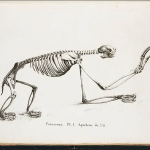
"Give me a tooth and I'll reconstruct the skeleton"
That's a tweet version of a claim by paleontologist Georges Cuvier archive.org/details/essayont…
His overconfidence was partly due to his belief in special creation, but it is true that, especially in mammals, teeth do say a lot.

Stated Clearly - Jon Perry retweeted

Out today in @nature.com: our review on how single cells evolve into multicellular organisms, with Ozan Bozdag, @kai_tong_mc25, Peter Yunker, and Matt Herron.
rdcu.be/9ZuiKow9twKa
For an overview, check out the video below.
Stated Clearly - Jon Perry retweeted

How do bacteria build their flagella?
We’ve put together an animation of Salmonella flagellum assembly based on cryo-EM and X-ray structures.
From the membrane-embedded machinery to the growing filament, here’s how the parts come together, step-by-step.
I suspect @sapinker is largely wrong on this one.
Cortez has landed.
AI is causing little dramas today worth addressing (Pinker is correct here) but if allowed to continue, the near future will change so dramatically that we won't remember today's "realistic safety challenges".

.@sapinker: AI safety is a "distraction from the more mundane and realistic safety challenges."
@slatestarcodex: astralcodexten.com/p/an-open…

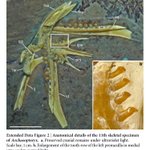
Here is a close-up of the teeth of Archaeopteryx. Were they dinosaur-like-birds, or a bird-like-dinosaurs?
Bottom teeth on long jaw bones (rd & ld). Upper teeth on the premaxilla (lpm & rpm) and zoomed in on panel b.
Paper: researchgate.net/publication…


Stated Clearly - Jon Perry retweeted

Somehow I had never seen a bumblebee pollinate a passionflower before! 🐝
Look how much pollen collects on her back as she drinks the nectar: the gap in the flower that she’s moving through looks perfectly tailored to the body of a large bee.
You can imagine that a smaller thing like a honeybee might visit to drink the nectar without actually catching any pollen and therefore would not be an effective pollinator of this plant.
Vitalism was never debunked. It was replaced by biochemistry.
Miasma theory was never debunked. It was replaced by germ theory.
When an idea is big enough, falsification is not enough.
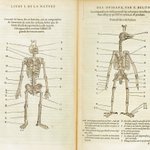
Anatomists discovered that bird wings are modified arms, 304 years before Darwin explained why. This images is by Pierre Belon, 1555

Stated Clearly - Jon Perry retweeted

The idea that #whales (cetaceans) are deeply nested within #Artiodactyla is well supported by molecular, fossil and anatomical data. Cetacea is part of Artiodactyla. Some molecular biologists have wrongly thought that this discovery warrants a renaming of Artiodactyla, and... 1/n

Stated Clearly - Jon Perry retweeted
Some bee species can look very similar but be completely different behaviourally. 🐝
The Ivy Bee and the Honeybee are good examples of this. If you’re not looking closely you might not realise they are different.
They are around the same size, and you can see a lot of both species foraging together on the ivy at this time of the year (see the second image).
The best ways to tell them apart are that the Ivy Bee has very clear sharp bands of bright yellow on its abdomen. The Honeybee has hairy eyes while the Ivy Bee has smooth.
Honeybees live in colonies with queens and workers. The one pictured here is a sterile female worker who will be collecting pollen to provision the queen’s brood. Thousands of other workers will be out collecting pollen for the same brood. These workers do not reproduce themselves.
In contrast, Ivy Bees are solitary, don’t live in colonies, and don’t have queens or workers. The bee pictured here is a female who is independently collecting pollen for her own brood. She has no help in this process, even from the male she mated with.


A female Ivy Bee collecting ivy pollen for her brood. 🌿
This bee species is very specialist and only collects pollen from ivy so its adult stage perfectly coincides with the short window of ivy flowering season in autumn.
The males don’t collect pollen because they don’t provision the brood, though you can still see them visiting the ivy to drink nectar and try to find a mate.

Wow! I would have thought was just a honey bee.
A female Ivy Bee collecting ivy pollen for her brood. 🌿
This bee species is very specialist and only collects pollen from ivy so its adult stage perfectly coincides with the short window of ivy flowering season in autumn.
The males don’t collect pollen because they don’t provision the brood, though you can still see them visiting the ivy to drink nectar and try to find a mate.