Sportify-GlutenFree F&B (@SportifyG) header
Sportify-GlutenFree F&B (@SportifyG) profile picture

Science-backed foods to heal your gut. 🔬 Specializing in GFCFSF solutions for Autism, Celiac, & Diabetes. Created by senior food scientists. 📦 Shop at @iip_le

Bangalore, Karnataka, India
Joined April 2019
Photo by Sportify-GlutenFree F&B (@SportifyG)Photo by Sportify-GlutenFree F&B (@SportifyG)Photo by Sportify-GlutenFree F&B (@SportifyG)Photo by Sportify-GlutenFree F&B (@SportifyG)Photo by Sportify-GlutenFree F&B (@SportifyG)Photo by Sportify-GlutenFree F&B (@SportifyG)Photo by Sportify-GlutenFree F&B (@SportifyG)Photo by Sportify-GlutenFree F&B (@SportifyG)Photo by Sportify-GlutenFree F&B (@SportifyG)Photo by Sportify-GlutenFree F&B (@SportifyG)
UNDERSTAND HEALTH AS A NETWORK RATHER THAN A SINGLE CAUSE IIPLEM.COM (Bangalore MSME run by senior scientists) “Why is the intestinal ecosystem producing an inflammatory environment in the first place?” Diet → microbiome → metabolites → gut barrier → immune system ------------------------------------- Mitochondria may be the missing middle layer Environmental/toxic/infectious/metabolic stress ↓ mitochondrial stress ↓ oxidative stress ↓ immune activation ↓ intestinal barrier dysfunction ↓ microbial-product exposure ↓ more inflammation ------------------------------------- The really interesting connection: infection ↔ gut barrier you can theoretically have: Infection → leaky gut → inflammation while simultaneously having: Leaky gut → immune activation → impaired recovery This creates a bidirectional gut–immune loop. ------------------------------------- There is considerably stronger toxicological evidence that metals such as lead, mercury, arsenic and cadmium can interfere with cellular processes. Heavy-metal exposure ↓ oxidative stress ↓ mitochondrial dysfunction + impaired antioxidant systems ↓ cellular damage ↓ DAMP release ↓ innate immune activation ↓ inflammatory signalling ------------------------------------- Concept: Multiple relatively modest stressors → reduced resilience → barrier dysfunction + immune activation → persistent inflammation Poor metabolic health sleep disruption dysbiosis environmental exposure previous infection nutrient deficiencies genetic susceptibility ↓ mitochondrial/oxidative stress ↓ immune dysregulation ↕ intestinal permeability ↓ microbial products entering circulation ↓ chronic low-grade inflammatory signalling This is why two people can have apparently similar lifestyles but very different inflammatory responses. ------------------------------------- The gut can sit at the centre of that network Think of the intestinal barrier as a selective border: Food → digestion → intestinal lining → bloodstream A healthy barrier allows nutrients through while restricting bacteria, bacterial products, and other potentially inflammatory molecules. When intestinal permeability increases—commonly called “leaky gut”—the barrier becomes less selective. A simplified pathway is: Dysbiosis / infection / alcohol / certain drugs / poor diet / metabolic stress / inflammation ↓ intestinal barrier disruption ↓ increased permeability ↓ microbial products such as LPS and other bacterial components reach immune surveillance more readily ↓ TLR/NOD and other innate immune pathways activated ↓ TNF-α, IL-6, IL-1β and other inflammatory signalling ↓ systemic inflammatory tone And importantly, the relationship can run both directions: Inflammation → intestinal barrier dysfunction → more immune stimulation → more inflammation That creates a potential self-reinforcing loop. IIPLEM.com | #GFCFSF | #GutMatters | #Health24hrsSubject
2
4
151
Sportify-GlutenFree F&B retweeted
Dr. Toby Rogers, PhD: “315 children develop autism every day in the US... 88% of autism cases are characterized by regression. Regression suggests an acute toxic exposure, not genetics.” We know beyond a reasonable doubt that vaccine toxicants... are causing autism.
59
1,433
52
2,713
34,389
Sportify-GlutenFree F&B retweeted
Where a muscle starts, where it attaches, and how it contracts. Animated illustrations make it clear at a glance. The AnatoBase Anatomy Library maps out the attachments and actions of each muscle and bone. Useful for figure drawing, fitness training, and medical study.

51
1,820
44
14,928
4,566,094
Sportify-GlutenFree F&B retweeted
Replying to @SportifyG
Very crucial point in Autism early dietary intervention researches, thanks for bringing this up 👍
1
1
15
New—Brain insulin resistance in the development of #obesity and type 2 #diabetes: temporal trajectories in humans thelancet.com/journals/landi… #OpenAccess
3
64
1
141
5,791
Crossover trials for clinical testing in Autism Space & build a consensus? Joining Link: xitter.cf/i/spaces/1POBoXjakQagR… 26.11.2026 | 8PM onwards | 2ndBrain.in | IIPLEM.com #AudioPodcast with Senior Food Scientist & Autism Researcher, Ft. Arnab Guha.
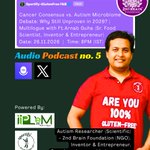
Cancer Consensus vs. Autism Microbiome Debate: Why Still Unproven in 2026? We Have Consensus on Cancer Treatment, but the Link Between the Gut Microbiome and Autism Remains Unproven and Fiercely Debated Even in 2026. Why? Ideal Way Forward? A Stark Contrast in Scientific Progress Cancer treatment has reached broad clinical consensus not because every molecular pathway is fully understood, but because successive generations of research produced measurable biomarkers, clear dose-response relationships & large, well-controlled trials that repeatedly demonstrated survival benefits across defined patient groups. The gut-microbiome–autism question has followed a markedly different trajectory. More than two decades of work have generated intriguing signals - differences in microbial composition and metabolites, temporary improvements in early antibiotic studies, and behavioral changes in mouse models that receive microbes from autistic donors - yet these findings remain inconsistent and heavily confounded. The result is a field still characterized by genuine scientific disagreement rather than settled clinical guidance. Why the Evidence Has Not Converged? Autism’s extreme heterogeneity and the microbiome’s sensitivity to everyday variables make clean causal inference unusually difficult. Core traits vary widely across individuals; co-occurring gastrointestinal problems, sensory-driven food selectivity, medications, and genetics further shape both microbial communities and behavior. Many studies have relied on small samples, numerous measured variables, and designs that cannot distinguish whether microbial differences cause symptoms, result from restricted diets, or simply travel alongside other risk factors. Systematic reviews continue to flag weak statistics and conceptual gaps. While researchers bring different personal and professional stakes to the question, the persistent lack of consensus is driven primarily by these biological and methodological obstacles rather than by conflicting agendas alone. Dietary Approaches and the Limits of Current Data The gluten-free, casein-free, soy-free (GFCFSF) diet exemplifies the gap between widespread family use and rigorous evidence. Some parents report reductions in gastrointestinal distress or modest shifts in behavior, and the diet remains a common first-line experiment. Controlled studies, however, have generally failed to show reliable improvements in core autism traits once expectancy effects and dietary confounds are minimized. The same pattern appears with probiotics and microbiota-transfer protocols: open-label or small trials sometimes suggest benefit for bowel symptoms, yet placebo-controlled results are mixed or null. Without designs that better isolate true effects from individual variability, such interventions stay suspended between anecdote and inconclusive data. Rethinking Trial Architecture for Heterogeneous Conditions Standard parallel double-blind randomized controlled trials (RCT) assign each participant to a single group for the entire study, allowing large between-person differences in microbiome, diet, genetics, and symptom severity to obscure modest treatment signals. A double-blind randomized crossover trial offers a practical alternative: every participant receives both the intervention and the control condition in random sequence, with an adequate washout period between them. Because each person serves as their own control, the impact of baseline heterogeneity is reduced - an advantage especially relevant to autism. Crossover designs are not suitable for every intervention; they require stable conditions, sufficient washout to limit carry-over, and longer overall participation. When those requirements can be met, they provide a more sensitive and efficient way to test microbiome-targeted or dietary approaches such as GFCFSF protocols. Toward Cumulative, Reproducible Evidence The ideal way forward is neither more small open-label studies nor the expectation of a single unifying microbial cause. It requires larger prospective cohorts that track microbial function alongside host genetics from early life, deliberate subgroup analyses that respect autism’s heterogeneity, and a shift toward well-powered within-subject designs such as crossover trials for clinical testing. Only through these more rigorous and better-matched methods can the field move from prolonged debate toward the kind of cumulative, reproducible evidence that has already transformed cancer care - clarifying, for specific individuals, whether and how the gut microbiome contributes, and what practical help may follow. Happy to pick your brains if you are a researcher in autism space. Let's have multilogue tonight at SPACES of X.com at 8PM (IST). Joining Link: xitter.cf/i/spaces/1POBoXjakQagR… IIPLEM.com | @iip_le | @2ndBrainF call.whatsapp.com/video/GqYj… #AutismResearcher #Research #Autism #TrialDesign #AutismConcensus #GBA #GutBrainAxis
1
1
26
Cancer Consensus vs. Autism Microbiome Debate: Why Still Unproven in 2026? We Have Consensus on Cancer Treatment, but the Link Between the Gut Microbiome and Autism Remains Unproven and Fiercely Debated Even in 2026. Why? Ideal Way Forward? A Stark Contrast in Scientific Progress Cancer treatment has reached broad clinical consensus not because every molecular pathway is fully understood, but because successive generations of research produced measurable biomarkers, clear dose-response relationships & large, well-controlled trials that repeatedly demonstrated survival benefits across defined patient groups. The gut-microbiome–autism question has followed a markedly different trajectory. More than two decades of work have generated intriguing signals - differences in microbial composition and metabolites, temporary improvements in early antibiotic studies, and behavioral changes in mouse models that receive microbes from autistic donors - yet these findings remain inconsistent and heavily confounded. The result is a field still characterized by genuine scientific disagreement rather than settled clinical guidance. Why the Evidence Has Not Converged? Autism’s extreme heterogeneity and the microbiome’s sensitivity to everyday variables make clean causal inference unusually difficult. Core traits vary widely across individuals; co-occurring gastrointestinal problems, sensory-driven food selectivity, medications, and genetics further shape both microbial communities and behavior. Many studies have relied on small samples, numerous measured variables, and designs that cannot distinguish whether microbial differences cause symptoms, result from restricted diets, or simply travel alongside other risk factors. Systematic reviews continue to flag weak statistics and conceptual gaps. While researchers bring different personal and professional stakes to the question, the persistent lack of consensus is driven primarily by these biological and methodological obstacles rather than by conflicting agendas alone. Dietary Approaches and the Limits of Current Data The gluten-free, casein-free, soy-free (GFCFSF) diet exemplifies the gap between widespread family use and rigorous evidence. Some parents report reductions in gastrointestinal distress or modest shifts in behavior, and the diet remains a common first-line experiment. Controlled studies, however, have generally failed to show reliable improvements in core autism traits once expectancy effects and dietary confounds are minimized. The same pattern appears with probiotics and microbiota-transfer protocols: open-label or small trials sometimes suggest benefit for bowel symptoms, yet placebo-controlled results are mixed or null. Without designs that better isolate true effects from individual variability, such interventions stay suspended between anecdote and inconclusive data. Rethinking Trial Architecture for Heterogeneous Conditions Standard parallel double-blind randomized controlled trials (RCT) assign each participant to a single group for the entire study, allowing large between-person differences in microbiome, diet, genetics, and symptom severity to obscure modest treatment signals. A double-blind randomized crossover trial offers a practical alternative: every participant receives both the intervention and the control condition in random sequence, with an adequate washout period between them. Because each person serves as their own control, the impact of baseline heterogeneity is reduced - an advantage especially relevant to autism. Crossover designs are not suitable for every intervention; they require stable conditions, sufficient washout to limit carry-over, and longer overall participation. When those requirements can be met, they provide a more sensitive and efficient way to test microbiome-targeted or dietary approaches such as GFCFSF protocols. Toward Cumulative, Reproducible Evidence The ideal way forward is neither more small open-label studies nor the expectation of a single unifying microbial cause. It requires larger prospective cohorts that track microbial function alongside host genetics from early life, deliberate subgroup analyses that respect autism’s heterogeneity, and a shift toward well-powered within-subject designs such as crossover trials for clinical testing. Only through these more rigorous and better-matched methods can the field move from prolonged debate toward the kind of cumulative, reproducible evidence that has already transformed cancer care - clarifying, for specific individuals, whether and how the gut microbiome contributes, and what practical help may follow. Happy to pick your brains if you are a researcher in autism space. Let's have multilogue tonight at SPACES of X.com at 8PM (IST). Joining Link: xitter.cf/i/spaces/1POBoXjakQagR… IIPLEM.com | @iip_le | @2ndBrainF call.whatsapp.com/video/GqYj… #AutismResearcher #Research #Autism #TrialDesign #AutismConcensus #GBA #GutBrainAxis
1
1
53
Taking iron supplements, eating healthy, yet your haemoglobin refuses to budge? The issue might not be what you’re eating—it might be what your gut is actually absorbing. 🩸 Recent ICMR SAMPADA data highlights a massive health reality in India: anaemia affects 56% of women of reproductive age and 42% of young children, with iron deficiency driving roughly half of these cases. While we often focus on increasing iron intake, we rarely look at the duodenum - the first section of your small intestine where specialised cells (enterocytes) do the heavy lifting of absorbing iron. In a typical Indian diet, several everyday factors quietly block this process: 🌾 1. The Cereal & Phytate Trap Most vegetarian Indian diets rely on plant-based (non-haem) iron. However, whole grains and cereals are naturally high in phytates, which bind to iron in the gut and limit how much your body can actually use. 🥖 2. Gluten & Gut Lining Damage For individuals with celiac disease (affecting roughly 1% of people in North India), gluten triggers an immune reaction that flattens the tiny, finger-like villi in the small intestine. When that surface area shrinks, iron absorption drops dramatically - making celiac disease a common, overlooked culprit behind anaemia that doesn't respond to supplements. (Non-celiac gluten sensitivity has also been linked to low iron in some studies.) 🥛 3. Dairy & Soy Interference Unlike gluten, dairy and soy don't damage the gut lining - instead, they create a traffic jam inside the gut itself: Dairy: Calcium and milk proteins (like casein) can reduce iron absorption by 50–60% in a single meal by competing for uptake pathways. Soy: Rich in both phytates and specific proteins (like conglycinin), soy binds iron into insoluble complexes that pass right through without being absorbed. The Takeaway 💡 Anaemia is rarely a simple "eat more iron" fix. Between dietary blockers, B12 deficiencies, chronic inflammation, and gut health, blindly popping iron pills often falls short. If your iron levels stay stubbornly low, look at food timing (like separating dairy/tea from iron-rich meals) and talk to a doctor about underlying gut absorption issues. 📚 Key References: - ICMR-NIN SAMPADA Survey (2023–2025) – National Anaemia & Biomarker Report - Piskin et al., ACS Omega (2022) – Duodenal Iron Absorption & Phytate Inhibition - Makharia et al., J. Gastroenterol. Hepatol. (2011) – Celiac Disease Prevalence in North India - Hurrell et al., Am. J. Clin. Nutr. (1992) – Soy Phytates, Proteins & Iron Bioavailability - Hallberg et al., Eur. J. Clin. Nutr. (1991) – Calcium, Dairy & Single-Meal Iron Uptake #GutHealth #Anaemia #IronDeficiency #IndianNutrition #ClinicalNutrition #PublicHealth #CeliacAwareness #WellnessIndia #GFCFSF IIPLEM.com
Anemia explosion is more intriguing than Diabetes explosion in India? Why? Why iron absorption is not being prioritized over iron top-up via fortifications?
1
3
85
Sportify-GlutenFree F&B retweeted
🚨BREAKING STUDY: OVER 3X HIGHER AUTISM RATES IN CHILDREN WHO TOOK MULTIPLE MMR AND HEPATITIS B VACCINATIONS COMPARED TO UNVACCINATED CHILDREN The study analyzed OFFICIAL Florida government Medicaid records from 14,235 children. They examined medical histories from birth through age 10, representing 156,585 patient-years of observations. Autism rates differed across vaccination categories compared to unvaccinated children: One MMR vaccination: +64% One MMR + one hepatitis B vaccination: +95% Highest combined HepB/MMR vaccination: +218% They also found several other MAJOR associations: MORE THAN 2X HIGHER RATES of ADHD, autism, and asthma associated with greater total vaccine burden. 4X HIGHER ASTHMA RISK associated with influenza vaccination. 3X HIGHER AUTISM RISK associated with influenza vaccination. 124% HIGHER annual respiratory infection diagnosis rate in fully vaccinated versus unvaccinated children (47% vs. 21%). 150% HIGHER developmental delay rate in the most-vaccinated children versus unvaccinated children. These concerning findings are consistent with those reported in the MANY other vaccinated-versus-unvaccinated studies, which also found higher rates of chronic diseases among vaccinated cohorts. This Florida Medicaid analysis adds yet another dataset to the vaccinated vs unvaccinated literature, with more than TWICE the recorded rates of ADHD, autism, and asthma associated with greater total vaccination exposure. Congrats to @BrianHookerPhD and Josh Mitteldorf on this IMPORTANT study!
62
1,568
79
2,680
39,217
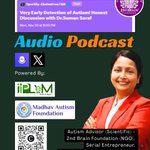
*Very Early Detection of Autism! Honest Discussion with Dr. Suman Saraf* 🧩✨ *Date* : 30th Nov.2026, *Time*: 8pm - 8:30pm (IST) As a parent, noticing subtle delays in your baby or toddler can feel overwhelming. Are they just taking their time, or is it an early sign of autism? Join Dr. Suman Saraf (Autism Specialist, Serial Entrepreneur & Founder of Suman Autism Center) for an open, judgment-free conversation on what to actually look out for in the first few years of life. *In this honest session, we’ll cover:* ✅ Subtle early signs in infants and toddlers that often go unnoticed ✅ Clearing up common myths and "wait and watch" advice ✅ Why early identification opens critical developmental windows ✅ Practical, actionable next steps for parents and caregivers Don't leave your child's development to guesswork. Get clarity, support, and real answers from an expert who understands. 👉 WhatsApp at +91-9611186720 & register call.whatsapp.com/video/uvnX… 2ndBrain.in #EarlyDetection #AutismAwareness #ParentingSupport #ChildDevelopment #DrSumanSaraf #EarlyIntervention #ToddlerMilestones #AutismParenting #Autism
4
5
76
Sportify-GlutenFree F&B retweeted
🧩 NIH-supported researchers are uncovering new connections in autism research. Scientists have identified the largest of its kind detailed map of the protein interaction network involving genes associated with severe autism risk. 🔎 These findings offer new clues about how autism-related genetic risk factors can interact in concerted ways to affect the body. Understanding these connections could also help researchers identify potential targets for future treatments for people with severe autism. 📸 Credit: Quantitative Biosciences Institute (QBI) 🔗 Learn more: bit.ly/4rfLrJL
27
32
5
116
30,785
Sportify-GlutenFree F&B retweeted
A paradigm shift in autism treatment is unfolding, and the evidence is nothing short of miraculous. Dr. Sabine Hazan reveals a stunning case study: twin boys, both severely autistic and nonverbal, sharing an identical, dysregulated microbiome. The breakthrough came when their gut microbiome was corrected—flipping the script to elevate beneficial microbes and suppress harmful ones. The result? A transformation that redefines clinical success. These previously nonverbal children began to speak. To read. To connect. This is the gold standard. It demonstrates profound clinical significance, confirmed by a tangible biological assay. We are no longer guessing; we are measuring. The path to unlocking potential may very well begin in the gut.
87
1,160
51
4,112
193,590
Sportify-GlutenFree F&B retweeted
Up to 76% of children with autism may actually have an autoimmune disorder which blocks uptake of folate into the brain, leading to a cerebral deficiency Autistic children were 19 times more likely to test positive for folate receptor alpha antibodies, which bind with and block folate receptors at the blood-brain-barrier These children had normal blood results, but very low levels in cerebrospinal fluid Treatment with a specialized folate supplement, calcium folinate/folinic acid (aka Leucovorin), led to improvement in ~65% of autistic children studied Standard testing is useless because blood levels of folate show up as normal, but the brain is deficient Ordinary folate supplements (folic acid, methylfolate) are ineffective because their transport system is blocked Calcium folinate, on the other hand, works by penetrating the brain via alternative transporters (reduced folate carriers) to effectively restore folate levels However it must be taken in extremely high doses to achieve this effect. Leading physicians are using approx. 2mg/kg body weight. Refs: PMID: 38392599 PMID: 38248763 PMID: 34834493 PMID: 32892962
148
759
80
5,705
1,957,007
Sportify-GlutenFree F&B retweeted
Autism is a diverse group of conditions related to brain development. Signs can emerge in early childhood, yet many people remain undiagnosed for years. @WHO stresses that early understanding and the right support can make a meaningful difference. who.int/news-room/fact-sheet…
64
102
16
216
32,059
COVID-19 vaccination in children adding to America's autism crisis. See Hulscher et al 2026. @NicHulscher @McCulloughFund
19
214
18
576
35,723
Anemia explosion is more intriguing than Diabetes explosion in India? Why? Why iron absorption is not being prioritized over iron top-up via fortifications?
1
1
3
120
This Lung Cancer Awareness Month, let us raise awareness about lung cancer and the importance of early detection. Dr. (Prof.) Saurabh Mittal, Department of Pulmonary, Critical Care & Sleep Medicine, AIIMS, New Delhi, shares a message with the public on lung cancer risk factors, symptoms not to ignore, and the importance of timely evaluation. Seek medical advice for a persistent cough, coughing up blood, breathlessness, chest pain or unexplained weight loss. Protect your lung health by staying away from smoking and tobacco, and by reducing exposure to air pollution. #LungCancer #LungCancerAwarenessMonth #LungHealth #AIIMSNewDelhi
3
5
23
1,956