

Auto-generate Kubernetes load tests & mocks with real-world traffic. Validate app performance and recreate realistic conditions for devs. 🚀
Joined May 2020
- Tweets414
- Following29
- Followers142
- Likes26






Stop Wasting Time on Mocking!
Learn how to analyze a 30-second local load test using AI and Proxymock to track latency and P99 metrics effortlessly.
Learn more at speedscale.com
#loadtesting #apitesting #devops #aiagents #softwareengineer
How to Run a Load Test in 30 Seconds
#aiagent #devops #loadtesting #developertools #softwareengineer
Still trying to reproduce a production bug that only happens sometimes?
Capture real application traffic and replay it on demand. Test fixes against actual requests instead of guessing what production might throw at your code.
Make production problems reproducible.
Read more: speedscale.com/blog/traffic-…
#Speedscale #TrafficReplay #APITesting #SoftwareTesting #DevOps

Can your PostgreSQL database handle real production traffic?
Synthetic load tests don't always capture the query patterns your app actually generates. Replay production recordings to test under realistic load and catch performance regressions before they reach users.
Read more: speedscale.com/blog/load-tes…
#Speedscale #PostgreSQL #LoadTesting #PerformanceEngineering #DevOps

Your Holiday Checkout Is the New Mall
With gas prices driving shoppers online, load test your site with Speedscale to ensure high holiday traffic and slow speeds don't crash your checkout page on Black Friday.
Read the full post here: speedscale.com/blog/holiday-…
#blackfriday #ecommerce #loadtesting #cybermonday #devops
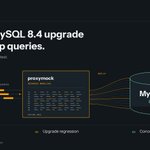
Your MySQL database passes testing. Then production traffic hits, and everything slows down.
Real queries reveal performance bottlenecks that synthetic tests can miss. Replay them under load to catch regressions before they reach production.
Test with the traffic your app actually sees.
Read more: speedscale.com/blog/mysql-lo…
#Speedscale #MySQL #PerformanceTesting #Database #DevOps

Setting Up Simple Test Automation from a Recording
Learn how to easily set up and run automated tests for your Go code using recorded replays, then try running your own test replay today!
Read more: speedscale.com
#GoLang #SoftwareTesting #TestAutomation #DevOps #CodeTesting #AutomatedTesting
One DLP policy for every team? That gets messy fast.
Different teams handle different data, and their security rules should reflect that. Team-based DLP helps apply the right protections without creating unnecessary friction for everyone else.
Security should be specific, not one-size-fits-all.
Read more: speedscale.com/blog/team-bas…
#Speedscale #DataSecurity #DLP #DevOps #Cybersecurity

How Traffic Context Helps AI Agents
Inspect your inbound and outbound API calls in detail to give your AI agent the exact traffic context it needs; use the link to get started!
Learn more: speedscale.com
#apitesting #devops #developertools #aiagents #techtips
The Missing Piece in Your AI Coding Agent
Stop making your AI coding agent guess how your app works with massive prompts. We feed live API traffic and runtime evidence directly into your agent so it can automatically detect bugs, run replays, and fix code fast!
Learn more: speedscale.com
#aiagents #aitools #devops #debugging #softwareengineer
AI Companies Can't Go Public....
What are your thoughts?? Drop them in the comments.
Read more: speedscale.com
#AI #TechIPO #OpenAI #Anthropic #Hyperscalers
The database is clean. The test environment looks safe.
Then someone notices a customer email sitting inside an API payload.
PII doesn’t only live in databases. It can travel through headers, tokens, URLs, logs, and requests without anyone realizing it.
Realistic test data is useful. Real customer data isn’t.
Read more: speedscale.com/blog/beware-o…
#Speedscale #DataSecurity #Privacy #APIs #DevOps

How Will Software Engineers Interface with AI in the Future?
A breakdown of the three potential ways software engineers will interact with AI coding assistants, ranging from local desktop setups to fully automated software delivery factories.
Learn more: speedscale.com
#aicoding #devops #techdebate #aiagents
I used to think API traffic was mainly useful for debugging.
Then I realized it can tell you how the business actually works.
The sequence of calls can reveal workflows, dependencies, and the actions that trigger what happens next.
Sometimes the API is the best documentation you have.
Read more: speedscale.com/blog/reading-…
#Speedscale #APIs #Observability #SoftwareEngineering #TrafficReplay

One security exception is manageable.
Thousands of reasonable exceptions can turn your platform into a completely different product.
Custom integrations, restricted capabilities, manual processes, compatibility requirements. They all add up, and eventually every upgrade becomes a port.
That’s the compounding platform tax.
Read more: speedscale.com/blog/the-comp…
#Speedscale #Kubernetes #CloudNative #PlatformEngineering #DevOps

Want to know how your app handles a dependency failure?
Don’t wait for production to find out.
Inject realistic timeouts, errors, and slow responses at the application level and see what actually happens.
Break the dependency. Not the whole system.
Read more: speedscale.com/blog/applicat…
#Speedscale #ChaosEngineering #DevOps #Testing #Resilience

The site is down. So… blame the site?
Not so fast.
The frontend might just be where a much deeper problem becomes visible — a slow dependency, failed network call, or broken service upstream.
Follow the request. Find the real failure.
Read more: speedscale.com/blog/drop-the…
#Speedscale #Observability #DevOps #APIs #SRE

Telemetry tells you where to look. Traffic lets you recreate what actually happened.
Find the signal in your traces and metrics, turn it back into traffic, and replay the request that caused the problem.
Because “we found the issue” hits different when you can reproduce it.
Read more: speedscale.com/blog/from-tel…
#Speedscale #Observability #Telemetry #DevOps #Testing

Chaos testing usually means breaking the infrastructure and seeing what happens. But what happens when the infrastructure stays healthy and the application itself is the thing that behaves badly?
That’s the difference between infrastructure chaos and application chaos. One tests failures like network outages or pod crashes, while the other tests how your application handles bad responses, timeouts, retries, and unexpected dependency behavior.
You need both to understand how a system actually fails. Because production rarely gives you just one kind of chaos at a time.
Read more: speedscale.com/blog/two-kind…
#Speedscale #ChaosEngineering #Observability #ResilienceEngineering #DevOps

CPU is at 20%. The service is still painfully slow.
That’s because CPU usage doesn’t tell you how long a request spends waiting on a database, network, lock, or dependency.
Prometheus shows the CPU isn’t the problem. Proxymock helps replay the request and find where the time actually went.
Low CPU doesn’t mean low latency.
Read more: speedscale.com/blog/explain-…
#Speedscale #Prometheus #Observability #APIs #DevOps
