

Chaos, Eros & Cosmos. The Tao of Terra is East and West. Born 312ppm. The truth is unpopular; that's why we ignored Cassandra. Make Love not War.
Sydney
Joined December 2007
- Tweets8.2K
- Following1.7K
- Followers800
- Likes4.8K





Kari McKern retweeted

Structure your Socratic prompts in 3 parts:
PART 1: Theoretical Question
"What makes [output type] effective?"
PART 2: Framework Question
"What principles or frameworks apply here?"
PART 3: Application Question
"Now apply those insights to [your specific task]"
This forces step-by-step reasoning.


Kari McKern retweeted

China is doing exactly what any developing country should do: utilise industrialisation to build up capabilities in clean energy.
China’s emissions are now *reversing* amidst rapid growth in energy demand.
The reason: huge investments in clean energy.

Kari McKern retweeted

More info on the reasons for the expansion of the Pine Gap military satellite base…👇
web.archive.org/web/20240614…
Kari McKern retweeted

DeepSeek’s R1 leaps over xAI, Meta and Anthropic to be tied as the world’s #2 AI Lab and the undisputed open-weights leader
DeepSeek R1 0528 has jumped from 60 to 68 in the Artificial Analysis Intelligence Index, our index of 7 leading evaluations that we run independently across all leading models. That’s the same magnitude of increase as the difference between OpenAI’s o1 and o3 (62 to 70).
This positions DeepSeek R1 as higher intelligence than xAI’s Grok 3 mini (high), NVIDIA’s Llama Nemotron Ultra, Meta’s Llama 4 Maverick, Alibaba’s Qwen 3 253 and equal to Google’s Gemini 2.5 Pro.
Breakdown of the model’s improvement:
🧠 Intelligence increases across the board: Biggest jumps seen in AIME 2024 (Competition Math, +21 points), LiveCodeBench (Code generation, +15 points), GPQA Diamond (Scientific Reasoning, +10 points) and Humanity’s Last Exam (Reasoning & Knowledge, +6 points)
🏠 No change to architecture: R1-0528 is a post-training update with no change to the V3/R1 architecture - it remains a large 671B model with 37B active parameters
🧑💻 Significant leap in coding skills: R1 is now matching Gemini 2.5 Pro in the Artificial Analysis Coding Index and is behind only o4-mini (high) and o3
🗯️ Increased token usage: R1-0528 used 99 million tokens to complete the evals in Artificial Analysis Intelligence Index, 40% more than the original R1’s 71 million tokens - ie. the new R1 thinks for longer than the original R1. This is still not the highest token usage number we have seen: Gemini 2.5 Pro is using 30% more tokens than R1-0528
Takeaways for AI:
👐 The gap between open and closed models is smaller than ever: open weights models have continued to maintain intelligence gains in-line with proprietary models. DeepSeek’s R1 release in January was the first time an open-weights model achieved the #2 position and DeepSeek’s R1 update today brings it back to the same position
🇨🇳 China remains neck and neck with the US: models from China-based AI Labs have all but completely caught up to their US counterparts, this release continues the emerging trend. As of today, DeepSeek leads US based AI labs including Anthropic and Meta in Artificial Analysis Intelligence Index
🔄 Improvements driven by reinforcement learning: DeepSeek has shown substantial intelligence improvements with the same architecture and pre-train as their original DeepSeek R1 release. This highlights the continually increasing importance of post-training, particularly for reasoning models trained with reinforcement learning (RL) techniques. OpenAI disclosed a 10x scaling of RL compute between o1 and o3 - DeepSeek have just demonstrated that so far, they can keep up with OpenAI’s RL compute scaling. Scaling RL demands less compute than scaling pre-training and offers an efficient way of achieving intelligence gains, supporting AI Labs with fewer GPUs
See further analysis below 👇

Kari McKern retweeted

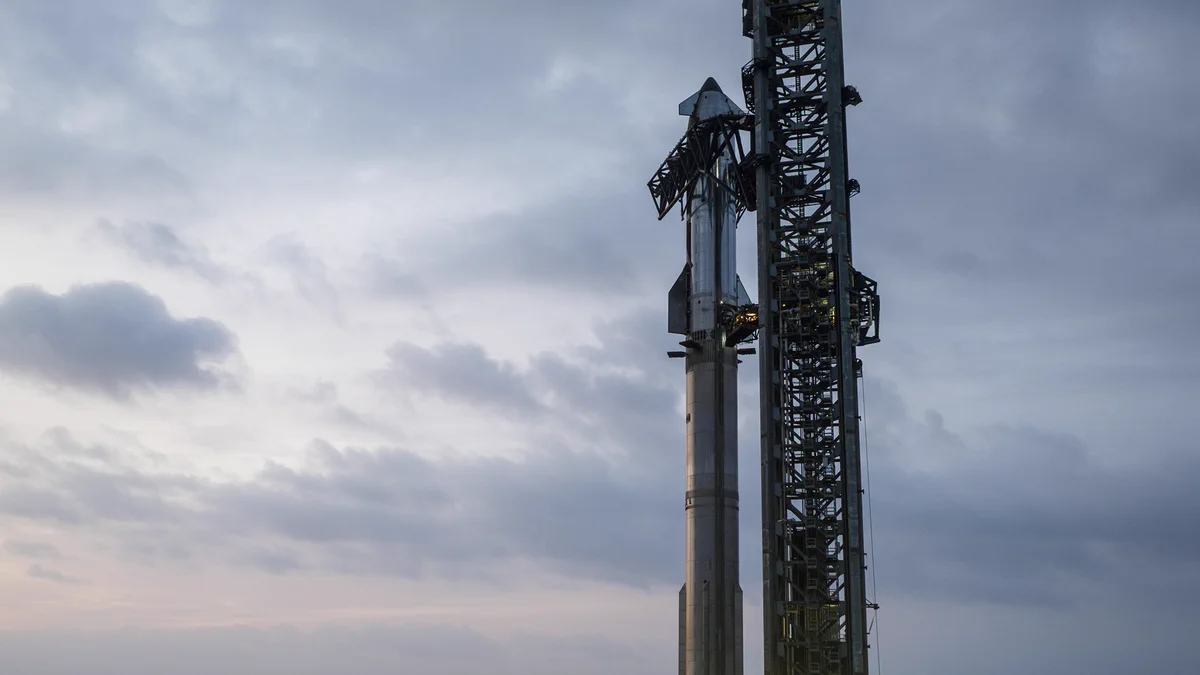
BREAKING: Starship flight 9 livestream in 4k on 𝕏 xitter.cf/i/broadcasts/1OwxWXMRA…
Kari McKern retweeted

The CCIA warns that this unchecked cyber-espionage erodes privacy, threatens national security, and undermines sovereignty. @spacerkari #auspol #cybersecurity
johnmenadue.com/post/2025/04…

Kari McKern retweeted
CAMS FOR THE COMPLEXITY CHALLENGED
perplexity.ai/page/the-cams-…

Kari McKern retweeted

This is super exciting!
In biology, "nothing makes sense except in the light of evolution".
Evolutionary principles and pressures surely apply to human societies and civilizations, yet even as I thought about it, I could never find an analysis.
Until your post that is.
Kari McKern retweeted
The emergence of a multipolar world is not a threat but a possibility—a chance to reimagine global civilisation as an ecosystem of cooperative systems, each contributing to the resilience of the whole. @spacerkari #auspol
johnmenadue.com/a-garden-of-…
Kari McKern retweeted

This guy scanned monks' brains.
He expected normal results.
But what he found had never been seen in scientific history.
The discovery landed him on Time's 100 Most Influential People.
Here's what 30,000+ hours of meditation does to your brain:


Kari McKern retweeted

In 2024, investment is solar PV is set to grow to $500 billion, leading the transformation of the power sector
More money is now going into solar PV than all other electricity generation technologies combined
Learn more 👉 iea.li/3zxRsuC

Kari McKern retweeted

This is perhaps the most important and powerful case against AUKUS that I've heard, especially because it comes from one of Australia's preeminent strategic thinkers: Hugh White, inaugural Director of the Australian Strategic Policy Institute (ASPI) and former Deputy Secretary for Strategy and Intelligence in the Australian Department of Defence.
Here's what he says:
- White argues that the era of Anglo-Saxon (British and American) dominance in the Western Pacific is ending. He states: "We are facing one of the, perhaps the biggest transformation in our shared international setting since European settlement." This transformation is driven by China's rise as an economic and military power comparable to the United States.
- As a result he argues that there's no alternative to treating China as an equal partner: "Nobody really knows what America's aim in Asia is. But one thing's for sure, nobody in Washington thinks they should treat China as an equal partner. And my basic argument to my many friends in Washington is that if they don't treat China as an equal partner, then they're going to be taking on a rivalry with China that I don't think they can win."
- He emphasizes this point repeatedly, arguing that given China's economic and military power, especially in the Western Pacific, the U.S. cannot maintain its previous position of uncontested primacy: "I don't see how, in an era where China's economy is as big as America's, in an era where its military power in the West Pacific is really quite comparable to America's, in an era where China is increasingly potent as a nuclear armed power, the US and China can find a way to get on in which the United States doesn't, at the very least, treat China as an equal partner."
- White sees AUKUS as problematic because it aligns Australia (and potentially New Zealand) with a U.S. strategy that refuses to acknowledge this new reality. He argues that by supporting AUKUS, these countries are effectively endorsing a primacy approach that is "not a smart way to go" and risks destroying both their prosperity and their security, because they'll "only be prosperous and secure if the United States and China can find a way to get on."
- On the economic benefits arguably brought by AUKUS: "The idea that you buy those economic benefits at the price of committing yourself to support an approach to this really fundamental question about the shape of our future order in Asia, which I don't think is going to work, that would be a very high price to pay for a very doubtful benefit."
Kari McKern retweeted
I always find it fascinating to read texts from the very first Jesuit missionaries who went to China during the 16th century. I found a few in this book 👇 I was reading last night.
First of all, this is from Saint Francis Xavier - who co-founded the Jesuit Order - in a 1552 letter he sent Saint Ignatius of Loyola (another founder of the Jesuits) from Shangchuan Island in contemporary Guangdong province:
"China is an immensely large country, populated by very intelligent people and numerous scholars... They are so devoted to knowledge that the most learned is the most noble."
At the time China was probably the only country in the world with a meritocracy in place, where officials were selected based on their results to the imperial exams. This is a feature of China that comes back all the time in Jesuit writings and immensely impressed them.
And this is from a 1582 letter written by Matteo Ricci who ended up living 30 years in China and became the first man to translate the Chinese classics into Latin. He describes China as "the most important and richest thing in all the Orient, surpassing all other kingdoms. In certain aspects, it greatly resembles the wealth and perfection of our Europe, and in many ways, it surpasses it."
Ricci lists 7 "points of excellence" of China:
1) "Among the discovered countries, it is the most peaceful and best governed"
2) "It is the largest state subject to a single king"
3) "It is the most populous nation [...] with more than 60 million inhabitants paying taxes"
4) "There is no kingdom more fertile and better supplied. Although the Chinese are bigger eaters than Europeans, there is enough to satisfy them all at a very low cost"
5) "The public wealth is unmatched by any other kingdom: silver and gold mines are in abundance [..] the emperor's revenues are greater for him alone than for all the kings and lords of Europe, and perhaps Africa combined"
6) "No region seems to equal it for freshness and peace, to such an extent that one might say it is a painted thing rather than a product of nature"
7) "The inhabitants are the most industrious in the world, even the blind and the lame earn their living, so one sees very few beggars"
Again quite a few striking similarities with the China of today: still the most populous nation (on par with India), still extremely peaceful (China hasn't fired a single bullet abroad in 45 years), still has the world's most industrious inhabitants with very few beggars, still a big emphasis on what Ricci calls "freshness and peace" by which he undoubtedly means what the Chinese refer to as "harmony", etc.
The reason why those old writings are so fascinating is because you can really see the continuity and permanence of Chinese culture and governance style. And by contrast you can see how we ourselves change: the same features we used to be immensely impressed by 4-5 centuries ago, and which in many ways inspired us (for instance our own meritocracy is directly inspired from China's), we today denigrate and bash endlessly.
For instance what Ricci calls "freshness and peace" - essentially "harmony" as an overarching value - we today call "violation of individual freedom" because by definition sometimes social harmony impedes on individual freedom.
Or, even more striking, China's meritocratic governance system which today shares many of the same features as back then: officials in China are still selected based on exams and on officials' performance in the job. Ricci and Saint Francis Xavier back then called it "the best governed country in the world", impressed that "the most learned [were] the most noble", but today the West calls it an "authoritarian dictatorship"...
This raises interesting questions, mainly on what changed so much in our value-system that we virulently denigrate today something that we used to be in awe of yesterday? And when you think about it a bit I'm personally convinced that deep down we can still see value in "the most learned [being] the most noble", and in a society optimizing for harmony instead of freedom (if not for us but at least as something we can respect for others).
So I think fundamentally what's changed is our capacity for cultural empathy and our willingness to appreciate governance models different from our own, rather than our opinion on the intrinsic qualities of the models themselves. In short, we've become arrogant and intolerant, probably due to 2-3 centuries of our domination of the planet which transformed us into peoples completely deaf to the virtues of any other culture or model than our own. Which is also thankfully the very reason why we can be hopeful about the future: as we get humbled with the rise of China and others, we'll have no alternative than to relearn how to understand and appreciate true diversity (and not the very artificial ersatz of "diversity" that liberalism is trying to shove down our throats nowadays).

Kari McKern retweeted

China seems to think wind and solar make sense.
South Australia proving that wind and solar can be the backbone of the grid. Imagine if they had some hydro.


Kari McKern retweeted

This is wild.
In just 25 seconds, Claude 3.5 Sonnet coded a fully functional Mancala web app for me 🕹️
I only provided ONE screenshot of the game's instructions.
It did the rest:
- Coded the entire game
- Previewed it so I could test
- Provided rules of play
Kari McKern retweeted

Narcissus at war by Kari McKern in @johnmenadue
The enormous obstacle to peace created by the disinformation empire through its institutions called ‘Democracy’ Somethings, and where anyone stating the truth is placed on a Kill list.
What is and where is the ‘real’ Ukraine?
johnmenadue.com/narcissus-at…
Kari McKern retweeted
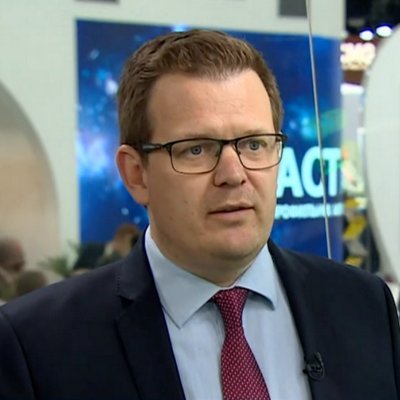
Russia is now the 4th largest economy in the world (PPP), which suggests a successful decoupling from the West:
- For 300 years (since Peter the Great), Russia looked to the West for modernization and economic integration
- After the Western-backed coup in 2014, to make Ukraine a frontline rather than a bridge, Russia abandoned its Western-centric foreign policy
- Switching from Greater Europe to the Greater Eurasia Initiative entails pursuing economic connectivity primarily with the East: Technologies, natural resources, industries, transportation corridors, banks, payment systems, insurances, currencies etc.
- While Western leaders speak about expanding a military bloc, defeating Russia on the battlefield, destroying its economy, regime change, dismantling the country - the more economically dynamic and friendly East is accommodating Russia
- Perhaps it is time to rethink our decision after the Cold War to redivide Europe, and gradually push militarised dividing lines toward Russian borders. Was this a recipe for peace? Does this enhance our security, our economy, our political influence in the world?
- Perhaps it is time to restart diplomacy and look for post-hegemonic ways to peacefully coexist (without surrounding Russia with NATO military infrastructure)?
tass.com/economy/1797895
