

The Global Commercial Space Conference & Exposition 🚀🛰️ Save The Date - Commercial Space Week 2027 January 11-14 | Orlando, FL
- Tweets1.7K
- Following799
- Followers2.8K
- Likes880





ALT Orbital resilience begins on Earth. Before a spacecraft can reinforce or reconstitute a capability in orbit, an entire system on the ground has to be ready. Launch sites. Power. Data. Communications. Cybersecurity. Utilities. Transportation. People. In Reconstituting Orbit, Karr W. "Win" Farrell Jr and Greg Wood of Amentum look at the ground infrastructure behind rapid space response and what it takes to make launch capability routine, repeatable, and resilient. Wood points to two resources that connect nearly every part of that architecture: power and data. Farrell adds another critical dimension: understanding the readiness of every asset required for a particular launch, including redundant and mandatory systems. The result is a different way of thinking about responsive space. Speed begins long before the countdown. It depends on an integrated ground architecture that is prepared to support the mission when it is needed.

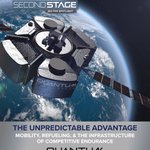
ALT Read the article for SpaceCom Second Stage! What if a spacecraft’s future was no longer determined by what it carried at launch? Mobility changes the equation. In The Unpredictable Advantage, Jim Bridenstine of Quantum Space explores how refueling, maneuverability, and in-space logistics could give spacecraft greater freedom to move, adapt, and remain useful over longer missions. It is a shift from spacecraft designed around finite resources toward an orbital environment supported by infrastructure. 🚀 Read The Unpredictable Advantage in LEO and Beyond: In-Space Infrastructure: https://spacecomsecondstage.com/the-unpredictable-advantage/ #SpaceMobility #InSpaceLogistics #SpaceComSecondStage #CommercialSpaceWeek #LEOandBeyond

ALT Read the latest SpaceCom Second Stage article! A spacecraft may occupy one point in orbit, but its operating environment extends far beyond its physical location. Signals move through the electromagnetic domain. Data becomes information. Information shapes decisions. And activity in one domain can quickly affect what happens in another. Bryan Hoke of The Aerospace Corporation takes us inside that interconnected environment in The Dynamic Domain, exploring the physical, electromagnetic, and cognitive layers that increasingly shape how missions operate in space. As space becomes more active and interconnected, infrastructure also has to support something beyond hardware: the ability to understand the environment, adapt, and act. Read The Dynamic Domain in LEO and Beyond: In-Space Infrastructure: https://spacecomsecondstage.com/the-dynamic-domain/ #SpaceDomainAwareness #LEOandBeyond #SpaceComSecondStage #CommercialSpaceWeek


ALT 🚀 The newest issue of SpaceCom Second Stage is here! LEO and Beyond: In-Space Infrastructure explores what happens when space becomes more than a destination and begins functioning as an interconnected operational environment. Through 21 exclusive interviews, leaders across commercial space and defense examine the infrastructure taking shape beyond Earth and what it means for how we move, connect, manufacture, defend, sustain, and grow in space. From the systems supporting increasingly dynamic operations in LEO to the infrastructure extending toward the Moon, this issue looks at the technologies, services, strategies, and policies building the next phase of the space economy. The next era of space will depend on what we build once we get there. 📖 Subscribe to SpaceCom Second Stage to read the articles online and receive the digital magazine directly. Digital subscriptions are open to everyone, so you can follow every issue and the conversations shaping commercial space and defense.

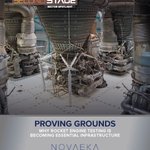
ALT The next great space infrastructure opportunity may begin on the ground. Rocket engine testing facilities support technology development, workforce training, propulsion validation, and commercial activity long before a vehicle reaches the launch pad. In the Powering Space issue of SpaceCom Second Stage, Marino Moro, CEO of Novaeka, discusses how rocket engine testing is becoming essential infrastructure and creating new opportunities for emerging spaceports. Read "Rocket Engine Testing: Why Rocket Engine Testing Is Becoming Essential Infrastructure": https://spacecomsecondstage.com/rocket-engine-testing/ #RocketTesting #PoweringSpace #SpaceComSecondStage #CommercialSpaceWeek

ALT READ THE LATEST ARTICLE - Investment needs confidence. Companies need predictability. Markets need stability. Clear policy and legal frameworks help create all three, providing pathways for emerging technologies to move from innovation to commercialization. In the Powering Space issue of SpaceCom Second Stage, Paul Stimers and Katie Inman, Partners at Holland & Knight, discuss how policy is becoming part of the foundational infrastructure supporting the commercial space economy. Read "Building the Rules for a Commercial Space Economy: How Policy Creates the Confidence to Commercialize Innovation": https://spacecomsecondstage.com/building-the-rules/ #SpacePolicy #PoweringSpace #SpaceComSecondStage #CommercialSpaceWeek

ALT READ the latest article - Breakthrough technologies create possibilities. Standards help turn them into repeatable operations. As commercial space nuclear advances toward increased launch cadence, shared standards can create common approaches for designing, testing, transporting, processing, and launching nuclear systems. In the Powering Space issue of SpaceCom Second Stage, Andrew Nelson, Chair of ASTM International's F47 Committee on Commercial Spaceflight; Alex Gilbert, Technical Lead of the ASTM F47 Space Nuclear Power Working Group; and David Schleeper, Lead for the ANS 31.1 Standard for Testing and Facilities for Space Nuclear Power and Propulsion Reactors, discuss the standards enabling commercial space nuclear. Read "From Policy to Practice: The Standards Enabling Commercial Space Nuclear": https://spacecomsecondstage.com/from-policy-to-practice/ #SpaceStandards #PoweringSpace #SpaceComSecondStage #CommercialSpaceWeek


ALT Join us! The 3rd Annual GSA International Spaceport Forum is coming to Antalya on October 4, the day before IAC 2026 begins, and time is running short to secure your place. One of the conversations you will hear: 🛰️ Commercial Destinations in Space As the International Space Station approaches retirement, what comes next? This session will explore the emerging generation of commercial destinations in low Earth orbit, the capabilities they will provide, the customers they will serve, and the growing commercial ecosystem around them. Panel: 🎙️ Jamie Morin – Vice President of Defense Strategic Space, and Executive Director of the Center for Space Policy and Strategy, The Aerospace Corporation – Moderator 🛰️ Marshall Smith – CEO, Starlab 🚀 David Zuniga – Civil Space, Blue Origin 🌎 Jared Stout – Chief Strategy Officer, Axiom Space

ALT Read the SpaceCom Second Stage article highlight. How do you keep lunar infrastructure running through two weeks of darkness? Small radioisotope energy systems could keep navigation beacons, communications networks, scientific instruments, and other critical infrastructure operating throughout the lunar night. In the Powering Space issue of SpaceCom Second Stage, Chris Tutt, Principal Investigator for Radioisotope Power Systems at Intuitive Machines, discusses how compact, long-duration power sources could help transform lunar exploration into permanent operations. Read "Infrastructure as a Service: Tomorrow - Staying There: Keeping Lunar Infrastructure Alive": https://spacecomsecondstage.com/infrastructure-as-a-service-tomorrow/ #RadioisotopePower #PoweringSpace #SpaceComSecondStage #CommercialSpaceWeek

ALT Read the SpaceCom Second Stage article highlight. The next generation of space nuclear power is building on decades of experience here on Earth. Trusted manufacturers, proven processes, resilient supply chains, specialized facilities, and skilled workforces are creating the industrial foundation needed to produce space nuclear systems at scale. In the Powering Space issue of SpaceCom Second Stage, Joel Sema, Director of the Space Nuclear Segment at BWXT, discusses how decades of terrestrial and naval nuclear expertise are accelerating the commercial space economy. Read "Terrestrial & Naval Power to Space Power: Decades of Nuclear Experience Are Accelerating the Commercial Space Economy": https://spacecomsecondstage.com/power-to-space-power/ #SpaceNuclear #PoweringSpace #SpaceComSecondStage #CommercialSpaceWeek

ALT Read the SpaceCom Second Stage article highlight. Powering an off-world base is as much an infrastructure challenge as an energy challenge. Future nuclear systems for the Moon and Mars will require precision manufacturing, specialized facilities, launch infrastructure, and engineering capable of delivering reliable power for continuous operations. In the Powering Space issue of SpaceCom Second Stage, Edward Ellegood, Aerospace Industry Analyst at Merrick & Company, explores how high-performance manufacturing is adapting to support the next generation of space nuclear power systems. Read "Our Off-World Bases Will Rely on Nuclear Power. Can We Deliver?": https://spacecomsecondstage.com/our-off-world-bases-will-rely-on-nuclear-power/ #SpaceNuclear #PoweringSpace #SpaceComSecondStage #CommercialSpaceWeek

ALT Read the SpaceCom Second Stage article highlight. In space transportation, efficiency can become a competitive advantage. Electric propulsion allows spacecraft to carry less propellant, extend operational lifetimes, support orbital servicing, and reduce the cost of moving cargo throughout Earth orbit and beyond. In the Powering Space issue of SpaceCom Second Stage, Michael VanWoerkom, Chief Executive Officer of ExoTerra Resource, now part of Voyager Technologies, discusses how electric propulsion is transforming transportation from a spacecraft system into a business strategy. Read "Electric Propulsion Economics: Efficiency as the Engine of Commercial Space": https://spacecomsecondstage.com/electric-propulsion-economics/ #ElectricPropulsion #PoweringSpace #SpaceComSecondStage #CommercialSpaceWeek

ALT Read the SpaceCom Second Stage article highlight. A nuclear space mission begins long before anyone starts counting down. Specialized facilities, trained personnel, regulatory expertise, radiation monitoring, security, and carefully planned operations are all part of preparing a nuclear payload for launch. In the Powering Space issue of SpaceCom Second Stage, David Schleeper, Nuclear Systems Engineer at RS&H, discusses how spaceports are preparing the infrastructure needed to support the future of nuclear spaceflight. Read "Before the Countdown: Preparing Spaceports for Nuclear Missions": https://spacecomsecondstage.com/before-the-countdown/ #Spaceports #PoweringSpace #SpaceComSecondStage #CommercialSpaceWeek

ALT Read the SpaceCom Second Stage article highlight. The next major energy market enabled by space could be right here on Earth. Orbital solar power could collect nearly continuous sunlight in space and wirelessly transmit clean energy to Earth, creating a commercial market while advancing technologies that could eventually support lunar bases and orbital industries. In the Powering Space issue of SpaceCom Second Stage, Martin Soltau and Sam Adlen, Co-Founders and Co-CEOs of Space Solar, discuss how orbital solar power could build a business case that benefits Earth and expands what is possible in space. Read "When Space Powers Earth: Building the Business Case for Orbital Solar Energy": https://spacecomsecondstage.com/when-space-powers-earth/ #SpaceSolar #PoweringSpace #SpaceComSecondStage #CommercialSpaceWeek

ALT Read the SpaceCom Second Stage article highlight. Generating electricity is only the beginning. Turning it into mission capability is the critical next step. Propulsion, communications, sensors, computing, and other spacecraft systems each require power delivered at the precise voltage, current, and stability they need to operate. In the Powering Space issue of SpaceCom Second Stage, Joe Pawelski, Co-Founder and Chief Technology Officer of CisLunar Industries, discusses why power processing is becoming essential infrastructure for the next generation of spacecraft and the growing cislunar economy. Read "The Missing Link: Turning Power into Mission Capability": https://spacecomsecondstage.com/the-missing-link/ #SpacePower #PoweringSpace #SpaceComSecondStage #CommercialSpaceWeek