
One-handed economist
Joined July 2014
- Tweets674
- Following211
- Followers2.5K
- Likes876




India's economy is holding up. But economists see headwinds building for FY28
cnbctv18.com/economy/india-e…
Sonal Varma retweeted

What macro factors and inflation trends are driving Nomura's expectations for RBI policy tightening?
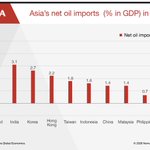
Sonal Varma, MD & Chief Economist (India and Asia ex-Japan) says that despite a relief from softening global oil prices, India faces sharp food inflation pressures.
Weak Kharif sowing and depleted reservoir levels are expected to reduce output across both Kharif and Rabi crop seasons. With headline CPI projected to reach 6% in October, persistent food inflation presents the primary challenge for the central bank - listen in
Full interview: youtu.be/eLLIVUY1uIM?si=YC36…
@sajeetkm @Nomura #Nomura #RepoRate #FoodInflation #MacroEconomy
Sonal Varma retweeted

Sonal Varma (@sonalvarma10) of Nomura discusses the outlook for rural demand and the factors that could pose challenges to it, in conversation with @Niraj_Shah.
Sonal Varma retweeted

#BSBFSI2026 | Speaking at the Business Standard BFSI Insight Summit 2026, economists called for wider credit access, productive lending, stronger domestic capital markets and sustained investment to drive growth.
business-standard.com/s/2gA8…
#BFSI #Credit #Markets #Economy #Finance | @akshita_singh_

Sonal Varma retweeted
#BSBFSI2026 | Foreign capital is not the answer to all our problems. We live in a world of increased uncertainty and instability. We don’t want to have a financial model that is dependent on foreign capital: Sonal Varma, Chief Economist, India and Asia-ex Japan, @Nomura
#SmartInvestorArena #BusinessStandard #Multibaggers #StockMarket #Investing #WealthCreation #FinancialLiteracy
youtube.com/live/ZiGMGg7yFUk

Sonal Varma retweeted

Are the RBI and MPC behind the curve on rates? Did RBI’s huge bond buying in 2025 repress yields and hurt the rupee? Hear out an excellent debate youtu.be/LQlcNxZkMbM
Can India turn AI disruption into job growth?
India has become the world’s most important test case for AI’s impact on employment. With 6 million IT workers spanning BPO operations and knowledge-intensive work in GCCs, the country faces a critical question: Can the world’s back office survive the automation wave?
A K-shaped impact
Our analysis of AI-linked hiring and layoffs shows that India has recorded net job gains. But the headline masks a K-shaped reality: routine and entry-level jobs are under pressure, while demand for experienced workers and AI skills is rising. The bigger risk is the silent decline in fresh graduate hiring.
The J-curve opportunity
Most jobs created by AI so far are directly linked to technology roles, while the broader employment spillovers have yet to materialise. This is India’s big opportunity. As AI adoption accelerates, new jobs could emerge through global AI implementation, domestic applications across sectors, and AI-enabled startups and SMEs.
A narrow policy window
Can India turn short-term disruption into medium-term job growth? Much depends on how quickly businesses and policymakers act on skills, education and AI diffusion. The window to act is narrow.
My latest opinion piece in Nikkei Asia:
asia.nikkei.com/opinion/can-…

Sonal Varma retweeted
#Opinion | This RBI cycle looks different
Core #inflation remains contained, but cyclical pressures are building from food and commodity prices. With the policy rate already close to neutral, the #RBI may need a measured recalibration to anchor expectations and improve monetary transmission, writes @SonalVarma10.
business-standard.com/s/2g9w…


Sonal Varma retweeted

Nomura has secured strong rankings and improved individual standings across multiple local currency and G3 bond categories in The Asset Benchmark Research’s 2026 Asia bond market surveys.🏆 Huge congratulations to our talented colleagues on this well-deserved recognition.


Sonal Varma retweeted
Instead of following economic trends, chip supply is now driving them, which is why we have just launched the Nomura Chip Shortage Index. The index suggests that chip shortage-driven upswing and elevated prices are likely to persist. Read more: ow.ly/4PA650ZObKi
Sonal Varma retweeted

Why is money created? Not to grease barter! That's a myth. In my new paper (summarising Mary Mellor) money is created to record and settle obligations: social first, political next, commercial last.
Paper 1 of a series on Theory of Money.
papers.ssrn.com/sol3/papers.…

Beyond the headlines, AI has added jobs in Asia—so far.
Our research finds 131,000 documented AI-related hires, compared with 61,000 job losses. But the headline numbers conceal an increasingly uneven impact:
• Job losses are concentrated in financial services and routine, lower-skilled technology roles.
• More than 90% of new jobs are in the technology sector, particularly AI training, data annotation and data operations.
• AI is creating a K-shaped labour market: entry-level hiring is weakening, while demand for experienced talent is rising.
• India is ground zero for this disruption because of its large IT and back-office sector. The net impact has been positive so far, but reduced campus recruitment represents a less visible form of displacement. @Nomura
nomuraconnects.com/focused-t…

Defence is becoming Asia’s next industrial policy
Asia is in the middle of its biggest defence build-up in a generation. While security is the primary motivating force, defence is also emerging as the region's next industrial policy in a strategic bet that military spending can seed domestic champions, open export markets and generate technology spillovers. The push for defence indigenisation should boost growth, but more spending will also demand fiscal discipline. Walking the fiscal fine line carefully will be the challenge.
businesstimes.com.sg/opinion…

3
283
Sonal Varma retweeted
How to manipulate a generation?
Recent Gen-Z discord is based on old template. Lets understand it.
rtvws.com/p/how-to-manipulat…

Sonal Varma retweeted
Applications for our 2027 Internships & Graduate Programs are now open! We are seeking students from all fields of study to join our teams in Hong Kong, Singapore, and Taiwan across Global Markets, Investment Banking, International Wealth Management and corporate functions.

Sonal Varma retweeted

OPINION: Strategic neutrality is Asia's new competitive advantage
Approach enables countries to capture wider growth opportunities in fragmenting world
s.nikkei.com/4pjlUic

Sonal Varma retweeted
Asia is at a pivotal moment. The shift to a multipolar world, China's rise, and AI are driving supply-chain realignments and fragmentation. Sonal Varma, Chief Economist, India & Asia ex-Japan, outlines 11 themes rewiring the region and their implications: ow.ly/rPEc50ZlT49.
Opinion: Strategic neutrality is Asia's new competitive advantage
Bottom-line: In this new era, strategic neutrality is not fence-sitting; it is sophisticated statecraft.
- The end of geography-neutral globalization: For decades, trade and FDI flows followed comparative advantage and cost efficiency. That world is gone. Today's supply chain shifts are driven by the imperative to diversify risk, and FDI follows geopolitical alignment.
- Asia's dual dependence dilemma: Asia cannot choose sides because the US is the largest export market while China supplies indispensable intermediate goods, and chokepoints (rare earth processing, green tech, AI energy infrastructure) exist on both sides.
- Strategic neutrality delivers measurable advantages: Singapore, Malaysia, Vietnam, and India top @Nomura’s FDI attractiveness scorecard, reflecting their ability to engage pragmatically with all major powers.
- Risks of over-alignment: Forced investment in the US risks hollowing out domestic manufacturing, forfeiting productivity gains from local production, and creating BOP pressures.
- Sector-differentiated neutrality: Maintaining neutrality is harder in strategic sectors (AI, semiconductors, advanced manufacturing), but countries can pursue differentiated strategies - aligning where necessary, while preserving autonomy elsewhere.
- Strategic implications: For Asian policymakers, geopolitical positioning must be a core component of growth strategy. Countries that master this approach will capture disproportionate shares of investment, trade, and growth opportunities.
asia.nikkei.com/opinion/stra…
@NikkeiAsia @Nomura @sharp_writing