Pinned Tweet
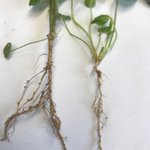
Nodules on white and red clover seedlings five weeks after sowing at Solohead. Current daily growth rate is 70 kg/ha without fertiliser N.
Solohead Farm retweeted
Solohead has garnered huge farmer interest in recent years. Implementing a zero nitrogen input strategy on grass-clover swards, Teagasc researchers have shown that the carbon and ammonia footprints of milk production can be lowered substantially. bit.ly/3LiwtyC
Solohead Farm retweeted
It's just not a good year for growth. But our clover is keeping pace with the fields that are getting normal N levels
Solohead Farm retweeted
Clover is starting to get going. It's been a long wait but we have gotten 5 grazing off this reseed from last year. A mix of red and white clover. The mix is the @SoloheadFarm1 grazing mix
Solohead Farm retweeted
Funded #PhD opportunity @SETUIreland with Dr @ImeldaAnneCasey @DeptOfSciSETU Dr James Humphreys (@Teagasc) (@SoloheadFarm1) and team for those interested in #sustainable agricultural production.
New PhD Opportunity.
Are you interested in "Using integrated weed management techniques to minimise reliance on herbicides for dock control during the renovation of multispecies grassland"?
If so, then please apply here: bit.ly/3whbrNa
The deadline for applications is 17 July 2024.
#SETU #SETUResearch #Herbicide #WeedManagement
Solohead Farm retweeted
On the Solohead Research Farm in Ireland, @teagasc Livestock Systems are testing systems of pasture-based dairy production🐄 with minimal external inputs, and as much internal circularity ♻️as possible.
🔗bit.ly/CircAgric-GHG
#agriculture #sustainability #circulareconomy

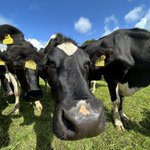
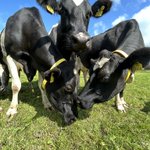
ALT Here calving is occurring, in the beginning of February, and cows are delighted to be back at pasture after eight weeks indoors. Photo: James Humphreys.

ALT The tractor in this picture is getting ready to apply cattle slurry with a band spreader on an umbilical system where the slurry is pumped directly from the house to the field. The cattle slurry was generated by the cows during the winter. “We try to spread it on the fields as early as possible to promote spring grass growth and to minimise methane emissions associated with slurry storage. Essentially, we are recycling the nutrients harvested in silage last year, and fed to cows while they were housed”, says Humphreys. Photo: James Humphreys.
Solohead Farm retweeted
Farm walk on Wed 24 April at 6.30pm at Solohead farm E34PF58. Looking at management of grass/clover swards. To book text Mary 087 2434365
Solohead Farm retweeted
I visited Solohead a couple of years ago and met with principal research officer Dr James Humphreys. A must visit for anyone (organic or otherwise) interested in growing grass with less, or no artificial fertiliser! @teagasc @TeagascOrganics
Solohead Farm retweeted
A short reprieve from the fliuch thankfully. 1200 cover on this paddock, heading into its second season of zero N
Solohead Farm retweeted
Chance to hear the latest on LoCAM dairy Low Carbon Dairying @SoloheadFarm1 @teagasc @DeptOfSciSETU @nuig funded by @agriculture_ie
Dr. James Humphreys, Principal Research Officer, Solohead Farm, Teagasc will join tomorrow's episode of #TheSignpostSeries at 9:30am to discuss the LoCAM-Dairy Project.
Register here teagasc.ie/sustainableagricu…
@TeagascEnviron @FDISkillnet @DairySusIreland
Dr. James Humphreys will feature tomorrow morning at 9.30am on The Signpost Series to discuss the LoCAM - Dairy Project.
To register click on the link below.
Dr. James Humphreys, Principal Research Officer, Solohead Farm, Teagasc will join tomorrow's episode of #TheSignpostSeries at 9:30am to discuss the LoCAM-Dairy Project.
Register here teagasc.ie/sustainableagricu…
@TeagascEnviron @FDISkillnet @DairySusIreland
In case you missed @Owen_Cashman on the Signpost Series last week you can watch the presentation below ‘Lowering the carbon and ammonia footprints of pasture based dairy production at @SoloheadFarm1’ youtu.be/hW5NmC_nJgE?si=CMK6…
Solohead Farm retweeted
Owen Cashman, Phd Student, Solohead Farm, Teagasc will join tomorrow's episode of #TheSignpostSeries at 9:30am to discuss lowering the carbon and ammonia footprints of pasture-based dairy production at Solohead Research Farm.
Register on teagasc.ie/sustainableagricu…
Covers increased by 100kg/ha in the last 9 days. The farm has a healthy green appearance; growth is kicking off. We normally get a flush of N mineralisation after frosty weather. N from slurry spread last week is kicking in. We plan to spread no fertiliser N on the farm this year
Solohead Farm retweeted
At Solohead Research Farm, we have been investigating the potential for lowering the carbon footprint of pasture-based milk production by implementing best practices. A key focus has been using clover to replace artificial fertiliser nitrogen (N). More at bit.ly/3Sm6niu
Article published by @mereWanderer in the Journal of Cleaner Production part of the @Dairy4Future project.
‘Factors influencing the carbon footprint of milk production on dairy farms with different feeding strategies in western Europe’
@ImeldaAnneCasey
sciencedirect.com/science/ar…
Solohead Farm retweeted
Congratulations to @ImeldaAnneCasey on this award! Delighted to be involved in a project that is a culmination of years of previous research involving @DeptOfSciSETU and @SoloheadFarm1
farmersjournal.ie/clover-res…
Growth at Solohead was 61 this week. Cows are going into heavy covers but clean outs are excellent. Most of the paddocks are close to 50% clover. Cows have no trouble grazing down to a low residual.