

Dealing with all aspects of children's social development as seen from a psychological stance
Joined July 2015
- Tweets368
- Following331
- Followers625
- Likes76




We've decided to stop posting research highlights here and moved to Bluesky Follow us at @socialdevelopment.bsky.social
*account will be left dormant rather than deleted
New work by Kelly Lynn Mulvey and colleagues identified four different latent classes of STEM career interests and perceptions of barriers. These classes differ in mindset and feelings of belonging.
Read now in Social Development
onlinelibrary.wiley.com/doi/…

Out now in Social Development 🥳
New paper by @VirnalizJ shows that African American parents offer a range of suggestions to help youth think about challenging peer situations in different ways.
onlinelibrary.wiley.com/doi/…

New paper by Lüken and colleagues shows that preschoolers’ strategy flexibility in emotion regulation increases with age. Strategy flexibility is furthermore associated with effective emotion regulation and peer integration.
Read open access
onlinelibrary.wiley.com/doi/…

Want to know how imaginary athletes—persons/beings imagined in the context of athletics—serve developmental roles in middle childhood? We've got this covered in Social Development:
onlinelibrary.wiley.com/doi/…

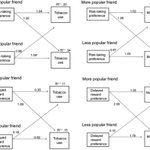
Having friends with tertiary-educated parents positively affects the adjustment to grammar school preferences, with weak evidence of deviation from peers’ preferences.
Read more in this new Social Development paper, available open access
onlinelibrary.wiley.com/doi/…

New paper alert💥
Sem and colleagues show that language style matching as a novel index of parent-child behavioral synchrony that predicts inhibited children’s sociability.
onlinelibrary.wiley.com/doi/…
@semkathy @NilaShakiba @GeriHatrick @LindsayDruskin @ChronisAndrea @nickjameswagner
Memba and colleagues show that traditional and affective executive functioning skills uniquely predict academic and social outcomes in early childhood.
onlinelibrary.wiley.com/doi/…

New paper alert!
Research by Yoon et al. shows that Black fathering in the U.S is a diverse experience with much heterogeneity and that children of highly involved Black fathers exhibit optimal social-emotional functioning.
onlinelibrary.wiley.com/doi/…

New research by Arts and colleagues demonstrates that personalized interactive virtual reality training significantly improved social skills in adolescents with Developmental Language Disorder.
onlinelibrary.wiley.com/doi/…

Eiteljoerge et al show that infants aged between 6-15 months followed the gaze of an adult, a 5-year-old child, and an 11-month-old infant. Their gaze-following was accurate and swift with all three social partners.
@Sar_Eit @nivedita_mani @hyogweon
onlinelibrary.wiley.com/doi/…

New article by Forbes et al shows that or boys, more frequent cross-group play with girls was associated with significantly more positive beliefs about girls' STEM abilities.
onlinelibrary.wiley.com/doi/…

Mellado demonstrates that adolescents who experienced greater fear of wildfire showed greater post-traumatic stress, depression and anxiety but also that those whose parents were supporting reported less post-disaster maladjustment.
onlinelibrary.wiley.com/doi/…

In a vignette-based design, Kim & Lobue asked whether children recognize inequalities in resources and effects of these on subsequent outcomes and found that only the oldest children consider effort when making decisions about resource allocation.
onlinelibrary.wiley.com/doi/…

Salomon and colleagues show that the relationship between risky technology use and negative outcomes is strongest in adolescents low in self-perceived gender typicality.
onlinelibrary.wiley.com/doi/…

In a study on the role of parental reflective functioning on children’s theory of mind and emotion regulation Misailidi et al found that parental prementalizing modes and curiosity about the child’s mental states uniquely influence children’s ToM and ER.
onlinelibrary.wiley.com/doi/…

Paper by Kornienko et al. shows that students who create social change tend to have more friends and are well-regarded in their live-in social groups, while those who engage in sociopolitical actions are less involved with their live-in peers.
onlinelibrary.wiley.com/doi/…

New paper showing that like adults, 5–8yr olds attribute more responsibilities and entitlements to leaders relative to non-leaders but develop a more sophisticated understanding of the responsibilities and entitlements associated with leadership.
onlinelibrary.wiley.com/doi/…

Article alert🤩
Provost et al show that 5- to 7-year-old American children view ethnicity as less informative than gender when making inferences about new individuals.
Early online at Social Development
onlinelibrary.wiley.com/doi/…
New from @DrJBoseovski and colleagues!
Chinese children judged positive behavior as intentional but were unsystematic in their judgments of negative behavior, suggesting connections between trait and mental state reasoning.
Available open access
onlinelibrary.wiley.com/doi/…