

SEBI RIA No INA000007881| MissioN SMILE | Stock SIP| Stock Advisory| Premium Offerings: https://xitter.cf/t.co/xhGNuQIbSV
Ahmedabad/ Bangalore/Mumbai
Joined May 2016
- Tweets27.3K
- Following707
- Followers48.3K
- Likes29.5K





Pinned Tweet
India’s next big power story isn’t solar
it’s NUCLEAR ⚛️
We’re entering a multi-decade capex cycle — and almost no one is talking about it yet.
🇮🇳 100 GW target by 2047 (vs ~8 GW today)
💰 ~₹19 lakh crore investment opportunity
⚡ AI + EVs = 24x7 baseload demand
Renewables are growing fast — but they’re intermittent.
Nuclear = low carbon + reliable + scalable
And now, the real inflection 👇
* SHANTI Act 2025 → private sector entry
* Liability reforms → supplier ecosystem unlock
* SMR push + ₹20,000 Cr allocation
* Execution pipeline finally building up
This is a high-entry-barrier sector
→ 7+ year approvals
→ Limited qualified vendors
→ Deep, durable moats
Which means:
The real winners may be a handful of suppliers most investors aren’t tracking.
From EPC to critical components —
this is a full ecosystem play.
We’ve decoded it all:
Value chain. Policy shift. Key beneficiaries. Risks.
👉 Full 38-page detailed report covering value chain, players & risks:
missionsmile.smartsyncservic…


5-Minute Stock Idea
Kusumgar Ltd.
Our team puts in a lot of efforts to read ARs, ppts, concall transcripts & credit rating reports to write 1-page crisp report for our community.
If you find value, plz "Retweet" to help us reach out and educate max investors.🙏
Disclaimer: This content is intended solely for educational purposes and does not constitute a recommendation.

Deep research, management-call insights & confidence in management quality gave us the conviction to add to our holding, even near the stock’s all-time high and at a peak in business performance.
The promoters’ recent buying further reinforced our belief in the company’s long-term prospects.
Notably, the stock has continued to make all-time highs despite volatile and challenging market conditions.
SEBI Disclosure: Partners and clients hold the stock. It was recommended to our HNI and advisory clients in January 2026, with further additions in March 2026. Our analysis may therefore be biased. Please conduct your own due diligence.


Hard work, thorough research & decisive action during uncertain times reward long-term investors.
Since our recommendation & the additional buy during the March 2026 correction, the stock has gained over 50% in just under six month
Reading the Jan 2026 concall showed a business in the midst of transformation & the results are now becoming evident.


SEBI Disclosure: This content is intended solely for educational purposes and does not constitute a recommendation.
Blockbuster Q2FY27 Results from Steel Strips Wheels
Stock up 15% post results
Q2FY27 Highlights:
🔹 Revenue: ₹1,930 Cr vs ₹1,201 Cr YoY | ₹1,510 Cr QoQ
🔹 EBITDA: ₹236 Cr vs ₹112 Cr YoY | ₹163 Cr QoQ
🔹 PBT: ₹156 Cr vs ₹48 Cr YoY | ₹93 Cr QoQ
🔹 PAT: ₹117 Cr vs ₹35.5 Cr YoY | ₹69 Cr QoQ
Strong sequential momentum too:
• PBT up ~67% QoQ
• PAT up ~68% QoQ
Operating cash flow stood at ₹122 Cr for H1FY27.


Smart Sync Investment Advisory Services retweeted
True long-term wealth isn’t only money. It’s health, happiness and good memories - pillars of holistic well-being.
Markets may correct/ crash, but financial wealth can be rebuilt. Lost health & broken habits are far harder to earn back.
Protect what compounds silently.
1/2
Enjoyed building long-term wealth in health, happiness & memories while trekking Hatgarh Fort.
Because true wealth adds up quietly- a strong body, a calm mind, beautiful views and the joy of showing up everyday.
Every step uphill reminds the best things in life are rarely instant. They are built one early morning, one effort, one decision at a time.
(Hatgarh Fort sits near Saputara on the Maharashtra–Gujarat border and stands at roughly 3,600 feet)
7/7
The Biggest Shift Is in the Power Sector
BloombergNEF estimates that shifting from coal to cleaner power sources accounts for 60% of emissions abatement by 2050 under its Economic Transition Scenario, relative to a no-transition pathway.
The next phase of the energy transition will depend on three things:
→ Cheaper clean technologies
→ Massive infrastructure investment
→ Reliable, flexible electricity systems
The big takeaway: The energy transition is no longer just about replacing fossil fuels. It’s about rebuilding the global energy system.
And the winners will be determined by cost, scale, technology and execution.

6/7
The Transition Needs Trillions of Dollars
Global energy-transition investment reached a record $2.3 trillion in 2025.
But under BloombergNEF’s Net Zero Scenario, annual clean-energy investment needs to reach:
• $4.8 trillion during 2026–2030
• $7.7 trillion during 2031–2035
Renewables alone won’t be enough. Capital must also flow into storage, grids, electrified transport and other clean technologies.
5/7
AI Is Becoming an Electricity Story
Global data-centre electricity consumption is projected to more than triple by 2035, reaching 5.4% of global electricity demand.
Meanwhile, global electricity demand could rise:
• 29% by 2035
• 69% by 2050
AI, EVs, air conditioning and industrial electrification are reshaping power demand.
The challenge? Supplying reliable electricity without undermining emissions goals.
4/7
Battery Storage Could Grow 17x
Global stationary battery storage capacity:
• 2025: 223 GW
• 2050 projection: 3.8 TW
Batteries can store excess solar power and release it when demand rises.
The opportunity extends beyond batteries to grid infrastructure, energy management and longer-duration storage.

3/7
Solar Could Become the World’s Largest Power Source by 2032
Annual solar installations surged from 75 GW in 2016 to 655 GW in 2025.
BloombergNEF expects solar to become the largest source of electricity generation globally by 2032.
Falling costs and manufacturing overcapacity are accelerating adoption.
But there’s a catch: solar needs storage and grid flexibility to deliver reliable power.

2/7
Oil and Gas Are Moving in Opposite Directions
Under BloombergNEF’s Economic Transition Scenario:
• Oil demand peaks around 2029.
• Gas demand continues rising, driven by power generation, data centres and industry.
EV adoption is changing oil demand, while rising electricity consumption supports gas.

1/7
Energy Security Is Driving the Transition
Geopolitical conflicts have exposed the risks of relying on imported fossil fuels.
Solar, batteries and EVs offer countries a way to reduce exposure to volatile fuel prices and improve energy independence.
The energy transition is becoming an energy security strategy, not just a climate strategy.
The global energy transition is entering a new phase. And it’s bigger than just climate change.
BloombergNEF’s New Energy Outlook 2026 reveals 7 trends that could reshape the global energy industry through 2050.
Here’s what matters 🧵👇

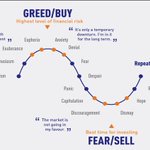
Human behavior drives stock market swings.
As Warren Buffett highlighted in his 1986 letter: “Occasional outbreaks of fear and greed will forever occur in the investment community.”
He famously advised, “Be fearful when others are greedy, and greedy when others are fearful.”
This wisdom, echoed in his chat with Jeff Bezos—where he quipped, “No one wants to get rich slow”—underscores the power of patience.
While greed fuels bull runs and fear triggers correction & crashes, staying calm and disciplined can turn corrections into opportunities.
Only a few long-term, patient investors profit from such opportunities.
Image source: @MiraeAsset_IN

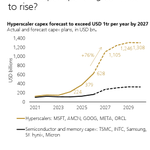
AI spending is booming, but how long can the capex cycle last?
Microsoft, Amazon, Google and Meta are ramping up investments in AI infrastructure, with hyperscaler capex projected to exceed $1 trillion annually by 2027.
But semiconductor capacity takes time to build. If new supply comes online just as AI spending growth slows, the industry could face oversupply and pressure on returns in 2028–29.
The key for investors: Track both AI spending and capacity additions. Today's shortage could become tomorrow's challenge.

Disclosure: This content is for educational and informational purposes only and does not constitute investment advice or a recommendation to buy, sell or hold any security.
10/n
How should investors evaluate the cooling opportunity?
Different companies offer different types of exposure to India's cooling ecosystem.
🔹 Voltas: Consumer and commercial cooling, alongside the proposed compressor venture.
🔹 Blue Star: Room ACs, commercial cooling, refrigeration and data-centre MEP projects.
🔹 Amber Enterprises: AC manufacturing and components within a broader electronics and mobility group.
🔹 Kirloskar Pneumatic: Industrial refrigeration and compression capabilities, alongside a provisionally selected AC-component investment.
These are examples of different business models - not interchangeable pure plays or buy recommendations.
For each company, I would track:
→ Capability: What does it actually manufacture or supply?
→ Orders: Is demand translating into confirmed business?
→ Execution: Are projects and new facilities progressing as planned?
→ Utilisation: Is additional capacity being productively used?
→ Margins: Is growth translating into better profitability?
→ Cash flow: Are earnings converting into cash?
→ ROCE: Are returns adequate relative to the capital invested?
India's cooling opportunity is not merely about selling more ACs. It also involves manufacturing more components, engineering larger cooling systems and maintaining them over time.
Follow the value captured - not just the demand forecast or capacity announced.
9/n
The opportunity continues after installation
Cooling equipment can generate business long after the initial sale.
Think of three distinct revenue streams:
🔹 Equipment: Selling the machine.
🔹 Projects: Designing and installing the system.
🔹 Services: Maintaining the equipment and keeping it operational.
For example, Kirloskar Pneumatic offers genuine compressor spares and related support.
Maintenance, repairs and replacement parts can create repeat business. However, an installed base alone does not guarantee high-margin recurring revenue.
Investors should examine:
→ Disclosed service revenue.
→ Maintenance-contract renewals and customer retention.
→ Service margins.
→ Project receivables and collection periods.
→ Warranty and performance obligations.
The objective is to determine whether after-sales services provide predictable, profitable cash flows or simply add another operational responsibility.
Recurring revenue is valuable when it is demonstrably repeatable, profitable and cash-generative.
8/n
Strong demand does not guarantee strong margins
Blue Star's Q1 FY27 results provide a useful reality check.
🔹 Revenue growth: 13.3%.
🔹 Operating EBITDA margin: 5.2%, compared with 6.7% a year earlier.
Despite revenue growth, operating margins declined.
Management cited rising input costs, a short summer window, old room-AC inventory in the trade and difficulty achieving the desired price increases.
This shows why investors need to look beyond sales growth.
Key indicators to track include:
→ Pricing power and ability to pass on costs.
→ Product mix and inventory quality.
→ Customer acquisition costs.
→ Operating margins.
→ Working capital and cash conversion.
A company can sell more products yet earn less profit per rupee of revenue if costs rise faster than selling prices.
In a competitive market, revenue growth matters—but margins and cash flow determine the quality of that growth.