

Navigating your career compass toward success | Smart career tips and insights to fuel your professional development and growth
New Hampshire, USA
Joined November 2008
- Tweets9.9K
- Following190
- Followers1.6K
- Likes8



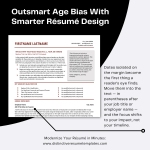

You have 25 years of experience.
You've navigated recessions. Rebuilt strategies after market shifts. Managed teams through crisis. Made high-stakes decisions with incomplete information.
You know things that a 28-year-old candidate simply cannot know yet.
And your resume might be burying all of it.
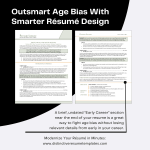
Not because you wrote it poorly. Because the template you're using was designed for a linear career path — not for someone with your depth. It emphasizes timeline when it should emphasize judgment. It foregrounds dates when it should foreground impact.
The professionals over 50 who cut through aren't hiding their experience. They're presenting it as what it actually is: current, relevant, and forward-facing.
There's a specific way to do that — design choices, content strategy, template structure. I broke it down here:
distinctiveresumetemplates.c…
#ResumeTemplates #ATSResumes #ResumeDesign #ResumeFormats #ResumeHelp #DistinctiveResumeTemplates

If you’re hearing nothing after you apply, don’t jump to blaming your resume—or yourself.
You might be applying to ghost job posts. 👻
These are listings that look legit but aren’t being actively filled. And they’re more common than you think:
20% to 30% of job postings fall into this category.
They drain your time.
They distort the job market.
They mess with your confidence.
And while we can’t eliminate ghost jobs, we can learn to spot them—and focus on the opportunities that matter.
This post breaks it all down:
► The 5 red flags of a likely ghost job
► Why employers post roles they’re not hiring for
► How to shift your search strategy for traction and interviews
If you want to stop applying to jobs that go nowhere—and start hearing back—start here.
Full article →
distinctiveresumetemplates.c…

There's a pattern I keep seeing in online job-search conversations.
Experienced professionals with strong backgrounds are applying to roles they're clearly qualified for — and hearing nothing back. Not even a rejection email.
The natural response? Self-doubt. "Is my resume not good enough? Am I not as competitive as I thought?"
Here's what most people don't realize: It may not be either of those things.
Research shows that somewhere between 20-40% of job postings online aren't connected to active hiring.
Why do companies do this?
→ They've already filled the role internally but HR requires a public posting
→ They're building a "talent pipeline" for future (maybe) needs
→ Hiring is frozen due to budget cuts, but they want to appear like they're growing
→ They're testing the market to see what talent is available at what price
→ Company policy requires them to post, even when there's no intention to hire
From your perspective as a job seeker, these postings are nearly impossible to identify. They live on reputable job boards. They collect your carefully tailored resume and cover letter. And then... silence.
So how do you protect your time and sanity?
I wrote a comprehensive guide to what ghost job postings are, why they exist, and how to build a better job-search strategy. Here is the link to the full article: distinctiveweb.com/job-searc…

You spent two hours customizing your resume.
You researched the company. You tailored every bullet point. You wrote a thoughtful cover letter explaining why you're the perfect fit.
You hit submit.
And then... nothing. Not even an automated rejection.
Companies post these for all kinds of reasons: internal compliance, building talent pipelines, maintaining the appearance of growth during hiring freezes, or simply because the budget for the role hasn't been approved yet (and may never be).
The result?
Qualified candidates spending hours applying to jobs that will never result in an interview. And then blaming themselves when the silence becomes deafening.
So what do you do when you can't trust that job postings are real?
You can't eliminate ghost jobs from your search. But you CAN change your strategy to minimize wasted effort and protect your confidence.
👉Want to know more? I wrote an in-depth guide to understanding ghost jobs, why companies post them, and how to navigate the modern job search without losing your mind. Here is the link to the full article: distinctiveweb.com/job-searc…

Even a strong resume may not be strong enough anymore.
For years, we’ve told job seekers to:
✔ Quantify results
✔ Show impact
✔ Move beyond responsibilities
That advice still matters.
But here’s what’s changed:
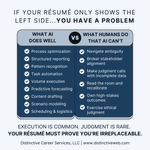
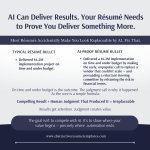
AI is exceptionally good at executing structured tasks and producing measurable results within defined systems.
If your resume only shows process optimization, reporting improvements, or efficiency gains — it may unintentionally position you as automatable.
The new question hiring managers are asking (whether consciously or not):
“Did this require human judgment?”
If your resume doesn’t show how you think — not just what you did — you’re competing on execution instead of strategy.
I break down how to reposition your resume so it highlights judgment, influence, and decision-making under pressure here:
👉 distinctiveweb.com/resume-wr…
#ResumeWriting #ResumeTips #ResumeHelp #ResumeWriters

The details hiring managers notice — often without consciously realizing it:
Whether your experience is clearly grouped and easy to follow.
Whether the document feels complete — or like something’s missing.
Whether it’s free of errors, inconsistencies, and visual noise.
None of that feels like “design” in the conventional sense.
But it is.
And collectively, those cues drive fast, instinctive judgments about whether you’re organized, thorough, and dependable.
Resume design isn’t about making your document look impressive.
It’s about eliminating every small reason for a recruiter to hesitate.
Because hesitation, at the screening stage, is costly.
If you want to understand how these subtle signals shape hiring decisions — and how to audit your own resume with a sharper lens — I unpack it here:
distinctiveresumetemplates.c…
#ResumeTemplates #ATSResumes #ResumeDesign #ResumeFormats #ResumeHelp #DistinctiveResumeTemplates

AI + Professional Resume Templates = A powerful support system.
Now, let me be clear: AI on its own is never enough. And it can never replace the expertise of a professional resume writer.
But when used wisely, AI can help job seekers who are trying to DIY it create something far stronger—and closer to what a professional might produce.
Here’s why:
❌ On its own, AI often produces resumes filled with clichés and generic phrasing.
❌ On their own, templates can feel like a blank shell if you don’t know what to write.
But together? You get speed and structure. Efficiency and authenticity.
Recruiters don’t blacklist candidates for using AI. They pass over candidates who misuse it.
That’s why I created a framework for combining AI with professional templates—to help job seekers:
✅ Avoid the pitfalls of generic AI content
✅ Create resumes that perform in ATS and resonate with recruiters
✅ Tell their story in their authentic voice
I dive deep into the risks, recruiter insights, and practical strategies here: distinctiveresumetemplates.c…
Your resume should sound like you, not a chatbot. This guide shows you how to make that happen.

Networking has always been hard for me. As an introvert, I used to dread the forced smiles, the awkward small talk, and the energy drain that came after every event.
Over the years, I’ve learned that many of the job seekers I work with—introverts like me—feel the exact same way. The problem? Networking is still one of the most powerful ways to land opportunities. Research shows that ~80% of jobs are filled through connections.
That left me (and my clients) with a tough question: how do we make networking feel less overwhelming and more authentic?
The answer, especially today, is AI. AI tools can:
✨ Draft emails that sound like you (so you’re not stuck staring at a blank screen).
✨ Help you find virtual events where you can connect without the crowds.
✨ Suggest ways to engage on LinkedIn without overthinking every word.
For introverts, that’s a game changer. Networking doesn’t have to mean pretending to be an extrovert—it can mean leaning into your strengths, with AI as your support.
👉 I put together a guide with my best strategies, including prompts you can copy and paste: distinctiveweb.com/networkin…

Most career changers make the same resume mistake:
They list what they’ve accomplished (good)…
But they stop there (not enough).
Here’s why that’s a problem:
In a linear career, “Increased sales by 40%” speaks for itself. But in a career change? That bullet needs translation.
A hiring manager sees “retail achievement” and thinks: “Cool. But how does this help in a project management role?”
If they have to work to connect the dots—they won’t. They’ll just move to the next resume.
That’s why I created the C.A.R.E. formula—a 4-part framework made specifically for career changers:
C – Challenge
A – Action
R – Result
E – Evolution (the transferable skill or insight that prepares you for the new role)
That last piece—Evolution—is the game-changer.
Here’s what it looks like in action:
Before (C.A.R. only):
"Implemented new scheduling system, reducing understaffing by 40% during peak season."
After (C.A.R.E.):
"Led overhaul of retail scheduling system to address inconsistent staffing, using sales data and employee input to optimize shifts, reducing understaffing by 40%—showcasing operational planning skills and proven abilities to coordinate project timelines and deliverables.
The first is an accomplishment.
The second is a bridge.
That’s the power of C.A.R.E.—you’re not asking them to imagine how you fit. You’re showing them you already do.
I just published a full breakdown of how to use this framework—step by step.
It includes:
→ Why most resume advice fails career changers
→ How to identify your “Evolution” moments
→ Real examples from retail, teaching, and military backgrounds
→ A repeatable system you can apply today
If you’re navigating a career change, this guide will shift how you approach resume writing. You can learn more about it, here: distinctiveresumetemplates.c…

Before anyone reads a single word on your resume…
They’ve already judged you.
Not your experience.
Not your achievements.
Your design.
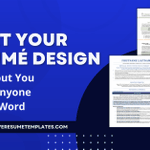
Most job seekers think resume design is about aesthetics. It’s not. It’s about perception.
Research shows recruiters infer personality traits from layout, structure, and formatting choices — and those impressions influence hireability decisions in the first few seconds.
Your resume is doing psychological work before your qualifications even get a chance.
I wrote about it in this article on what your resume design is silently communicating — and how to make sure it’s working for you, not against you.
Read it here: distinctiveresumetemplates.c…
#ResumeTemplates #ATSResumes #ResumeDesign #ResumeFormats #ResumeHelp #DistinctiveResumeTemplates

Most resumes never get read.
They get scanned—and skipped.
The truth is, recruiters spend 6–8 seconds scanning before deciding if you’re a yes or a no.
(That’s not a lot of time to make an impression.)
⚠️ And if your resume layout doesn’t guide their eye to the right details?
Even your best achievements can get missed.
👉 That’s why your format matters nearly as much as your content.
In this quick video, I’ll show you:
✅ What most resumes get wrong
✅ How design influences perception
✅ What it takes to pass the “6-second test”
👇 Want the template featured in this post?
Grab it here: distinctiveresumetemplates.c…
Your resume is fighting a battle you might not realize it's fighting.
Age bias in hiring is real. Documented. Measurable. And your resume is either actively countering it — or accidentally reinforcing it.
Not because of your years of experience. Not because of your graduation dates.
Because of design choices most professionals never think about.
The font. Where you place dates. The email address in your header. Whether your skills section signals current or obsolete. The difference between an "Objective" statement and a forward-facing summary.
None of these feel significant on their own. All of them register.
I wrote about the specific design moves — template structure, content strategy, the details that shift a reader's perception before they know it's happening.
distinctiveresumetemplates.c…
Worth a read if you're navigating the job market at 50+.
#ResumeTemplates #ATSResumes #ResumeDesign #ResumeFormats #ResumeHelp #DistinctiveResumeTemplates

Every resume tells a story.
The real question is: Is it telling the right story—and is anyone actually seeing it?
Here’s what most job seekers don’t realize:
It’s not enough to have strong experience.
If your resume doesn’t highlight that experience clearly, it’s easy to get overlooked—no matter how qualified you are.
And no, I’m not just talking about content. I’m talking about structure, layout, and visual flow.
Because design isn’t fluff. It’s function.
📌 Bolded section headers signal your career themes
📌 White space draws the eye to your best wins
📌 Visual hierarchy makes sure the right points land first
Without those elements? Even your best achievements can get buried under bullets or lost in dense paragraphs.
That’s why I created Distinctive Resume Templates—not just to make resumes look good, but to make your value unmissable.
Each design is built for recruiter eye-path, with formatting that supports clear, compelling storytelling.
👉 Curious what that looks like in action?
Check it out: distinctiveresumetemplates.c…
Your story deserves to be seen—and remembered.

Are you just listing what you did on your resume…
Or are you showing the decisions, judgment, and leadership behind the results?
In today’s AI-driven market, that distinction matters.
If your resume reads like structured process + outcome, it may sound automatable.
This article explains how to rewrite your resume bullets to highlight the human thinking AI can’t replicate:
👉 distinctiveresumetemplates.c…
#ResumeTemplates #ATSResumes #ResumeDesign #ResumeFormats #ResumeHelp #DistinctiveResumeTemplates

Most introverts think the best way to conserve energy is to avoid networking altogether. But here’s the truth: avoiding networking doesn’t just protect your energy—it limits your opportunities.
Networking isn’t about being the loudest in the room. It’s about creating real, thoughtful connections. And AI can make that process so much easier. From crafting professional yet authentic emails, to curating virtual events that actually matter, to suggesting LinkedIn comments that build visibility—AI gives introverts the tools to network on their own terms.
If you’re an introvert who feels overwhelmed by “traditional networking,” I encourage you to try just one AI-assisted outreach this week. Draft a short LinkedIn connection request with AI, personalize it, and send it. That single action could be the start of an opportunity you didn’t know was possible.
I share the full 30-day roadmap for introvert-friendly networking in my article: distinctiveweb.com/networkin…
Your resume is fighting a battle you might not realize it's fighting.
Age bias in hiring is real. Documented. Measurable. And your resume is either actively countering it — or accidentally reinforcing it.
Not because of your years of experience. Not because of your graduation dates.
Because of design choices most professionals never think about.
The font. Where you place dates. The email address in your header. Whether your skills section signals current or obsolete. The difference between an "Objective" statement and a forward-facing summary.
None of these feel significant on their own. All of them register.
I wrote about the specific design moves — template structure, content strategy, the details that shift a reader's perception before they know it's happening.
distinctiveresumetemplates.c…
Worth a read if you're navigating the job market at 50+.
#ResumeTemplates #ATSResumes #ResumeDesign #ResumeFormats #ResumeHelp #DistinctiveResumeTemplates

"I'm too old to start over."
"My experience doesn't translate."
"AI is going to take my job anyway."
I hear these fears constantly from professionals who see their roles evolving—or disappearing.
And I get it. Change is terrifying.
But here's what I've learned from helping thousands of people through career transitions:
The ones who succeed aren't the ones with the perfect plan. They're the ones who shift from asking "What's happening TO me?" to "What am I going to do ABOUT it?"
They stop seeing themselves as employees and start seeing themselves as the CEO of their own Business of One.
That mindset shift? It changes everything.
Because suddenly you're not a victim of automation—you're a strategist who can learn to work alongside it.
You're not "too experienced" for a new field—you're bringing valuable perspective that entry-level candidates can't match.
Your resume isn't a list of old jobs—it's marketing collateral that tells the story of who you're BECOMING, not just who you've been.
I developed a detailed guide that walks through exactly how to make this shift.
It's not about having all the answers. It's about being willing to ask better questions.
Your competitive advantage isn't knowing everything. It's being willing to learn anything.
Read the full roadmap: distinctiveweb.com/resume-wr…

Board seats aren’t typically posted. They’re networked.
Most appointments happen behind closed doors — through trusted introductions, referrals from current directors, and conversations with board recruiters.
The executives who land board positions understand this reality:
They don't wait for postings—they cultivate relationships with current directors, governance experts, and board search consultants long before they need them.
They show up consistently in the right circles: governance conferences, industry leadership events, and advisory roles that put them on the radar of nominating committees.
They build their reputation as strategic thinkers and trusted advisors, not just operational executors.
The shift from "job seeker" to "relationship builder" changes everything:
Instead of chasing opportunities → You become the opportunity
Instead of proving your qualifications → Others advocate for your value
Instead of competing with hundreds → You're having private conversations
The networking approach isn't just more effective—it's how the board ecosystem actually works.
That’s why one of the most practical tools in my free playbook — 95+ AI Prompts for Board-Ready Executives — is a prompt to help you map out a strategic networking plan for board appointments.
It helps you identify who you need to meet, where to show up, and how to engage authentically.
📌 Link to download: distinctiveresumetemplates.c…

If you’re hearing nothing after you apply, don’t jump to blaming your resume—or yourself.
You might be applying to ghost job posts. 👻
These are listings that look legit but aren’t being actively filled. And they’re more common than you think:
20% to 30% of job postings fall into this category.
They drain your time.
They distort the job market.
They mess with your confidence.
And while we can’t eliminate ghost jobs, we can learn to spot them—and focus on the opportunities that matter.
This post breaks it all down:
► The 5 red flags of a likely ghost job
► Why employers post roles they’re not hiring for
► How to shift your search strategy for traction and interviews
If you want to stop applying to jobs that go nowhere—and start hearing back—start here.
Full article →
distinctiveresumetemplates.c…
AI + Professional Resume Templates = A powerful support system.
Now, let me be clear: AI on its own is never enough. And it can never replace the expertise of a professional resume writer.
But when used wisely, AI can help job seekers who are trying to DIY it create something far stronger—and closer to what a professional might produce.
Here’s why:
❌ On its own, AI often produces resumes filled with clichés and generic phrasing.
❌ On their own, templates can feel like a blank shell if you don’t know what to write.
But together? You get speed and structure. Efficiency and authenticity.
Recruiters don’t blacklist candidates for using AI. They pass over candidates who misuse it.
That’s why I created a framework for combining AI with professional templates—to help job seekers:
✅ Avoid the pitfalls of generic AI content
✅ Create resumes that perform in ATS and resonate with recruiters
✅ Tell their story in their authentic voice
I dive deep into the risks, recruiter insights, and practical strategies here: distinctiveresumetemplates.c…
Your resume should sound like you, not a chatbot. This guide shows you how to make that happen.