

San Francisco Bay Area
Joined February 2022
- Tweets845
- Following6
- Followers9.3K
- Likes854





Our computer-use agent @sai_borg just beat Opus 5 and GPT-5.6 Sol on OSWorld 2.0.
Sai scored 73% on the CUA benchmark where each complex task takes a skilled human over an hour to execute.
And Sai did it at about 2/3 the cost per task of Opus and GPT 💸
The unlock is our neurosymbolic framework that pairs the exploratory power of neural networks with the logic of symbolic code, resulting in reliability and cost saving.
Read the full report: simular.ai/articles/sai-tops…

Agent S4 is open source, so you can try it yourself from our GitHub.
github.com/simular-ai/agent-…

The full paper, Evolving Agent Interfaces, is up on arXiv.
arxiv.org/abs/2610.28601

Give the Sai API a try. It's the autonomous computer API, and every computer-use agent you build gets its own cloud computer.
platform.simular.ai/


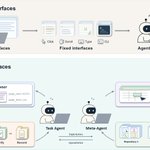
Each iteration, the meta-agent selects a parent repository, mutates it or crosses it with a second one, scores the result and adds the descendant back to the population.
It learns only from synthetic tasks that carry no success labels and never sees a benchmark task.


Is the model the main factor for a computer-use agent?
We think the interface matters a lot more.
Today, computer-use agents are fundamentally bottlenecked by fixed, human-designed interfaces: raw clicks, scrolls, typing, and basic CLIs built for human eyes and fingers, not autonomous agents.

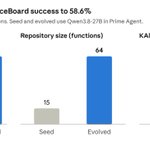
Our agent scientist, Agent S4, just got an open 27B model to beat GPT-5.5 and Claude Opus 4.8 on OSWorld V2, with the model's weights left exactly as they were.
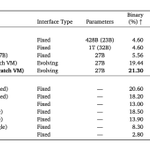
With the interfaces S4 evolved, Qwen3.8-27B completes 21.3% of the 108 tasks, the highest binary success of any open-source computer-use agent and 3.8x the same model with fixed interfaces.
It costs $1.10 per task, against $25.50 for GPT-5.5 and $72.40 for Opus 4.8 💸
Full write-up: simular.ai/articles/agent-s4…
At the @aiDotEngineer World’s Fair, our CEO @angli_ai explored a future where one person could have a fleet of autonomous computers.
That's what we are building with @sai_borg. your robosecretary. It starts with work you can reliably delegate to one computer. Then you start imagining what you could do with 10. Then 100. And Sai manages them for you.
Build the thing you keep saving for someday
#simular
Enterprises and individuals increasingly find computer-use agents powerful. But the cost of scaling usage weighs on them.
That's because these agents call on LLMs to reason every step and repeat. Our CTO Jiachen Yang told @miyadavid at @ISMG_News how we use neuro-symbolic to bring costs down:
The agent learns a workflow once, then repeats it with code, so it doesn't run a frontier model on every step.
On OSWorld, our @sai_borg was 217x cheaper than Opus alone, with a 72% success rate. Savings start after the third run, and Sai checks before each action.
As Jiachen points out, a single LinkedIn recruiting task costs at least 50 cents with today's best models. "If a recruiter wants to do it for thousands of people, I'm pretty sure at some point it will be unjustifiable in terms of the cost."
The full story here 👇f.mtr.cool/xyrmkelccm

Ever wondered what goes into making @sai_borg more reliable?
@Richard_simular from @SimularAI’s research team was invited to BayLearn 2026. His presentation explored how computer agents can reuse successful steps and handle repetitive tasks more consistently.
For more on how agents learn reusable workflows, read the paper Richard coauthored: arxiv.org/abs/2609.36927
Thanks to Santa Clara University for hosting, and to San José State University, UC Berkeley, and UC Santa Cruz for co-organizing the event 👏
#BayLearn2026 #AIResearch

Simular retweeted

@Richard_simular presenting neuro-symbolic computer use agents at @BayLearnOrg today!


This is what our intern Qingni spent this summer solving with our head of research @xwang_lk
The team proposes LEASH, a training-free framework that unleashes the strong agent only when the weak agent's latent uncertainty signals it is needed, and keeps it on a leash afterward.
Read more in our blog: simular.ai/articles/put-the-…

A consensus is forming among computer-use agent builders:
Don't run every step of your long desktop task with a frontier model
Weak-to-strong escalation offers a middle ground: a weak agent acts by default and hands control to a strong one only when needed.
But put in practice, this escalation method faces a dilemma:
1. This requires an uncertainty signal cheap enough to check at every step.
2. After handoff, the strong agent can still go astray, and a black-box API exposes no internals to monitor.


Simular retweeted
Build your own personal agent within 10 minutes, using the Autonomous Computer API by @SimularAI
It also self optimizes token usage for repetitive tasks btw
youtu.be/doddTcFZMw8?si=YQWP…

Thanks again to our guests @reiinakano @AJMadani & Gage Olesen for the incredible conversation.
We had no idea what it'd be like putting frontier AI and humanities people on the same panel, but your thoughtfulness proves that we all have something in common 💚
People also LOVED their pixel art portraits.
Kudos to the team for putting on what multiple people said was the best #SFTechWeek event they've been to this year 💚
@ZeningChen42844 @LytvynovaYuliia @ZiqiLiu158430 @angli_ai @Richard_simular @ritacyliao
