Tweeting about Simulation Intelligence & Artificial Intelligence
- Tweets43
- Following9
- Followers5
- Likes118


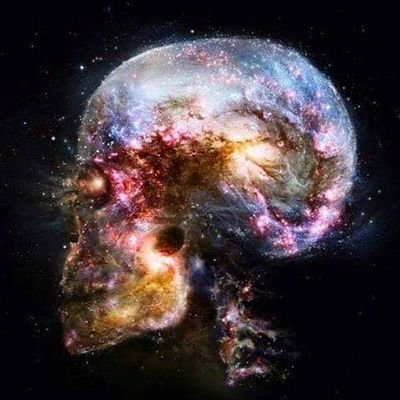
ALT 🌌🧠 It’s mind-blowing to realize that brain cells and the universe share a striking similarity in their network structure. Both are made up of countless nodes — neurons in the brain and galaxies in the universe — connected by delicate filaments. The brain contains around 86 billion neurons, while the universe holds at least 100 billion galaxies, woven together in a vast cosmic web. Yet, despite this visual and structural resemblance, they’re worlds apart in composition and purpose. The universe is dominated by dark energy and dark matter, while the human brain is mostly water. The brain processes information and thought, while the universe’s filaments transfer energy and matter across unimaginable distances. It’s a beautiful reminder that patterns repeat themselves — from the smallest neuron to the grandest galaxy.


ALT 🚨 New research suggests gravity might be the glitch revealing our universe is a simulation. A groundbreaking new theory suggests gravity is not a force of nature, but a universal data-compression tool designed to optimize the computer of our reality. Physicist Melvin Vopson is challenging the very foundation of physics with a theory that redefines gravity as an informational byproduct rather than a fundamental force. Vopson suggests the universe operates like a colossal computer, and gravity is its primary method for optimizing data storage. Much like a file compression algorithm, gravity pulls matter together to reduce the complexity of the information being stored within the cosmic system. This perspective shifts our view of the cosmos from a collection of drifting masses to a highly efficient, self-optimizing data-processing machine. This concept relies on the second law of infodynamics, which posits that the universe seeks to minimize information entropy to remain computational


ALT Albert Einstein's mathematical framework of relativity proved that space and time are mechanically fused into a singular, rigid geometric structure known as the "block universe." In this exact architectural model, time does not actively "happen" or physically move forward. Instead, every single microscopic event—from the absolute beginning of the universe to its final absolute end—already exists simultaneously within this massive four-dimensional coordinate system. This means your biological consciousness is simply traveling through a pre-existing structural framework. The past has never truly vanished, and the future is already completely constructed; your central nervous system is merely sequentially rendering the environmental data as you physically move along your specific geometric coordinate path.