

Investigative Journalist & Historian (PhD from SOAS). Interests i/c terrorist & other serious crime, religion, film, music, art (pic from Latheronwheel)
London, UK, Europe
Joined December 2013
- Tweets124K
- Following3.1K
- Followers1.2K
- Likes24.4K



Pinned Tweet
Another article by me for Searchlight:

The Tinder Nazis: how a toxic teenage romance ended in terrorism charges.
They met on Tinder, bonded over Nazi trolling, and ended up in the dock at the Old Bailey.
With reporting restrictions lifted, the full story of Rex Clark and Sofija Vinogradova’s prosecution, and the neo-nazi ecosystem behind it, can now be told.
Read more here:
searchlightmagazine.com/2026…
@uaf @AntiRacismDay

Simon Forbes retweeted

Zinaida Portnova, a fearless teenage resistance against Nazi occupation during WWII and her posthumous recognition as a Hero of the Soviet Union. She received the title of Hero of the Soviet Union along with the Order of Lenin on July 1, 1958...
She went to her grandmother’s house for summer vacation. She never made it home.
Zinaida Portnova was 15 when Germany invaded the Soviet Union in June 1941, trapping her in German-occupied Belarus, far from her parents in Leningrad. By 1942, she had joined the Young Avengers, an underground resistance organization whose members distributed leaflets, gathered intelligence and carried out sabotage.
Soon, the schoolgirl was doing something far more dangerous.
According to accounts that became part of her wartime story, Zinaida obtained work in a canteen serving German personnel and poisoned their food. When suspicion fell on her, she reportedly ate the same food to convince the Germans she could not have poisoned it. She became seriously ill but survived.
That famous episode should be treated cautiously. It comes largely from later Soviet accounts, and details such as the number of Germans killed and exactly how Zinaida survived cannot be independently established.
What is firmly documented is extraordinary enough.
By August 1943, Zinaida was a scout for the Voroshilov partisan detachment. That December, she was sent back into occupied territory to discover why the Young Avengers had been compromised and to reconnect with surviving members.
She was captured.
During an interrogation, Zinaida suddenly seized the investigator’s pistol from his desk. She shot him and two other Germans and attempted to escape.
She was caught.
Zinaida was tortured and killed in January 1944. She was just 17. Soviet records later credited her with refusing to betray the underground despite interrogation.
Fourteen years later, on July 1, 1958, Zinaida Portnova was posthumously named a Hero of the Soviet Union.
Her story began with something utterly ordinary: a teenage girl leaving home for summer vacation.
Less than three years later, she was dead.
War had turned a schoolgirl into a courier, saboteur, partisan scout and prisoner.
And when her interrogator left a pistol within reach, she reached for it.
#archaeohistories

Simon Forbes retweeted
Jacques Jaujard, the French civil servant who helped save national art collections during WWII. He served as the Director of the French National Museums (Musées Nationaux) during Nazi occupation. He secretly organized the massive evacuation and hiding of thousands of priceless artworks from the Louvre, including the Mona Lisa. His courageous efforts protected French cultural heritage from looting and destruction...
Months before German troops entered France, he organized a massive, secret evacuation of the Louver Museum.
Among these masterpieces was Leonardo da Vinci's famous painting, the Mona Lisa, alongside thousands of other priceless items like the Winged Victory of Samothrace and the Venus de Milo.
He gathered museum staff, art curators, and local volunteers to pack thousands of precious artworks into wooden crates.
This man was Jacques Jaujard, a quiet French civil servant who served as the director of the National Museums in France during World War II.
As the threat of war drew closer to Paris in 1939, he decided not to wait for official government permission or military orders to protect the nation's cultural heritage.
He understood that paintings, sculptures, and historical treasures were at immediate risk of destruction from aerial bombings or theft by invading forces.
Moving these items was extremely complicated.
Hundreds of trucks carried heavy wooden boxes, each labeled with color-coded marks to show the value of the contents. Jaujard instructed his team to move the collection quickly and quietly out of the city.
He told his staff, "We must move every single piece to safety before it is too late, no matter how many trips it takes."
The art was transported to distant chateaux and countryside estates across southern and western France, far away from urban targets and bomb zones.
When German forces occupied Paris in 1940, military officials went straight to the Louvre expecting to seize the world's most famous art collection.
Instead, they walked through long, empty halls filled with nothing but bare walls and vacant frames.
Count Franz Wolff-Metternich, a German officer appointed to oversee French art collections, confronted Jaujard directly about the missing items.
Jaujard maintained a calm, polite, and unyielding attitude, constantly making administrative excuses, creating bureaucratic delays, and handing over fake inventory reports to hide the actual locations of the art.
Despite the intense pressure and the constant danger of arrest or execution by the Gestapo, Jaujard stayed in Paris to maintain the appearance of compliance while secretly working alongside the French Resistance. He used his official position to send secret messages to the caretakers hiding the art across the countryside, warning them whenever German searches were planned in their local areas.
During one stressful meeting with a nervous colleague, Jaujard said, "Our job is simply to make sure these treasures survive the war intact, regardless of who is watching us."
Through his careful planning, quiet resistance, and refusal to back down, Jaujard managed to protect almost every major piece of art under his care.
When the war finally ended in 1945, thousands of evacuated artworks were returned safely to the Louvre without a single major masterpiece being lost, damaged or stolen. His remarkable courage saved a vital piece of human history for future generations to enjoy.
Jacques Jaujard proved that true courage does not always require a weapon on a battlefield. Sometimes, a quiet hero with a clear purpose and a clever plan is all it takes to save human culture from destruction.
Every time millions of visitors line up at the Louver to see the Mona Lisa today, they owe a debt of gratitude to Jacques Jaujard. His determination preserved centuries of global heritage through one of the darkest times in human history, ensuring that future generations can still experience these incredible works of art.
#archaeohistories

Simon Forbes retweeted
Donald Trump, 41 years old, in Moscow at the invitation of Soviet Ambassador to the U.S., Yuri Dubinin (July 1987)....
Trump visited Moscow at the personal invitation of Soviet Ambassador Yuri Dubinin. At the time, Trump was a 41-year-old real estate developer whose name had become synonymous with luxury and ambition in 1980s New York. The visit was part of an exploratory trip to discuss the potential construction of a Trump-branded hotel in the Soviet capital. Soviet officials, eager to showcase openness during the era of Mikhail Gorbachev’s perestroika reforms, rolled out a warm reception for Trump, arranging high-level meetings and guided tours of prospective sites along the Moscow River.
Though the hotel deal never came to fruition, the trip reflected the unusual intersection of Western capitalism and Soviet diplomacy during the final years of the Cold War. For Trump, it marked one of his earliest forays into international politics and global branding. For the Soviets, hosting a prominent American businessman symbolized a cautious step toward engagement with the capitalist world.
Upon returning from Moscow, Trump took out full-page ads in major U.S. newspapers criticizing American foreign policy and military spending, his first public step into the political spotlight.
#archaeohistories

Simon Forbes retweeted
Adolf Hitler meeting with the Grand Mufti of Jerusalem, Haj Amin al-Husseini, in Berlin on November 28, 1941. The meeting took place at the Reich Chancellery, where they discussed geopolitical cooperation and shared opposition to British influence and a Jewish national home in Palestine...
Amin al-Husseini was born in Jerusalem near the turn of the 20th century, Husseini came from a prominent Palestinian family. In 1921, Palestine’s British rulers installed him as grand mufti of Jerusalem, a religious leadership position.
Husseini was an advocate for Arab nationalism, and in 1936 he joined with other Palestinian leaders in revolt against British. The revolt lasted until 1939, claimed thousands of lives, including hundreds of Jews and led British to seek an exit from the territory. In 1937, British removed Husseini from his position, prompting him to flee to Lebanon.
During WWII, Husseini supported an anti-British rebellion in Iraq and became rebels’ envoy to Germany and Italy. When rebellion was suppressed, he fled to Italy and continued his contacts with Axis powers from there, famously meeting with Adolf Hitler in November 1941. He continued to support Nazis in various ways throughout the war. After the war, Husseini escaped to Beirut, his influence diminished. He died there in 1974.
Husseini opposed any accommodation of a Jewish national home in what would become Israel. He opposed 1939 British White Paper, despite its ban on Jewish immigration to Palestine, because it set too long a timeline for an Arab state. And he opposed 1947 United Nations partition plan that sought to create neighboring Jewish and Palestinian states. Husseini also backed violence against Jews. In 1920, he organized an anti-British demonstration in Jerusalem that grew violent and was subsequently convicted of incitement.
In early 1940s Husseini was seeking German support for Arab independence from colonial rule, and records of the meeting show that Husseini focused his requests on a formal Nazi declaration of support for “the independence and unity of Palestine, Syria, and Iraq” under Arab rule. According to the British record, Husseini told Hitler, “The Arabs were Germany’s natural friends because they had the same enemies as had Germany, namely English, Jews and Communists.” He also thanked Hitler for supporting “the elimination of the Jewish national home.” The record does report that Hitler announced his intentions, noting that he planned to “ask one European nation after the other to solve its Jewish problem.”
According to some unverified sources, Hitler promised the Mufti of Jerusalem that he would also eliminate Jews in Palestine. With this, he wanted to torpedo the British partition plan for Mandate territory. This plan envisioned creating a "Jewish homeland" in part of Palestine. Mufti didn't want that, and neither did Hitler. Extermination of the Jews in Palestine was to be only the beginning. Once Russian campaign was over, all remaining Jews in Arab world would be annihilated, Hitler promised the Mufti. For the first time, envisioned Final Solution was to take place outside of Europe. Amin al-Husseini announced plans to form Muslim SS units in Balkans and North Africa. They were to support North African campaign led by Erwin Rommel, where Wehrmacht encountered fierce resistance from British army.
According to Maoz, Palestinians today see Husseini as one of their national fathers. But their admiration is mitigated, he said, because Husseini was so strongly pro-Nazi and was ineffective in advancing the Palestinian cause.
His stature among Palestinians, Maoz said, pales to that of Yasser Arafat, whose memory enjoys near universal reverence. But Palestinians tend not to criticize Husseini in public, Maoz said, because they want to display unity.
“Not a few Palestinians think he wasn’t so positive,” Maoz said. “He was very stubborn. But those who oppose him don’t emphasize it out of solidarity.”
(Colorized Photo)
#archaeohistories

Simon Forbes retweeted

London, 1908, when the Olympic Games looked very different!
Originally intended for Rome, the Games were moved to London and to the newly built White City Stadium.
More than 2,000 athletes from 22 nations took part, competing in everything from athletics, swimming and cycling to tug-of-war and even motorboat racing.
Remarkably, over a century later we can still watch these athletes competing thanks to surviving film from the Games.
Film has been colourised.
#Olympics #LondonHistory #SportHistory
Simon Forbes retweeted

Britain First’s poor Tamworth turnout and a very modest Pink Ladies rally in Glasgow this weekend, contrasted with larger numbers in Portsmouth, where Danny Tommo’s Patriot Platform allies ignored his instruction to stay away.
Read more here:
searchlightmagazine.com/2026…
@uaf @AntiRacismDay

Simon Forbes retweeted
The arrest of White Vanguard members in Wales at the weekend has sparked a bitter internal split, with members leaving, attacking leader Kai Cunningham as a police informant, and discussing new plans to unite rival neo-nazi groups.
Read more here:
searchlightmagazine.com/2026…
@uaf @AntiRacismDay

Simon Forbes retweeted
The jailing of Patriotic Alternative member Ivan Jennings for terrorism offences again highlights the organisation’s record of activists convicted of terrorism, racial hatred and incitement.
It's time the organisation was banned.
Read more here:
searchlightmagazine.com/2026…
@uaf @AntiRacismDay

Simon Forbes retweeted

The Potala Palace complex in Lhasa, Tibet
Boasting 13 stories, over 1,000 rooms, and 10,000 shrines, it served as the winter residence of the Dalai Lamas from 1649 until the 1959 uprising.

Simon Forbes retweeted
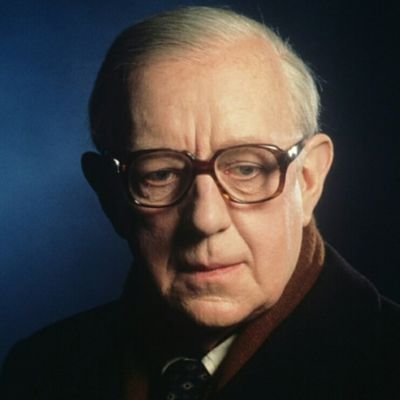
Doctor Who: The Tomb of the Cybermen - Episode 3 (16th September 1967). "Our lives are different to anybody else's. That's the exciting thing. There's nobody in the universe can do what we're doing".
Simon Forbes retweeted

16 Sept 1975: #Australia grants Papua New Guinea its independence after the Papua New Guinea #Independence Act of 1975 was enacted on September 9. #PapuaNewGuinea #OTD #History #ad amzn.to/33wsPen


Simon Forbes retweeted

#OnThisDay 1984. South Yorkshire police were ordered to sell horses and dogs, seen during events at Orgreave to help pay for the policing of the #MinersStrike
The decision was decided by the county’s Labour controlled police authority.


Simon Forbes retweeted

Krystyna Skarbek, widely regarded as the most outstanding female spy of WWII, was a proud Pole who served with Britain’s Special Operations Executive (SOE). Winston Churchill called her "his favourite secret agent".
Due to Clare Mulley’s advocacy a commemorative "blue plaque" was unveiled on 16 September 2020 at the building where Krystyna was tragically murdered in 1952.

Simon Forbes retweeted
Hurrian Hymn (part of collection of Hurrian songs), inscribed in Akkadian cuneiform on clay tablets (1550-1400 BC) excavated from ancient Amorite-Canaanite city of Ugarit, northern Syria....
The clay tablet text, which was discovered alongside around 30 other tablet fragments, specifies 9 lyre strings and intervals between those strings – kind of like an ancient guitar tab. But this is only hymn that could be reconstructed – although the name of the composer is now lost. The complete song is one of about 36 such hymns was is dedicated Hurrians’ goddess of the orchards Nikkal. It was discovered in 1950s, considered as the oldest surviving melody and is over 3400 years old.
An account of the group of shards was first published in 1955 and 1968 by Emmanuel Laroche, who identified as parts of a single clay tablet the three fragments catalogued by field archaeologists as RS 15.30, 15.49, and 17.387. In Laroche's catalogue the hymns are designated h. (for "Hurrian") 2–17, 19–23, 25–6, 28, 30, along with smaller fragments RS. 19.164 g, j, n, o, p, r, t, w, x, y, aa, and gg. The complete hymn is h.6 in this list. A revised text of h.6 was published in 1975. Following Laroche's work, Assyriologist Anne Draffkorn Kilmer and musicologist Marcelle Duchesne-Guillemin worked together in 1970s to understand the meaning of the tablets, concluding that one tablet presented tuning methods for a Babylonian lyre, another referred to musical intervals.
Tablet h.6 contains, the lyrics for a hymn to Nikkal, a Ancient Near Eastern goddess of orchards, and instructions for a singer accompanied by a nine-stringed sammûm, a type of harp or, much more likely, a lyre. The hymn was given its first modern performance in 1974, a performance of which the New York Times wrote: “This has revolutionized the whole concept of the origin of western music.”
While the Hurrian hymn pre-dates several other surviving early works of music (e.g. Seikilos epitaph and Delphic Hymns) by a millennium, its transcription remains controversial. Duchesne-Guillemin's reconstruction may be heard at Urkesh webpage, though this is only one of at least five "rival decipherments of the notation, each yielding entirely different results".
Text of h.6 is difficult, in part because Hurrian language itself is imperfectly understood, and in part because of small lacunae due to missing flakes of the clay tablet. In addition, however, it appears that the language is a local Ugarit dialect, which differs significantly from the dialects known from other sources. It is also possible that the pronunciation of some words was altered from normal speech because of music. Despite the many difficulties, it is clearly a religious text concerning offerings to goddess Nikkal, wife of the moon god. Text is presented in four lines, with the peculiarity that the seven final syllables of each of the first three lines on the verso of the tablet are repeated at beginning of the next line on the recto. While Laroche saw in this a procedure similar to one employed by Babylonian scribes in longer texts to provide continuity at the transition from one tablet to another, Güterbock and Kilmer took the position that this device is never found within the text on a single tablet, and so these repeated syllables must constitute refrains dividing the text into regular sections. To this, Duchesne-Guillemin retorts that the recto-verso-recto spiral path of text, an arrangement unknown in Babylon is ample reason for the use of such guides.
The first published attempt to interpret the text of h.6 was made in 1977 by Hans-Jochen Thiel and his work formed the basis for a new but still very provisional attempt made 24 years later by Theo J. H. Krispijn, after Hurritology had made significant progress thanks to archaeological discoveries made in the meantime at a site near Boğazkale.
🎥© Peter Pringle (YT)
National Museum of Damascus
#archaeohistories
Simon Forbes retweeted

"If Chicago gangsters can have bulletproof glass in their cars, I can't see any reason why my pilots cannot have the same." Born in Scotland, an animal-welfare advocate and champion skier, Dowding pioneered the integrated air defence system. #battleofbritainday

Simon Forbes retweeted

Remembering Peter Falk on his birthday
Wings of desire, directed by Wim Wenders
Simon Forbes retweeted

The Mayflower departed England with 102 Pilgrims, bound for the New World, on this day in 1620!
🤖 Made with AI
