

Shark & tuna movements & behaviour with machine learning (BRT) @ Florida International University, Miami, FL, USA. Snowboarding, Arsenal & SF Giants. He/His
San Carlos, CA
Joined March 2009
- Tweets1.5K
- Following150
- Followers251
- Likes218




Pinned Tweet
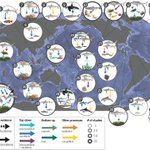
What we do/don’t know re: sharks ecological roles. Much predation/fear by big coastal sharks, by western unis, little else. Must protect big individuals & species’ outsized roles. MPAs crucial; engage communities to improve outcomes & shark perceptions tinyurl.com/52e295m3

Simon Dedman retweeted

This thread 🔥👇🏽

🚨New Website blog 🚨 🧵
Did you watch #SharkWhisperer on Netflix? I did & it was pseudoscientific rubbish.
Here, I do a deep dive into the documentary; its subject, Ocean Ramsey; & the harmful effects of “shark influencers” on shark conservation (1/9)
drjackacooper.com/writing/sh…

Simon Dedman retweeted
New #GlobalSharkTrends study published in @ScienceMagazine reveals that #overfishing has more than halved shark & ray populations over the past 50-years causing widespread erosion of ecological function and exceptionally high extinction risk
👉🏽Full article bit.ly/GlobalSharkTrends
Please SHARE & LIKE
🧵1/20

ALT Scalloped hammerhead sharks (Sphyrna lewini) IUCN Critically Endangered
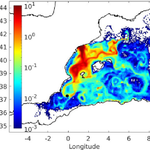
Faster than disaster! Interesting work from Spain+Stanford: a nuclear reactor disaster near Barcelona shouldn't radioactively contaminate Atlantic bluefin tuna above safe levels because they move through the region too quickly t.ly/FRmix

ALT Map of caesium 137 concentration in surface waters of the Mediterranean 150 days after a nuclear accident
Ecological Role of Sharks website: environment.fiu.edu/what-we-…
Figure reprinted with permission from Dedman et al., Science 385, eadl2362 (2024). Figure design by SayoStudio; vertebrate illustrations by Marc Dando
Great white sharks visit the Bahamas! Sharks acoustically tagged in Cape Cod/NE USA visit deep waters off Andros at night in spring tinyurl.com/3rnzh4sv. Cheers to great team & reviewers!

Simon Dedman retweeted

Fascinating new paper whereby genome analysis reveals three distinct lineages of the great white shark:
🦈 White shark populations are divided into three discrete lineages globally
🦈 Lineages diverged 100,000–200,000 years ago, during sea level lows

Simon Dedman retweeted

If you dove into the ocean in the 1800s, you would have been treated to a complex symphony of sound: raindrops falling, seals moaning, staccato snapping of shrimp, undersea vents bubbling & love songs of humpback whales.
Today the sea sounds different.
science.org/doi/10.1126/scia…

Accelerometry classified young lemon #sharks as resting/swimming/foraging: Rest nearshore at high tide, move offshore, increase swimming, foraging peaks at low tide & dusk. Once older/larger/safer from predation, home range & foraging increases. authors.elsevier.com/c/1jA4E…

Visualise & quantify space use of lots of animals: github.com/SimonDedman/moveg… on CRAN; automates dBBMM modelling & plotting. Thx to coauthor @SharkSprinkles 🥳

Academics: (how) can one get credit for reviewing (PhD) theses, like you would for reviewing 4-6 papers?
🚨PAPER JUST PUBLISHED🚨
Method to identify 2 Atlantic bluefin tuna stocks from (satellite) tag data, but no genetics, using behaviour: movement, depth, habitat preferences. Thx coauthors @Thunnus & Stanford team @DrSammyShark @coastal_chloe @HopkinsMarine tinyurl.com/4ecfj545

Great times in Valencia @SharksInt2022 with my wonderful #FIU lab mates


Simon Dedman retweeted

HOW IMPORTANT ARE REEF SHARKS?
If you're at #SharksInt2022 and work on reef sharks, please contribute to one of our short surveys to help answer this key question ⬇️
English - forms.gle/5ef4CjmxyfTeJr8G9
French - forms.gle/x2kjmy3E14T7vt9s9
Spanish - forms.gle/sQbbv51nSxHeMqH58

Simon Dedman retweeted

NEW COLLABORATIVE PAPER: Our team, co-led by @DavidCurnick, compiled the first global synthesis of vertical habitat use by elasmobranchs.
For more info, check out the infographic and #openaccess article
science.org/doi/10.1126/scia…
More tidbits in the 🧵below (1/4)
#VerticalSharks

Drones for marine science! Big review of history of use, different applications, comparisons to traditional approaches, research trends, and future developments roadmap. Get it while it's free! authors.elsevier.com/c/1f8nj…
Gillnet survey useful for abundance, mortality, & habitat mapping of data-limited red drum (fish) in GoMexico. Inc fan-fave machine learning spo.nmfs.noaa.gov/content/po… @MarcusDrymon @CrystalHighto13
Just published, cool study with friends: China farms >80% of the world's oysters. Satellite analysis & questionnaires show this causes 961 tons of plastic pollution a year in just 1 area. Hopefully a 1st step to awareness & management. authors.elsevier.com/a/1f2xS…