

I'm nobody. Nothing to see here. Mostly retired from X. But, -Nuclear energy is clean energy -GMOs are safe -Ukraine must win -Islam is incompatible w the west
Joined October 2013
- Tweets9.6K
- Following1.1K
- Followers239
- Likes112K






Pinned Tweet
If all the energy in your lifetime came from nuclear, the waste would fit in a soda can. If it came from fossil fuels, it would have the size of a building. 👇


Sig Fried 🇪🇺 retweeted

The Energiewende spent so much money that if it had been invested in nuclear, Europe as a whole (not just Germany) would be almost completely energy independent by now, which would bring it closer to being an actual geopolitical great power.

1990s German utilities could not imagine the amount of subsidies German politicians would be willing to waste in order to achieve this.
Without theese subsidies the 4% figure would be very realistic.
It also just delicious how you, like all renewables propgandists leave out that the consequence of this was German electricity production declining from 650 TWh to 450 TWh, German wholesale electrcity prices doubling, German industry shutting down due to high energy prices and German energy security just being thrown out the window.
1993 had German get almost all of its electricity from domestic nuclear and domestic coal. Now its gets its electricity from unreliable renewables and coal and gas supplied by unreliable international markets.
Sig Fried 🇪🇺 retweeted

Fun fact: Sweden has four nuclear reactors that have each generated more electricity than all Danish wind turbines ever.
Forsmark 3 and Oskarshamn 3 started in 1985, the year Denmark banned nuclear. Both still ahead of Denmark’s entire wind fleet.

Sig Fried 🇪🇺 retweeted

Pure fantasy:
Germany’s promise to be free of fossil fuels by 2045
is free of reality
iea.org/data-and-statistics/…
bundesumweltministerium.de/f…


Sig Fried 🇪🇺 retweeted

It's whatisnuclear dot com's 20th birthday today! Since I registered the site in 2006 I've had a wonderful time talking to people about nuclear power. Here's a short thread with some highlights.

Sig Fried 🇪🇺 retweeted

A few years back, a friend of mine looked into the 2018 American National Election Study pilot, and he found that every racial group felt warmth towards members of their own race, except for White liberals
I wanted to see if that replicated and expand on it🧵
#1: It replicates

Sig Fried 🇪🇺 retweeted

France’s nuclear safety authority ASNR is set to find “no major technical obstacles” to extending the operating lifetime of 32 EDF 900 MW reactors beyond 60 years, two sources close to the matter told Montel. montelnews.com/news/2aa001cc…

Sig Fried 🇪🇺 retweeted

Can we finally stop pretending nuclear is "unreliable" because of droughts and heatwaves?
New study: across 500+ reactor-years in Europe, heat & drought reduced output by just 0.6% (max 1.3% in any country). That's peanuts.
Solar and wind are FAR more weather-dependent and thus less reliable year-round, even during droughts. Heatwaves often bring still air, so low wind is common exactly when it's hottest. Nuclear's capacity factor is ~90.9%, way steadier.
And the fixes work: French river-fleet heat losses dropped 91% (5.5→0.5 TWh) since 2003 through cooling upgrades.
(Voor @MelissaDepr, dat is precies het punt dat ik eerder maakte.) sciencedirect.com/science/ar…

Sig Fried 🇪🇺 retweeted

Wie lange müssen die Strompreise eigentlich noch steigen, während gleichzeitig der Anteil von Wind & Sonne an der Stromproduktion zunimmt, bist auch der letzte Nasenbär endlich rafft, dass die „Energiewende“ ein riesiger, teurer Scam ist und niemals funktionieren wird?
Sig Fried 🇪🇺 retweeted

Friendly reminder that the trace amounts of uranium and thorium in coal contain more energy than the coal itself.

Sig Fried 🇪🇺 retweeted

Die deutsche Energiewende kostet nach einschlägigen Organisationen die nächsten 20 Jahre 5.4 Billione €. Ja, Billionen, 1000 Milliarden, 10¹². Dafür könnte man 300 große KKW kaufen und hätte noch Geld übrig für den Treibstoff und die Endlager für die nächsten 100 Jahre. Vor allem hätte man sichere und politisch unabhängige Energie und nicht dieses China-Klumpenrisiko. Als Bonus Prozesswärme und viel weniger CO2 als in allen EE-Szenarien
dihk.de/de/newsroom/aktuelle…
Sig Fried 🇪🇺 retweeted

The median construction time as of 2023 was 6.3 years, according to an analysis from Hannah Ritchie. Some can get down to just 3-5 years.
For comparison, according to Iberdrola, the global leader in wind power, an onshore wind farm takes 4-8 years and an offshore one 7-11 years.


Sig Fried 🇪🇺 retweeted

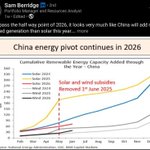
Und es kam, wie es kommen musste - man baut weiter wie die Irren Windräder zu und sie bringen nichts.
Nun hat dem ersten Wind-Halbjahr nicht nur der Kannibale PV den Garaus gemacht, sondern das schönste Sommerwetter. Und ein neuer Begriff ward in Schilda geboren: Hitzeflaute.


Sig Fried 🇪🇺 retweeted

Neuer Bericht zeigt: Die Reaktivierung deutscher Kernkraftwerke ist technisch machbar und wirtschaftlich sinnvoll.
Der Bericht von Nuklearia und der Radiant Energy Group enthält erstmals einen konkreten Zeit- und Kostenplan für die Wiederinbetriebnahme deutscher Kernkraftwerke.
Die Einschätzung wird zudem von ehemaligen Leitern deutscher Kernkraftwerke und weiteren kerntechnischen Experten in einem begleitenden Brief unterstützt.
Die Reaktivierung von Kernkraftwerken kann Deutschland wieder günstigen, sauberen und verlässlichen Strom liefern.
📄 Den Bericht gibt es hier zum Download:
nuklearia.de/2026/06/29/reak…
📅 Am Dienstag, dem 14.07., um 18 Uhr stellen die Autoren den Bericht in einer öffentlichen Online-Veranstaltung vor, der Einladungslink wird auf der oben verlinkten Webseite bekanntgegeben.


Sig Fried 🇪🇺 retweeted
Everyone dunking on French nuclear this week while the big red rectangle just sits there doing its job 🫠

Sig Fried 🇪🇺 retweeted
Jetzt gibt es keine Ausreden mehr für die deutsche Politik: Ehemalige Leiter von Kernkraftwerken erklären deren Reaktivierung für möglich und sinnvoll!
Wirtschaftlichkeit, Machbarkeit und Zeitplan werden in der Neuauflage des @RadiantEnergyG-Berichts zur Reaktivierbarkeit deutscher Kernkraftwerke detailliert erklärt, der am kommenden Montag veröffentlicht werden wird.

Sig Fried 🇪🇺 retweeted

L’Espagne illustre un paradoxe devenu central dans la transition € : une électricité de + en + bon marché sur le marché de gros, mais de + en + coûteuse lorsqu’il faut la rendre utilisable. Selon EY, les coûts des services auxiliaires pourraient atteindre 5,6 milliards d’euros cette année, soit 47 % de plus qu’en 2025.
Derrière les beaux graphiques sur le solaire triomphant et les prix spot écrasés à midi, les dépenses nécessaires pour équilibrer, stabiliser et sécuriser le réseau explosent. Autrefois, ces services passaient pour une ligne résiduelle du système électrique, une dépense technique et discrète que personne ne commentait . Mais lorsque cette ligne atteint plusieurs milliards, elle cesse d’être résiduelle. Elle devient l’un des noms du coût réel de l’intermittence...
▶️ Les coûts moyens des services auxiliaires sont ainsi passés de 6,83 €/MWh avant le black-out ibérique à 20,41 €/MWh après. En clair, l’Espagne découvre qu’un système électrique très renouvelable peut afficher des prix de gros attractifs tout en accumulant, dans les coulisses, des coûts de stabilisation de plus en plus lourds. La production solaire fait tomber les prix à certaines heures. Le système, lui, réclame ensuite des dépenses supplémentaires pour ne pas vaciller.
La raison est simple : plus le réseau accueille de production variable et moins synchrone, plus il faut acheter des services permettant de maintenir la fréquence, la tension, la réserve et l’équilibre instantané entre production et consommation.
▶️ Le plus ironique est que ces coûts peuvent même dépasser très largement les prix du marché journalier. On continue pourtant de regarder le prix spot comme s’il révélait le coût de l’électricité, alors qu’il peut être noyé par les frais de maintien du système.
Le rapport indique que les services auxiliaires ont parfois coûté plus de 150 fois le prix du marché day-ahead cette année. Le prix affiché dit : « regardez comme c’est peu cher ». La facture complète répond : « attendez de voir les astérisques ».
▶️ Partout en Europe, on a pris l’habitude de juger les renouvelables à leur coût de production isolé, comme si un mégawattheure produit à midi dans une zone saturée avait la même valeur qu’un mégawattheure disponible à 19 heures lors d’un pic de demande.
La vraie question n’est donc pas seulement de savoir combien coûte un panneau solaire lorsqu’il produit. Elle est de savoir combien coûte un système capable d’intégrer massivement cette production variable sans perdre sa stabilité. Et sur ce point, l’Espagne rappelle une évidence que la communication verte préfère souvent oublier : l’électricité bon marché devient beaucoup moins bon marché lorsqu’il faut payer tout ce qui permet au réseau de tenir debout...
okdiario.com/img/2026/06/19/…

Sig Fried 🇪🇺 retweeted

Linke sprechen gerne über die Enteignung von Elon Musk und was man mit 1.000 Milliarden Dollar alles an Gutem tun könnte. Schulen, Straßen und Brücken sanieren. Bildung verbessern, Menschen aus der Armut holen.
Tatsächlich haben linke Regierungen alleine in Deutschland in den letzten Jahren mehr als 1.000 Milliarden Euro für Energiewende und Klimamaßnahmen ausgegeben – ohne irgendeinen erkennbaren Effekt auf Wetter, Klima oder Emissionen. Kein Cent davon wurde für Schulen, Straßen, Brücken, Bildung oder Wohlstandsförderung ausgegeben.