

Independence. Dedication. Fearlessness. Tired of MSM Propaganda? Free Daily Email News: [email protected] https://xitter.cf/t.co/Gkj6hZ497A
Tokyo
Joined February 2011
- Tweets55.2K
- Following459
- Followers16.8K
- Likes3



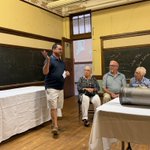



An under-investigated rape case at Cornell recently resurfaced due to a lawsuit. It might seem odd for an Ivy League school to face such severe allegations, but not to me. I was an undergraduate at Cornell 40 years ago, and what’s happening now is all within character. #Cornell Link: shingetsunewsagency.com/2026…
🤖 Made with AI

LDP-BACKED GENTA KOJA WINS OKINAWA GOVERNOR RACE: Genta Koja, a 42-year-old former deputy mayor of Naha backed by Prime Minister Sanae Takaichi's ruling Liberal Democratic Party and allied parties, defeated two-term incumbent Denny Tamaki in Okinawa's gubernatorial election.
Official tallies showed Koja received 423,124 votes to Tamaki's 276,060. Voter turnout reached 61.57%, up from the previous contest. Four other candidates finished far behind.
Koja will become Okinawa's first governor born after the 1972 reversion of the islands from US control and the youngest in the prefecture's history. He takes office later this month. The result ends 12 years of leadership opposed to relocating US Marine Corps Air Station Futenma from densely populated Ginowan to the Henoko coastal area of Nago.
Exit polls indicated the economy outweighed base issues for most voters. Nearly half cited economic revitalization, tourism, and jobs as their top concern, while about 21% named US military facilities. A majority of those surveyed supported the Futenma transfer.
Koja, a University of Tokyo graduate and former Internal Affairs Ministry official, campaigned on doubling per-capita income in a prefecture that ranks lowest nationally, expanding child-care support, and promoting new industries. After projections declared him the winner, he told NHK he viewed the outcome as "a choice by many to move Okinawa forward." He also pledged to press the national government for a firm timeline on Futenma's return while accepting the Henoko plan as the fastest path to reducing the local burden.
Tamaki, 66, the son of a Japanese mother and a US Marine, had demanded the base leave the prefecture entirely. He conceded, saying he would "heed the will of the people" and treat the result as a source of strength despite unfinished goals from two terms.
The victory gives Takaichi a local partner as her government advances defense buildup plans to counter China. Parties endorsing Koja included the Japan Innovation Party, Democratic Party for the People, Sanseito, the Conservative Party of Japan, and Komeito's Okinawa chapter. Tamaki drew support from the Constitutional Democratic Party of Japan, the Japanese Communist Party, and the All Okinawa coalition.
Takaichi has now outperformed her mentor, former Prime Minister Shinzo Abe, on Okinawa's most closely watched electoral battleground. Abe's Liberal Democratic Party-backed candidates lost three consecutive gubernatorial races in 2014, 2018, and 2022, leaving the prefecture under governors who fought the Henoko plan in court and refused cooperation. The last LDP-supported winner before Koja took office in 2010. By securing a pro-relocation governor on her first attempt at the race, Takaichi has broken a 12-year streak that frustrated Abe throughout his second premiership.
Construction of the replacement airfield at Henoko remains far behind the original timetable and is split between two distinct zones. Reclamation on the shallower southern side of Cape Henoko, which began in 2018, is largely finished. The larger and deeper Oura Bay sector on the eastern and northern side has proven far more difficult because of extensive soft seabed. Contractors must drive about 71,000 sand piles to stabilize the ground before bulk landfill can proceed; only a few thousand piles had been installed by early 2026, and typhoons halted pile-driving after June. Fresh dumping of earth and sand began in June in a limited Oura Bay section that does not require piles, yet overall soil placement in the main northern reclamation area remains below 3% of the planned volume.
Defense officials have said construction will continue until at least 2033, with the facility possibly becoming operational around 2036. The return of the Futenma site in Ginowan is not expected before then, and some US officials have questioned whether Henoko's planned pair of 1,800-meter runways can fully replace Futenma's longer strip. Project costs, once estimated at 930 billion yen (US$6.05 billion), are widely expected to rise further.
Debito Arudou: The Cabinet minister in charge of policy towards “foreigners” is basically removing them from Japan. I see it as the natural outcome of Japan’s legacy of abuse towards its Visible Minorities. #KimiOnoda #Japan #DebitoArudou
Link: shingetsunewsagency.com/2026…
🤖 Made with AI

Debito Arudou: It was that regular time of the year in certain parts of Japan that for some foreign residents was better than Christmas: Sodai Gomi no Hi.
Link: shingetsunewsagency.com/2026…
🤖 Made with AI

Debito Arudou: The United States should be celebrating the best of itself on its landmark birthday, like it did fifty years ago. It’s not. But the party is actually elsewhere. Link: shingetsunewsagency.com/2026…

Debito Arudou: Because what Japan is doing to its foreign residents is all within character, and everyone should have seen it coming long ago. #Japan #Sanseito #Racism Link: shingetsunewsagency.com/2026…

SEPTEMBER 10 -- This week I am finishing the final corrections and the index, and I've just been told by the publisher that release day is set for September 10. You never know, but I suspect this one will sell better than my first book, being as it is a very broad modern history of Japan, written for general audiences. #Japan

SDF FIRES ANTI-SHIP MISSILES
The Self-Defense Forces (SDF) fired anti-ship missiles for the first time from Philippine soil during multinational military exercises, striking a decommissioned warship in waters facing the South China Sea.
Two Type 88 surface-to-ship missiles launched from mobile launchers at Culili Point Sand Dunes in Paoay, Ilocos Norte province, hit the target vessel, the BRP Quezon, within six minutes. The strike occurred about 75 kilometers offshore as part of the Joint Task Force Maritime Strike in Balikatan 2026, the annual US-Philippines drills.
Ground Self-Defense Force troops conducted the live-fire exercise, marking the SDF’s first combat role in Balikatan. Japan deployed about 1,400 personnel, along with warships, aircraft, and the missile systems, joining the United States, Australia, and the Philippines as full participants for the first time. More than 17,000 troops from seven nations took part in the exercises overall.
Philippine Defense Secretary Gilberto Teodoro and Japanese Defense Minister Shinjiro Koizumi witnessed the launches on the ground. Philippine President Ferdinand Marcos Jr. observed remotely via live video from military headquarters in Manila.
The Philippine military described the Type 88 system as designed to defend coastal areas and deter maritime threats. “I’m very, very proud and happy that we were able to pull this off for the first time and it will only get larger in scope with more partners,” Teodoro said.
The drill showcased coordinated maritime strike operations among allies and highlighted growing interoperability. It comes as the Philippines and Japan began talks on defense equipment transfers, including the possible early handover of Abukuma-class destroyers and TC-90 aircraft, enabled by Japan’s recent easing of restrictions on military exports. #Japan #SDF #AntiShip #SelfDefenseForces
ARTICLE 9 REVISIONS PUSHED ON CONSTITUTION DAY: Prime Minister Sanae Takaichi used Constitution Memorial Day on Saturday to reaffirm her government’s commitment to revising Japan’s pacifist Constitution, with a focus on Article 9, the clause that renounces war and prohibits maintenance of “war potential.”
In a video message to a pro-revision rally and in a Liberal Democratic Party (LDP) statement, Takaichi and the LDP declared that the Constitution, unchanged since its enactment under US occupation in 1947, must be revised, allegedly to match the current security environment. The party called for prompt drafting of amendment language in the Diet, including explicit recognition of the Self-Defense Forces under Article 9 while preserving the first paragraph’s renunciation of war.
“Constitutional revision is more important than ever,” Takaichi said, citing evolving threats in the region. The LDP, which holds a commanding majority in the lower house after recent elections, has agreed with its coalition partner, the Japan Innovation Party, to pursue changes to Article 9 and an emergency clause as urgent national security priorities.
Article 9 has defined Japan’s postwar identity as a peaceful nation. It states that the Japanese people “forever renounce war as a sovereign right of the nation” and that “land, sea, and air forces, as well as other war potential, will never be maintained.” Successive governments have interpreted the clause to allow the Self-Defense Forces for exclusive defense, but conservatives argue the forces lack clear constitutional grounding.
Opponents staged large counter-rallies, including one in Tokyo that drew about 50,000 people. They warned that revision could erode Japan’s postwar pacifism and risk entanglement in foreign conflicts. Critics from opposition parties and civic groups called Article 9 Japan’s “treasure” and urged broad public debate before any vote.
Any amendment requires a two-thirds majority in both houses of the Diet followed by majority approval in a national referendum. Public opinion remains divided, with roughly half supporting changes to Article 9 and a strong majority preferring consensus across party lines.
US CRUDE OIL ARRIVES IN JAPAN: A tanker carrying US crude oil arrived at an offshore jetty in Tokyo Bay for the first time since US attacks on Iran began in late February, marking Japan's initial alternative procurement amid the ongoing crisis.
The vessel, procured by oil distributor Cosmo Oil Co., delivered 910,000 barrels—equivalent to about 145,000 kiloliters—destined for the company's Chiba refinery. Loaded in Texas on March 22, it traveled via the Panama Canal in roughly 35 days, the Ministry of Economy, Trade and Industry said.
The shipment underscores Japan's urgent push to diversify supplies after the de facto blockade of the Strait of Hormuz disrupted Persian Gulf crude shipments, which normally account for nearly 90% of the country's imports. Officials described the arrival as a cooperative effort between the government and private wholesalers to ease supply concerns.
The volume falls short of one day's domestic consumption. Japan's daily crude needs average more than 3 million barrels. In response to the crisis, the government has released emergency reserves equivalent to 30 days of demand and freed private-sector stocks for another 15 days.
The Ministry of Economy, Trade and Industry plans to quadruple US crude imports in May from year-earlier levels as part of broader diversification. Energy analysts noted the move highlights vulnerabilities in reliance on a single chokepoint but represents only a modest buffer.
The Iran conflict, which escalated with US and Israeli strikes, has rerouted global oil flows and driven up prices. US exports have surged to meet demand from Asia and Europe scrambling for replacements.
Japanese refiners continue monitoring the situation as peace talks remain uncertain. Officials said further alternative shipments are expected soon to stabilize gasoline, electricity and logistics costs that have begun rising for consumers and businesses. #Japan #Oil #IranWar
15K followers on X! The SNA prioritized Twitter for many years in the 2010s, peaking just short of 15K in October 2022, when Elon Musk bought the platform. Since many of our followers were progressives and were antagonized by Musk's behavior, we saw a collapse of several thousand followers and were routinely encouraged to go elsewhere. We did suspend daily news coverage of Japanese politics. Happy to say, however, that 3.5 years later the SNA feed bounced back and finally reached 15K. (MP)
From today's "Japan and the World." Free email newsletter, available by dropping a note to [email protected] #Japan #Exports #Pacifism #Constitution

Debito Arudou: The world is living under a rogue regime—or rather, a rogue individual—who is wielding unprecedented power. shingetsunewsagency.com/2026…
From today's "Japan and the World." Free email newsletter, available by writing to [email protected]

From today's "Japan and the World." Free email newsletter, available by writing to [email protected]

58 Years Ago Today: On March 28, 1968, radical students at the University of Tokyo, primarily from the medical faculty, forced the cancellation of the university's graduation ceremony through disruptive protests.
The action was part of growing campus unrest over issues including poor working conditions for medical interns, authoritarian university governance, and broader opposition to the Vietnam War and Japan's alignment with the United States.
This disruption drew sharp domestic criticism. University administrators and conservative voices condemned the students for denying fellow graduates their ceremonial rite of passage and undermining academic order. Many ordinary citizens and media outlets expressed outrage at the escalating militancy that disrupted normal university life.
Critics argued the protest tactics prioritized radical political demands over respect for institutional traditions and the rights of non-activist students, amid broader debates on the 1968 student movement—widely seen by contemporaries and later analysts as signaling deepening generational conflict and challenges to postwar Japanese authority structures. #Japan #Students #TokyoUniversity

8 Years Ago Today: On March 27, 2018, former senior Finance Ministry bureaucrat Nobuhisa Sagawa, a central figure in the Moritomo Gakuen land sale scandal, stonewalled questions during sworn testimony before the Diet, repeatedly dodging inquiries by citing fear of possible future prosecution.
Sagawa denied that Prime Minister Shinzo Abe or Finance Minister Taro Aso had ordered the falsification of official documents related to the heavily discounted sale of state land to a nationalist school operator with ties to Abe's wife. He claimed the alterations were done internally at the ministry level.
This performance drew sharp domestic criticism. Opposition parties and media outlets accused him of evasive and contradictory answers, labeling it a deliberate cover-up to shield political leaders. Public distrust in the government deepened amid perceptions of cronyism and bureaucratic opacity.
Critics argued the testimony prioritized protecting the Abe administration and ministerial interests over transparency and accountability, amid broader debates on the scandal's handling—widely seen by opposition voices and analysts as undermining public trust in democratic institutions and the rule of law. #Japan #ShinzoAbe #Transparency

101 Years Ago Today: On March 26, 1925, after a long struggle marked by decades of popular campaigns and repeated failures, the Universal Male Suffrage Bill passed the House of Peers, clearing a major obstacle in Japan's Taisho-era push for democratic reform.
The legislation, which eliminated property and tax qualifications, extended the vote to all men aged 25 and older, dramatically expanding the electorate from roughly three million to over twelve million voters.
This breakthrough drew sharp domestic criticism from conservatives and some elites who feared the influx of working-class and rural voices would destabilize imperial order. In exchange for passage, the government simultaneously enacted the repressive Peace Preservation Law to curb radical leftwing activities.
Critics argued the paired measures prioritized controlled democratization and state security over genuine expansion of political freedoms, amid broader debates on the limits of Taisho democracy—widely seen by later historians as a partial and fragile step toward mass participation that coexisted with growing authoritarian controls. #Japan #Voting #Elections

ARAGHCHI AND ME: Back in 2011, I had some news stories where I sometimes interviewed the Iranian Ambassador in Japan. He was a career diplomat named Abbas Araghchi. Today, he is the Iranian Foreign Minister and one of the most prominent members of the Iranian government.
We met maybe half a dozen times and were on speaking terms. In this shot, I met him as he entered the Japan Foreign Ministry building in Tokyo. He wondered why I was there and gave me this cautious look as he passed.
What is he like? Quiet, serious... Kind of an all-business demeanor. I wasn't surprised that he went on to be promoted. He seemed like the sort of person who was on the rise.
