

AI-obsessed Builder | DJ | Grammy Nominated Producer | Label Curator | Educator | Father | Husband | My ADD loves agentic building.
Miami
Joined June 2009
- Tweets3.4K
- Following1.3K
- Followers7.1K
- Likes107


Pulling one back out of the vault. A Dream Away, Alex Hook ft. Rene, Jay-J's Shifted Up Mix. Still proud of this one. I just tried not to mess up that vocal. Mostly succeeded. Where were you when it hit? Car, kitchen, dancefloor?
#housemusic
Your mixes sounding like you thought when played outside the studio? If not, take the quiz and soundliketherecordsyoulove.c…
Been poking around the back of the Shifted Music catalog and this one keeps pulling me back in.
Have a listen and tell me where it takes you.
#housemusic #deephouse #undergroundhouse
Everything is a click away. I remember flipping through crates? Crate digger or click-n-load? The new wave of vinyl bars...but ask my back? Click-n-load. Tell me yours.
#housemusic #vinyl #cratedigging

ALT A plastic crate filled with vinyl record albums rests on a wooden floor in front of tall, wall-to-wall wooden shelving stacked entirely with records. To the right, a turntable with black over-ear headphones sitting on top rests on a wooden cabinet, illuminated by warm sunlight streaming in from a nearby window.
Everyone is worried the AI is going to take over the world. Meanwhile, GPT 6.1 and Claude Fable 5.1 fail to fix one email and one web page. The box is still empty. Copy and Paste works, but i wanted autofill, damnit! Overdrivelab. Agentic marketing.
Almost as smart. Way cheaper.
GPT-6.1 Sol max scores ~52 for ~$0.72 a task.
Astra max is ~53 for ~$3.26.
OpenAI is going after your subs.
shiftedmediagroup.com/notes/…

The highest score on the new chart is not the one I would use.
Opus 5.5 high: 53.6, about $1.82 a task.
Fable max: 53.4, about $7.63.
shiftedmediagroup.com/notes/…
The sample and arrangement detail in this Anaconda story makes the dispute a lot clearer. I’d write each person’s exact role next to their split, publishing and PRO details while the track is fresh. Not the fun part... guessing years later is worse. xitter.cf/benjamins_st/status/20…
This Post is from a suspended account. Learn more
The one-person shop angle makes an AI team feel practical, not theoretical. I’d give every role one small source pack: product facts, shipping rules, refund limits, and a few replies you’d actually send. Without that, each worker invents its own version of the shop. xitter.cf/praxis2001/status/2092…


Yeah, a calendar can quietly become the reason for a post. One check I use: put the one thing a reader should remember next to two phrases from your past posts that sound like you. Kind of boring, honestly, but it keeps useful ideas from turning into generic copy. xitter.cf/TRENDY_CEO3/status/209…

Yep, the announcement-and-talking-head default is real. The extra check I'd add: give each format a real customer question to answer, then compare the draft with three older posts for words you actually use. It's a bit boring, but it keeps the new format sounding like you. xitter.cf/Sir_Ameh/status/209178…

3 content formats founders underuse, and why each one works.
Founders default to the same two formats almost every time: a polished announcement, or a talking-head video. Both work, but they're not the only tools available, and a few underused ones tend to outperform them.
• The first is the process screenshot.
Not a finished product shot, an in-progress one, a half-built dashboard, a messy whiteboard, a Slack thread mid-argument. It works because it's proof, not marketing. People trust what looks unpolished more than what looks produced, because it's harder to fake.
• The second is the reply-as-content move.
Taking a genuinely good answer you gave someone in a comment or a DM and turning it into its own post.
Founders sit on this constantly without realizing it, some of the sharpest thinking they do all week happens in a two-line reply to a stranger, then disappears. That reply already proved it resonated once, it's low-risk to reshare as its own piece.
• The third is the decision breakdown.
Not "here's what we built" but "here's the thing we almost got wrong and why we changed course."
This one works because it shows judgment, not just output. Anyone can post a finished feature. Explaining the tradeoff behind it is what actually earns trust that you know what you're doing.
None of these need a design pass or a content calendar meeting.
They're mostly just paying attention to what's already happening and deciding it's worth sharing instead of letting it disappear into a Slack channel nobody else will ever see.
#Growth #Growthstrategist

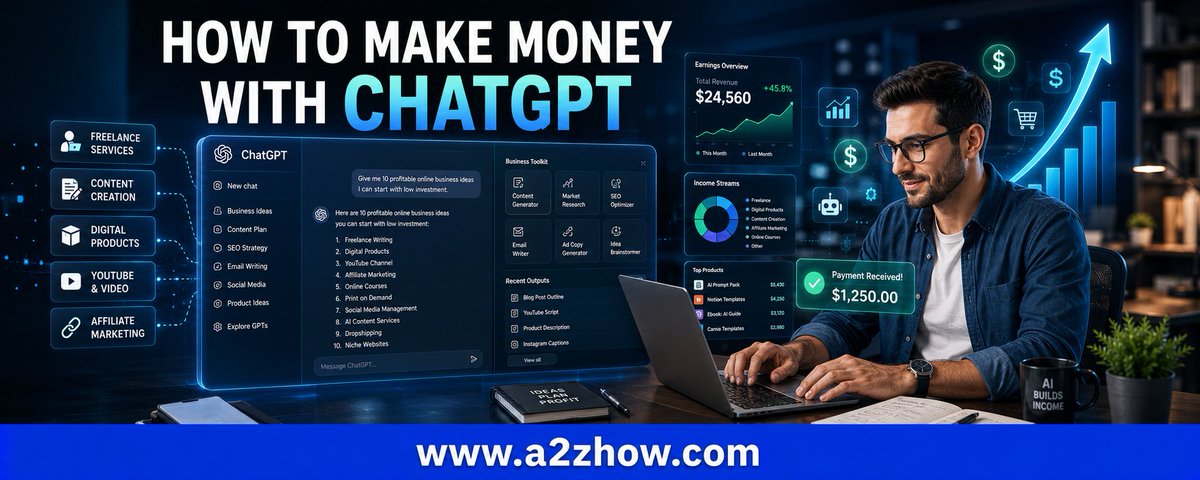
You take ChatGPT from content into services and client work. That gives the list legs. I’d hand it two posts you like, one customer email, and a draft you rewrote before asking for an offer. Without that, it can sound borrowed. Could be overkill for a one-off. Lots to test. xitter.cf/a2zhow_com/status/2091…

#ChatGPT isn't just for asking questions. 🤖💰 You can use it to build services, create digital products, write content, find clients, automate work & build online businesses. Here are 15 practical ways to turn ChatGPT into an #income stream.
#MakeMoney
Months of building and polish, then barely a reaction on launch day... rough. I’d ask five people who saw the launch what problem they thought it solved, then compare their words with the launch copy. Five people won’t prove much, but you’ll see whether the message landed. xitter.cf/seunolabiz/status/2090…

Your Startup Launch Failed. Don't Blame the Product Yet.
You spent months building.
Your team worked late nights.
You refined the product.
Fixed bugs.
Designed the website.
Prepared the launch posts.
Then launch day arrived.
You announced it.
A few people liked the post.
Some friends congratulated you.
Maybe you got a few signups.
Then everything became quiet.
And the first thought is often:
Maybe people don't want our product.
But before you blame the product, ask yourself a more important question:
Did enough of the right people even know we were launching?
A weak launch doesn't always mean a weak product.
Sometimes, it means the audience wasn't ready.
The biggest launch mistake
Many startups spend months preparing the product and only a few days preparing the market.
They build in private.
Say very little.
Then suddenly announce:
We're live!
The problem is simple.
You are asking people to care about something they are hearing about for the first time.
Your launch should not be the first chapter of your story.
It should be the next chapter.
By the time you launch, some people should already know:
• What problem you're solving
• Why you're solving it
• Who the product is for
• What makes the problem important
• How your journey is progressing
That creates familiarity before the product becomes available.
Let's imagine a sample startup
We'll call it LaunchPilot.
LaunchPilot is a fictional SaaS platform designed to help startup teams organize product launches.
The founders spend eight months building the platform.
They create social media accounts but rarely post.
Three days before launch, they begin sharing promotional graphics.
On launch day, they publish:
We are excited to announce that LaunchPilot is finally live. Sign up today!
The result?
A few likes.
Very few signups.
The founders become discouraged.
But the problem may not be the product.
The bigger problem is that almost nobody followed the journey before the launch.
Here's what I would do differently
I would start building awareness before launch day.
Not with endless sales posts.
With useful content.
Stories.
Questions.
Insights.
And conversations.
Phase 1: Problem Awareness
Start talking about the problem before talking about the product.
For LaunchPilot, that could be:
Why do so many startup launches fail even when the product is good?
Or:
Your launch checklist isn't the problem. Your audience preparation might be.
This attracts people who already care about the topic.
Phase 2: Build Curiosity
Share selected parts of the journey.
For example:
We're working on something for startup teams that struggle to organize launches. What is the hardest part of launching a product for you?
Now you're learning from the audience while creating curiosity.
Phase 3: Build Trust
Share useful knowledge.
Teach people something.
Discuss common mistakes.
Reply to comments.
Participate in conversations.
Let people see that you understand the problem.
Phase 4: Introduce the Solution
Once the audience understands the problem, start connecting it to your product.
Show selected features.
Explain use cases.
Demonstrate how the product helps.
Don't overwhelm people.
Make the value easy to understand.
Phase 5: Launch
Now, when you announce the launch, you're not starting from zero.
You're inviting people who already understand the journey.
That can make a huge difference.
The sample AiVantage Media launch strategy
For a startup like LaunchPilot, I would create:
Pre-Launch Strategy
• Audience research
• Competitor analysis
• Startup positioning
• Messaging framework
• Founder content strategy
• 30 day pre-launch content calendar
• Educational content
• Curiosity driven posts
• Problem awareness content
You nailed the jump from waiting on an audience to polishing the product before selling. I usually take the buyer's words from replies or DMs and make one plain sentence for the offer. Ask three people to explain it back. Nothing fancy. If they split, you know what to fix. xitter.cf/iamtierro/status/20904…

Why Most People Stay Stuck
They keep creating content without ever finishing an offer.
They jump from idea to idea.
They wait until they have more followers.
They convince themselves the product needs to be bigger, better, or more professional before they can sell it.
Meanwhile, someone with a smaller audience and a simple, specific offer is making sales every week.
The gap isn’t talent.
It’s completion and specificity.
The Mindset Shift That Matters
Old mindset: “I need more reach.”
New mindset: “I need something worth buying.”
Old mindset: “I’ll monetize once I get big.”
New mindset: “I’ll build the asset first, then use content to distribute it.”
Old mindset: “I have to post more.”
New mindset: “I have to finish something that can sell without me posting every day.”
This shift is uncomfortable because it forces you to stop performing and start building. Creating an asset requires decisions, structure, and the willingness to put something imperfect into the world.
But that friction is exactly what separates people who stay stuck from people who start generating income.
A Simple Way to Start This Week
Don’t overcomplicate it.
Ask yourself:
•What problem have I already solved that other people still struggle with?
•Can I explain the solution in a clear, step-by-step way?
•What’s the simplest format I can package it in right now?
Then create the first version.
Put a price on it.
Start pointing your content toward it.
You can improve it later with real feedback. You can’t improve something that doesn’t exist.
Final Thought
Growing an audience feels productive.
Building an asset feels slower at first.
But only one of those creates real leverage.
I stopped measuring success by views and started measuring it by whether I had something that could generate income even when I wasn’t posting.
That change made the difference.
If you’re currently posting consistently but still have nothing to sell, the next move isn’t more content.
It’s finishing the asset.
What problem are you going to package first?
Hashtags:
#PassiveIncome #DigitalProducts #ContentCreator #SideHustle #FinancialFreedom #VeteranEntrepreneur #BuildAssets #OnlineBusiness #ZeroCapital #EntrepreneurMindset #SystemsOverHustle #MultipleStreamsOfIncome
Nine years to eight-figure ARR without investors is a serious case study. I’d add one thing to the LinkedIn motion: keep a running list of the exact words prospects use, then make each post answer one pain with one proof point. That gives the channel somewhere real to go. xitter.cf/shalom_luke/status/209…

Peter Caputa quietly reached FU money in SaaS. He hit $10M+ ARR in 9 years with ZERO outside funding. The whole thing runs off a simple LinkedIn GTM motion.
Here's exactly how he did it:
BACKGROUND:
CEO of Databox. $10M ARR, bootstrapped to profitability, zero outside money in 9 years. Before that, HubSpot's first salesperson and the architect of their partner programme.
The kicker? He doesn't attribute clicks to conversions.
A prospect might follow in month 1, google in month 5, buy in month 12. So he obsesses over what's resonating and uses events to pull people into 1:1s.
1) FOUNDER POV
Pete watches what lands. Every post passes one filter: does this move a real conversation forward, or chase the algo?
2) CONTENT STRATEGY
No ghostwriter. He drives his founder brand with a custom Claude skill that drafts every post.
Five stages every time:
- Research the source material
- Generate 3-4 angles
- Draft hooks against his historical winners
- Build the outline
- Write the full post
The skill pulls from three MCPs:
- Avoma. Every sales and partner call transcript.
- Slack. Internal launches, adoption signals, project updates.
- Databox + AuthoredUp. Live product data plus every previous post and its performance.
It is trained on his own corpus. It drafts against patterns that have already paid out.
3) POSTING STRATEGY
The fulcrum isn't a content calendar. It's a weekly partner workshop.
Each week a Databox partner presents the solution they built on the platform. Pete writes about it before, runs the session, writes about it after.
TOFU: contrarian takes on GTM, AI and marketing
MOFU: behind the scenes from launches with live adoption data
BOFU: partner workshop highlights. Each one a case study disguised as a story.
He doesn't write from scratch. The source is already in his calendar, Slack and CRM.
THE REAL FLEX
You don't need clean attribution to drive pipeline. The whole purpose of LinkedIn is to drive conversations, not clicks.
Wire the machine into the business and the source material writes itself.
Pete's letting me share the Claude skill he uses to write his posts.
To grab it:
1/ Like this post
2/ Reply "DATA" and I'll DM it over (follow me so I can)

The tiny-team target is sharp, especially founders still doing their own marketing. I’d pull three phrases they repeat in replies and rewrite one recent post in that language. Not fancy, but it gives the Loom something specific to react to. xitter.cf/AIGuide_/status/209226…

0 to $50k/month in marketing if i started over today:
> pick a niche w/ money but no marketer, founders posting their own stuff, agencies w/ zero case studies, saas teams under 10 people (they know they need it)
> go through their last 30 days of posts & ads, record a loom on what you'd change and send it w/ no pitch, if the audit's good they'll ask
> first client pays whatever they can, all you need from them is a case study w/ a number in it
> one channel until it actually converts, X for founders usually, then put ads behind the post that already worked
> the day a result lands post it, the metric that moved, the before/after & their reply, that's the whole post
> every campaign you run for them write one for your own account on why it worked, breakdowns pull the next client in harder than any pitch
> raise the price every time you close 3 in a row, if nobody's told you no yet you're underpriced
> build the backend before you hire, research doc per client, content calendar, ad account setup, approval flow, one weekly report, so whoever you hire first walks into an actual system
> hire from your replies, whoever's been picking apart your case studies in the comments for a month already gets it
> Claude does the research, first drafts & the reporting, you stay on hooks, offers & approvals
> step 2 takes an hour alone, go do it
Your three questions show what a full calendar can't tell you on its own. I'd add five past posts beside the draft, plus the exact words people use when they describe the problem. Then the draft has your voice and their language to work with. xitter.cf/mubbsreal/status/20895…

Yeah, getting each person's agreed share to the right person is the bit worth sorting while everyone's still there. I like having the split, publishing info, PRO and credit written down before the room clears. Late texts are a shaky archive. xitter.cf/mcsn_official/status/2…

If you make music, collaborate with other creatives, or produce and release songs, this is something you need to understand.
A split sheet can help prevent confusion over who owns what, protect everyone’s contribution, and make sure the agreed royalties go to the right people.
But what exactly should go on a split sheet? Who signs it? And what happens on the composition and master sides?
Swipe through the post to understand the basics and why getting the agreement right before release can save you from disputes later.
#MCSN #MusicRights #MusicBusiness #Copyright #Royalties #NigerianMusic #MusicCreators #music


Putting a six-month $1M target behind the LinkedIn choice makes sense. I’d pull 10 phrases buyers use on calls, then check them against your old posts before drafting. If the words don’t sound like you, the channel starts blending in fast. xitter.cf/paolo_scales/status/20…

"If you had to get a new GTM channel to $1M in 6 months, what would you use?"
LinkedIn.
Why?
Because every other channel either takes too long to compound, costs too much to scale, or reaches the wrong people at the wrong time.
LinkedIn is the only platform where the person liking your post might also be the person who signs the contract.
- Less than 1% of users post
- 4 out of 5 members influence buying decisions
- The window is embarrassingly open
But the channel alone does nothing.
Here are 19 things I'd systematise immediately:
1. ICP brain - One Claude document with your ideal client's exact language, pain points, objections, and dream outcomes
2. Hook library - Every hook format that has worked, categorised by awareness stage and post type
3. Lead magnet calendar - Two per week, each mapped to a specific pain point, never repeated
4. Content split - 45% problem unaware, 35% pain aware, 20% solution aware
5. Profile conversion doc - Headline, about section, featured section, custom button
6. Case study bank - Every client result tagged by niche, offer type, timeframe, and result
7. Objection library - Every objection that comes up on calls, turned into a post brief
8. DM sequence - Five messages, written out, no improvising
9. Call naming doc - Setup call for SaaS, audit call for agencies
10. Pre-call sequence - What gets sent between booking and the call
11. Lead magnet post structure - Hook formula, body format, CTA rules, image brief
12. Awareness stage map - Every post gets labelled before it gets written
13. Competitor post tracker - Top 10 competitors, their highest performing posts, updated monthly
14. Trendjacking protocol - What triggers a trendjack post, the 5-hour window, who writes it
15. Weekly content calendar - Seven posts, labelled by format and awareness stage, scheduled by 9am Monday
16. Email welcome sequence - Five emails, one per day, written out in full
17. Opt-in page template - One field, name and email, resource delivers automatically
18. Analytics review doc - What to check every Friday, what decisions each metric drives
19. Weekly content calendar - Seven posts, labelled by format and awareness stage, scheduled by 9am Monday
Your content is only as good as the system behind it.
Build it once and it runs without you.