

Manage AI coding agents like teammates, not tabs. One board for tasks, parallel runs, blockers, and review across Claude Code, Codex, and more.
Joined August 2026
- Tweets113
- Following17
- Followers126
- Likes7


Pinned Tweet
Your team already runs AI coding agents. What it doesn't have is a way to manage them like teammates.
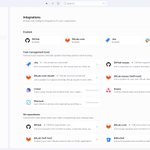
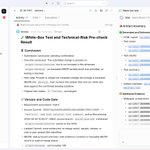
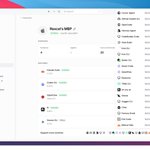
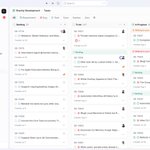
Sharkly is that layer: assign a bug straight to Claude Code or Codex, run every task in its own git worktree on your own machines, and review results on a real board. The agents execute. People set direction and accept the work.
We're building it in public here.

When you actually run swarms, the first thing that breaks isn't output quality: it's two agents writing to the same file. worktree isolation per agent run fixes it. nothing in these repos manages that handoff yet.

Claude Code can build full apps.
These 8 repos make it build them better.
PLAN IT
gstack → Garry Tan's setup that gives Claude Code roles like founder, eng manager and QA
github.com/garrytan/gstack
STAFF IT
claude-flow → runs swarms of agents working together
github.com/ruvnet/claude-flo…
oh-my-claudecode → multi agent orchestration on top of Claude Code
github.com/Yuyz0112/oh-my-cl…
orca → parallel agents
github.com/stablyai/orca
REMEMBER IT
claude-mem → memory that survives between sessions
github.com/thedotmack/claude…
context-mode → keeps tool output from flooding the context
github.com/mksglu/context-mo…
DO IT RIGHT
agent-skills → senior engineer habits: specs, TDD, reviews
github.com/addyosmani/agent-…
everything-claude-code → agents, skills, hooks and configs in one place
github.com/affaan-m/everythi…
Bookmark this.

Claude Code Review is GA for Team and Enterprise. Three depths: Quick, Standard, Deep, configurable per repo by admins. For teams where coding agents write the first draft, the default review gate is now a setting, not a per-PR manual call.


This compounds when you have multiple agents in flight: each one declares done on its own terms, the review queue stacks, and nobody's watching the stuck run. A shared done definition is the contract between agents, not just between dev and reviewer.

Verification is one of the most important things for getting great results out of your agent.
Clearly define "done" before code review starts.
A reviewer, human or agent, asked to find bugs without this may still find something that could be improved.
Give Claude checks it can run (bash commands, tests, clicking through the app in a browser) and have it pass that too before it says it's finished.
When nothing blocks merge and ship.
The part that breaks first isn't the agents, it's the lead: 27 blocks land and now you're reviewing in long context again. the fix is routing each output to a named slot, not a thread. otherwise you've just moved the bottleneck.

six Claude agents. one task. 27 blocks in 15.4 seconds and none of them works alone
CLOUD CREW is a multi-agent terminal about how Claude subagents actually split the work
most ai agent setups are still one chat, one tab and a prayer to the long context. CLOUD CREW runs a LEAD agent and 5 subagents on one cloud, with one shared context and one context bus
the idea: a task is not a prompt. a task is a build site where every agent has its own shift
i built a crew of 6 robots around one task core. each one carries its own blocks, hands off to a neighbor and drops the result into one merge
what runs under the hood:
1. LEAD agent: orchestration · decompose task → 27 blocks · 4 phases of 6s · PLAN → BUILD → REVIEW → SHIP
2. PLANNER: task graph · 1 root → 6 subtasks → merge → review → ship · every node's progress is computed from the timeline, not drawn by hand
3. BUILDER·A + BUILDER·B: parallel tool calls · a new block every 0.5s · 0.9s flight to the core · first block lands at 2.4s, last at 15.4s
4. REVIEWER: code review scan · sweeps all 27 blocks over 12–17s · a block turns green only after the scan · LGTM in the handoff log
5. TESTER: tests green 0 → 100% over 14–18s · no green tests, no SHIP phase
6. CONTEXT BUS: 18 handoff packets in flight · 3s period · 144 handoffs per loop · agent → agent, agent → lead, nobody drops context
pipeline: SPAWN → PLAN → ASSIGN → BUILD → REVIEW → TEST → MERGE → SHIP
alone each agent is mid: one cube, one function, one diff. together six agents ship the whole task while a solo agent is still reading the repo
the novelty is not the robots. the novelty is that the agentic workflow is visible end to end: who plans, who builds, who reviews, who ships
keywords: Claude, Claude Code, Anthropic, AI agents, multi-agent system, subagents, agent orchestration, agentic workflow, agent swarm, parallel agents, shared context, context engineering, tool use, tool calls, task decomposition, code review, CI, tests, merge, ship, LLM, AI coding, vibe coding, automation, WebGL2, 3D terminal, generative motion, procedural animation, html terminal, devtools, build in public
bookmark this before solo agents stop looking normal
edge is open until everyone else stops prompting one tab at a time

The separate worktree per direction is the part worth leaning into. the gap i hit: once you've got 3-4 tasks running in parallel, knowing which one is blocked vs just slow is manual. you're back to pinging each terminal.

Mistral is back.
Another frontier model means another reason to keep your agents' work on one board, whatever model they run on.
1T params, 49B active, 1M context, and launch pricing at $0.68 in / $2.09 out.
The frontier might just got another serious option.

Meet Mistral Large 4, aka Le Chonk.
• 1T parameters, natively multimodal. 49B active.
It is the best open weights model from US or Europe on aggregated benchmarks.
• State-of-the-art on critical workloads, including cyber defense, manufacturing and finance and it surpasses closed frontier models on visual grounding.
• Forged in Europe end-to-end and is deployable from Europe via our own Mistral Cloud infrastructure.
• Available to all via API today. Working with cybersecurity partners privately.
Open weights release end of October.
An agent that can open a pull request is useful. An agent that can merge one while nobody is watching is a liability with commit access.
Opening a PR is a proposal. Merging it is a decision about production. Most teams have no gate between the two, they have a habit.
Where the stop belongs.


Grok 4.7 is live on Amazon Bedrock and Google's Gemini Enterprise Agent Platform. SpaceXAI built it for coding and knowledge work. If your stack already talks to Bedrock, no new API contract needed: swap the model config and point your agents at it.

Grok 4.7 is now available on Amazon Bedrock and on Google's Gemini Enterprise Agent Platform.
Both platforms already offered Grok 4.6. Grok 4.7 is SpaceXAI's model for coding and knowledge work, and its docs call it the most capable model SpaceXAI has built.
On the xAI API, Grok 4.7 has a 500k context window and costs $2 input and $6 output per million tokens below 200k prompt tokens.


55 slash commands is also 55 decision points: which one runs when, in what order, and who reviews the output. the toolbox problem arrives before the coordination problem but they're really the same problem at scale.

Garry Tan, the CEO of Y Combinator, open-sourced 55 ready-made agents for Claude Code
Each agent is a slash command in plain Markdown with its own role and rules. 134k stars, MIT.
What is inside:
> 7 for browser work and scraping
> 6 for product planning
> 6 for design
> 6 for memory and retros
> 5 for code review and debugging
> 5 for security and guardrails
> 5 for QA and performance
> 5 for shipping and deploy
> 5 for iOS apps
> 3 for docs
They hand work to each other. /office-hours writes a design doc, the plan reviewers read it, /qa and /ship check against it.
Clone it into ~/.claude/skills/gstack, run ./setup, then try /review on any branch.

Parallel work in one terminal is the single-dev view. the team problem: which runs went stale, who reviews the diff when the agent finishes at 2am, what happens when two Codex instances touch the same file. those three are still open.
GPT-6.1 Sol is live. OpenAI says near-Astra quality at one-fifth the price. For teams routing coding tasks by complexity, that ratio changes where you point the short and medium runs.


We handed 52 article tasks to an agent writer. 49 came back done, 3 failed.
The 3 failures were the cheap ones. They were loud.
The 49 cost us more: nothing told us which of them needed a human until someone opened each one. Failure is easy to route. Finished-but-wrong is not.
