





Just received my Tesla Model Y Performance today. I drive 3-4 hours a day so gaining back those hours because of FSD is truly life changing.
From a person that has purchased over 10 vehicles, I can tell you the Tesla buying experience is hands down 10x better than any other car buying experience. From first demoing the vehicle to purchasing it. No pushy salesperson, no confusing line items, or sales tactics. Tesla made a product so good that it sells itself. Thank you @elonmusk
You converted another Tesla hater, went from saying I would never own one to now being the biggest advocate.

Ahmad Nasr retweeted

Around 1820, roughly 84% of humanity lived in extreme poverty, and today the share is around 10%. That is one of the largest improvements in human welfare in history.
The current AI CAPEX cycle is not being driven by chat interfaces alone. It is being driven by the infrastructure requirements of autonomous systems.
For two decades, compute architecture was optimized for intermittent, human-triggered workloads: PCs, smartphones, SaaS, search, and streaming.
Autonomous vehicles, robotics, AI agents, and real-time multimodal systems require a different stack:
• Continuous inference
• Low-latency edge compute
• High-bandwidth memory
• Advanced packaging
• High-speed interconnects
• Dense power delivery
• Liquid cooling
• Distributed data centers
• Massive storage and networking capacity
These systems do not process one prompt and stop. They continuously ingest video, audio, sensor data, maps, context, and machine-generated tasks.
That changes the semiconductor demand function from:
Devices sold × chips per device
to:
Endpoints deployed × inference frequency × model complexity × memory intensity × operating hours
We underbuilt power generation, transmission, grid connections, data-center density, HBM, packaging, and edge infrastructure for this demand profile.
Now the industry is being forced into a synchronized catch-up cycle across compute, memory, networking, power, storage, and thermal management.
That is why the semiconductor sector is being rerated.
The market is no longer valuing semiconductors solely as cyclical components tied to PC and smartphone replacement cycles.
It is beginning to value them as the physical operating layer of autonomous intelligence.
Selling compute is not as simple as buying GPUs and renting them out.
The economics depend on:
• Utilization
• Power and cooling costs
• Customer concentration
• Pricing and contract structure
• Hardware depreciation
• Financing costs
• The pace of technological obsolescence
High demand does not automatically mean high returns.
The real question is whether providers can keep their infrastructure highly utilized, recover the upfront capital before the hardware becomes obsolete, and earn an attractive return on invested capital.
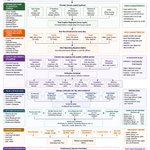
This flowchart breaks down how raw infrastructure is converted into revenue, cash flow, and ultimately profit.
🤖 Made with AI

@grok Objectively speaking, does this market and economic environment justify a rate hold, rate hike, or rate cut
Ahmad Nasr retweeted

Real estate has the 1031 exchange.
Sell a property, roll into another, defer the tax, keep capital moving.
Equities should have some version of this.
Capital markets would be more efficient if investors weren’t incentivized to sit in yesterday’s winners just to avoid a tax hit.


Ahmad Nasr retweeted

A U.S. Marine Corps UH-1Y Venom helicopter lifts off from USS Tripoli (LHA 7), May 16, during the U.S. blockade against Iranian ports. The Venom is capable of executing a variety of missions including maritime interdictions, reconnaissance, and close air support.


