

Building @senpaispmdojo @Maryanns_LLF
Nigeria
Joined April 2022
- Tweets6.5K
- Following448
- Followers1.1K
- Likes4.2K




We surveyed aspiring and junior Product Managers.
8 out of 10 said the same thing was their biggest hurdle: practical experience.
Small survey, so I won’t pretend it speaks for everyone. But it matches what I keep seeing.
People can learn PM from YouTube, courses, books, communities. Then they apply and hear “do you have experience?”
You need experience to get the job. You need the job to get experience.
That’s the trap we built SPD to break.
Learning, building with a team, feedback, presentations.
So you leave with work you can talk about, not just concepts you can define.
No guarantees. But practice is the missing piece.
So tell me, what’s your biggest obstacle?
Getting experience, finding opportunities, knowing what to learn, or something else? 👇

You can finish every Product Management course on the internet and still not know how to do the job.
Because the job is:
→ Figuring out what the user’s real problem is
→ Choosing what to build first (and what to cut)
→ Getting a team to move in one direction
→ Explaining why you made the call
→ Hearing “this isn’t working” and fixing it
That’s practice, not theory.
We surveyed aspiring PMs and 8 in 10 said experience is their biggest hurdle. So we built the Dojo around doing the work with a team, not just studying it. 🥷
What’s missing from how beginners learn PM today?

Adaeze Chukwu retweeted
The cruelest joke in tech hiring:
“Entry level. 2 years experience required.”
Someone decides they want to be a Product Manager. They watch the videos, buy the courses, learn what a PRD is, study Agile, get the certificate.
Then they apply.
“Do you have experience?”
All that learning. Still not enough.
Nobody tells you that knowing product management and having evidence you can do it are two completely different things.
That’s the exact gap I built SPD to close.
Not another place to consume lessons and figure out the rest yourself. A place where you actually learn by doing , build products, work with people, make mistakes, get feedback, and leave with proof.
The bridge between learning PM and actually doing PM.
That’s the work. ❤️🔥
So, what exactly is Senpai's PM Dojo?
We're a Product Management learning community built around one belief:
Learning the theory is the beginning. You also need opportunities to practise.
At the Dojo, aspiring product professionals learn Product Management and Product Design fundamentals, collaborate with other learners, build real products, receive feedback and develop practical experience.
We're building for people who want to break into Product, people who have learned the theory but need hands-on experience, and beginners who want somewhere to start.
Our approach is simple:
Learn → Build → Get Experience → Grow.
We're not promising that one programme will magically hand you a job. We're creating opportunities for you to develop your skills and demonstrate what you've learned.
If you've been looking for a more practical way to learn Product, welcome to the Dojo.
That's what we're here to build.

This post is for Product managers only 👀
Think about a typical discovery interview.
You want to understand the customer's role, their company, their problems, the solution they want, how much they'd pay, and how they currently get things done.
So you put everything in one interview guide.
But should all these questions come at once?🧵

Here's what I want more PMs to understand:
A customer saying “I'd definitely use that feature” isn't proof that you've found a problem worth solving.
People can like your idea without needing it.
They can say they'd pay without ever actually paying.
Customer discovery isn't about getting customers to validate the solution you've already imagined.
It's about understanding their reality well enough to decide whether you're solving the right problem.
The questions matter. But the order matters, too.
PMs, how do you structure your discovery interviews?


Adaeze Chukwu retweeted

Join our community whatsapp.com/channel/0029VbD….

Adaeze Chukwu retweeted
So, what exactly is Senpai's PM Dojo?
We're a Product Management learning community built around one belief:
Learning the theory is the beginning. You also need opportunities to practise.
At the Dojo, aspiring product professionals learn Product Management and Product Design fundamentals, collaborate with other learners, build real products, receive feedback and develop practical experience.
We're building for people who want to break into Product, people who have learned the theory but need hands-on experience, and beginners who want somewhere to start.
Our approach is simple:
Learn → Build → Get Experience → Grow.
We're not promising that one programme will magically hand you a job. We're creating opportunities for you to develop your skills and demonstrate what you've learned.
If you've been looking for a more practical way to learn Product, welcome to the Dojo.
That's what we're here to build.
Adaeze Chukwu retweeted
🫵🏽🫵🏽Product Management EXERCISE: Turn a feature request into a problem statement.
Imagine a user tells your team:
“Please add dark mode to the app.”
A beginner might immediately add dark mode to the feature list.
But a PM should first ask: what problem is the user trying to solve?
Try this:
The request: What feature did the user ask for?
The context: When and why do they need it?
The problem: What is difficult or frustrating about their current experience?
The evidence: Have other users experienced the same issue?
The outcome: What would improve if the problem were solved?
Your problem statement could look like this:
“Users who use the app at night may experience discomfort when viewing its bright interface, making it harder to use comfortably in low-light environments.”
Notice the difference? We've moved from a requested solution to a possible user problem.
The statement is still a hypothesis. You'd need evidence to validate it.
Your turn: What questions would you ask before deciding whether to build dark mode?
Drop your answers in the comments.

Product Management interview tip nobody tells you:
Recruiters don’t care if you can define an MVP.
They care if you can decide what goes in one when the team is arguing, the deadline is in 2 weeks and everyone has a favourite feature.
They don’t care if you know prioritisation frameworks.
They care if you can defend your decision when the founder’s pet feature is the one you’re recommending they cut.
Knowing and doing are two completely different muscles.
Most courses only train one of them.
That’s the gap @Senpaispmdojo intends to close.
Adaeze Chukwu retweeted
When you’re exploring monetisation as a product manager, do you start with features you could charge for, or problems customers would pay to solve?
Because those two approaches lead to very different products.
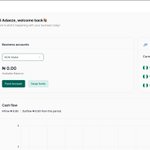
I’ve been studying Duplo recently, and one thing stood out.
A business can see it spent ₦20 million last month. But does it know why spending spiked? Which department went over budget? How much cash it needs next month?
That gap between seeing financial data and actually understanding it? That’s not a feature request. That’s an expensive unsolved problem.
And expensive unsolved problems are where real monetisation lives.
Before you touch your next roadmap, ask:
— What is the customer still struggling with after using our product?
— How much is that problem costing them?
— Are they already throwing money at it?
Features are easy to brainstorm. The right questions are harder.
Start with the questions. 👀

There are two types of product teams:
Type A asks: “What features can we charge for?”
Type B asks: “What problem would our customers pay to have solved?”
Type A builds a pricing page.
Type B builds a business.
Who's the 8th person on the first row?👀👉👈

I'm giving iBuildInPublic.com’s most active users another layer of visibility.
The top 50 appear on the landing page, and ranks 51–100 appear on the auth pages.
Every avatar is clickable.
Do you see yourself or any familiar faces? 👀


When you’re exploring monetisation as a product manager, do you start with features you could charge for, or problems customers would pay to solve?
Because those two approaches lead to very different products.
I’ve been studying Duplo recently, and one thing stood out.
A business can see it spent ₦20 million last month. But does it know why spending spiked? Which department went over budget? How much cash it needs next month?
That gap between seeing financial data and actually understanding it? That’s not a feature request. That’s an expensive unsolved problem.
And expensive unsolved problems are where real monetisation lives.
Before you touch your next roadmap, ask:
— What is the customer still struggling with after using our product?
— How much is that problem costing them?
— Are they already throwing money at it?
Features are easy to brainstorm. The right questions are harder.
Start with the questions. 👀