

Founder and CTO: @ComputeDesk. Exited Pace to FLYR. Formerly VP Research at Winton, particle physics at Harvard and CERN (Higgs discovery). MIT/Caltech alumnus
London, England
Joined July 2018
- Tweets255
- Following85
- Followers1.3K
- Likes157






David López Mateos retweeted

Needless to say, the reason for the $DESKB300 gpu price ticker is exploding (We're calling it the "B300 Summer") is this. @Kimi_Moonshot, did this with KimiK3


David López Mateos retweeted

Blackwell Ultra (B300) GPU rental prices up 17 consecutive days to a new all-time high, according to Compute Desk's index of verified transactions from U.S. neoclouds.

Anybody who has been trying to find B300s intuitively knows this. But not everyone is involved in the physical market. DESKB300 index gives you insight that the players in the physical market already have. Compute, and specifically NVIDIA compute remains in a supply crunch.

Nvidia hardware is an appreciating asset, with B300 value up 40% in 3 months.
"The B300 Summer". In July, @Kimi_Moonshot released KimiK3, expanding B300 demand and value. By late September @Supermicro "Gold SKU" supply on 4-week lead time was depleted, triggering a continued value increase, with no sign of slowing down.
Residual value for Nvidia hardware is increasing.
@NVIDIAAIInfra @JensenHuang

ALT Nvidia B300 hardware value up 40% in 3 months due to open source software.


The market as it is is not the market is it can and should be…
There's a misconception:
"a big compute market doesn’t imply a big hedge market. [...] a lot of capacity is locked into fixed-price deals."
The entire compute market today is *FULLY* hedged. Fixed-price deals ARE the hedge. But, it's a horrible *full* hedge.
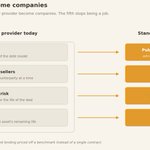
Compute derivatives will replace the "offtakes" with instruments allowing a finer-grained control over risk.
Sellers hate offtakes, because they want to get better rates on riskier shorter-term rentals. Buyers also hate them, because they want flexibility.
Compute derivatives allow more risktaking and more flexibility. The reason there's a compute shortage is that risk-taking and speculation is not possible.
This is otherwise a fantastic article, thanks for the @ComputeDesk mention.
David López Mateos retweeted
How do we know compute is a commodity ?
We track >500 GPU compute providers. Hyper-fragmentation is a hallmark sign of a commodity offering.
@ComputeDesk is making compute tradable.

This was such a fun format and ride. Are you confused about compute markets? Have a look and get your facts right

Great interview with @SenorScience of @ComputeDesk. He kicks it off strongly by calling compute a lot like electricity. @NodalExchange
The Knowledge: a snapshot of compute markets with David Lopez Mateos, Co... youtu.be/yYh4LMPqWyw?si=IgtR… via @YouTube

David López Mateos retweeted

Great interview with @SenorScience of @ComputeDesk. He kicks it off strongly by calling compute a lot like electricity. @NodalExchange
The Knowledge: a snapshot of compute markets with David Lopez Mateos, Co... youtu.be/yYh4LMPqWyw?si=IgtR… via @YouTube
David López Mateos retweeted

Thanks @JasonYanowitz for having @BrettHarrison and I on The Empire pod. There's money to be made for people listening to the episode.

On the Empire Pod set today talking compute markets with @JasonYanowitz and Compute Desk's @andrawesbahou!

David López Mateos retweeted
Can't comment because @AnthropicAI is an investor in @ComputeDesk but the flatlining graph is not what people assume it is.

David López Mateos retweeted
That's why @deedydas invested in @ComputeDesk, building capital markets infrastructure to hedge compute exposure.

The economics of a Neolab.
A neolab is loosely defined as a startup of AI researchers who raises a lot of money pre-production to be able to finance GPU compute to take on a large AI problem.
To buy 1000 GB300s or ~14 NVL72 racks will set you back $125-150M for 3yrs with 15-30% upfront. That’s about ~2-2.5MW.
Thats about enough to do 10^25 flops a quarter and get to a GPT-4 level model which is 1-2 OOMs off frontier for pretraining.
If you post-train on a great open source model, you have a better chance of getting to frontier. The risks are a) you need to spend millions on RL environments too and b) being lapped by another model release while being tied to a base model.
For this to payback, you need to give your customers a better and ideally cheaper inference service than a base model and serve them for long enough to recoup your large investment. Even at 50% margin on inference, to recoup $10M in training means serving ~10T tokens (!) if you price like Fable / Astra given a standard cache read / input / output split ($2/M blended). And you have to justify being better than a release like Opus 5.5 which is even cheaper. Often, you end up charging your customers a huge premium in terms of platform fees and compute fees on top of pure inference.
Meanwhile, every hour you’re not utilizing your GPUs you are burning money so you typically resell this compute back to a broker or run inference for open models / resell spot instances. At below a ~60% utilization on spot, you will still lose money.
Add to that insane cost of talent.
So what can you do with the compute?
- Not play the model game at all.
- Play an entirely different model game (Jev, World Labs) that if big labs played, would either a) cannibalize their business or b) be incrementally not significant revenue c) would cause too much distraction from the main main thing
- Acquire a proprietary data set (Peridodic Labs) in enough volume in a domain of usefulness to eclipse frontier quality. Often happens in robotics, biology, chemistry.
If you do overcome the challenge of building a model that is useful and well priced beyond big labs models, given the huge price of compute, you still need to play in an area where the revenue / compute ratio is signficant and market demand is large enough to payback your compute spend.
It is a difficult game.
It's only a matter of time till neoclouds introduce dynamic pricing. If you are running at full capacity, by definition, you are pricing too low and leaving money on the table. As margins compress, that money will become a critical part of your revenue optimization.


David López Mateos retweeted
Big
Thanks @Google for having @ComputeDesk × @NodalExchange. Hyperscalers can soon trade and hedge compute, stay tuned.

“We track over 1000 different oil prices” @neilbradford . Who still thinks oil is a homogeneous commodity?

Vote, should I write a follow up blog post about how and when the free option disappeared? Also, congrats to all of those who actually took the free option! We won
Compute Desk CTO @SenorScience presciently wrote that "B300s at B200 prices is a free option" at the end of April.
The market hadn't priced in the fact that KimiK3 would come out, uniquely suited to work on B300s. We could have sold you an option to hedge that.
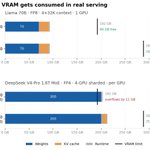
"If MoE keeps scaling, toward multi-trillion-parameter models with longer context, the per-card headroom matters even more".
Here's the original article:
computedesk.substack.com/p/b…
David López Mateos retweeted
Thanks for covering @ComputeDesk. Missing from analysis is how @Architect_Fi 's ComputeConnect, built on Compute Clear bridges price hedges and capacity hedges though an Exchange-for-Physical mechanism. Otherwise a good primer !


Do you want to be knowledgeable like @BrettHarrison ? Get the data

David López Mateos retweeted
Thanks @Google for having @ComputeDesk × @NodalExchange. Hyperscalers can soon trade and hedge compute, stay tuned.
1/ A common way to build a GPU forward curve: take the 6-month reserved rate and the 12-month rate, subtract the six months already priced, call the remainder the price for months 7 to 12. That subtraction doesn't work.

3/ The subtraction loads the extra discount onto the marginal months. Each extra point of discount on the 12-month contract becomes two points of apparent decline in months 7 to 12. From 2-year to 3-year contracts the factor is three. B200 year-3 delivery comes out at 21% of today's rate.