We're proud to support the open letter, launched by #SkyPower, calling for a gov-backed pilot tender to accelerate #eSAF. A concrete step to scale production, bring price stability & unlock investment
project-skypower.org/news-pu…
📢 The IMO approves mandatory GHG limits for marine fuels starting 2027 and carbon pricing for non-compliance!
Sempen is developing green ammonia in Brazil — delivering scalable, verifiable low-emission fuels to power the shipping sector’s decarbonization. 🚢🌎
#GreenAmmonia
39
🛫 @EASA 's new SAF Report confirms: eSAF costs €7,695/t
At Sempen, we’re developing eSAF in Brazil at significantly lower costs, leveraging low-cost H₂ and biogenic CO₂.
The race is on — and we're ready. 🚀
#eSAF #Sustainability #Aviation
🛫 EASA releases its annual SAF Report: The race for cost-competitive eSAF is on! 🛬
The latest publication from the European Union Aviation Safety Agency details official SAF costs under the ReFuelEU Aviation regulation, establishing key reference prices! Go Brazil!!
1/2
Full report here:
easa.europa.eu/en/document-l…
2/2
1
20
Check the list of all the selected projects! lnkd.in/eYxEWREQ
At the YTEC event, our Head of Strategy shared insights on strategic and regulatory roadmaps key to eSAF success. Securing an eSAF offtake contract? Understanding EU regulations is mission-critical—they shape contracts, technical, and commercial frameworks for long-term success.
🚀 Proud to support the groundbreaking #Kahirós Project, Uruguay’s first #GreenHydrogen project for road transport—a Latin American first! Huge thanks to Santander, FRAYLOG, Fidocar, Ventus, and Montes del Plata. Together, we’re driving a greener future! 🌍💪 #SustainableFuels
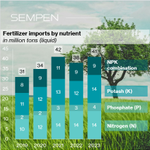
Brazil imports 40M tonnes of fertilizer yearly, costing $27B in 2022—mostly from Russia, Canada, and China.
💡Green hydrogen can drive local fertilizer production, using Brazil’s resources to produce green ammonia, reduce food production risks, and ease the foreign balance.
2
48
✈️@ICAO approved 11 pathways for SAF production. SAF must meet some sustainability indicators in 3 categories:
1. GHG and Carbon Stock
2. GHG reduction permanence, site Conservation, Waste, Chemicals, Seismic & Vibrational Impacts
3. Human, labor, land rights & social development
1
102
The lack of expansion of electricity grids can be a bottleneck to reach Net Zero
@IEA: we need a 20% faster growth in global electricity use over the next 10y to achieve Net Zero Emissions by 2050. However, transmission grids, could be a detractor for full renewables development
🌿 Synthetic fuels are crucial to Net Zero, converting H2 and biogenic CO2 into long-chain hydrocarbons. Key sources of CO2 are biofuel production and biomass power plants
DAC is promising but needs more scalability
💡 @IEA: CO2 from bioethanol is the most cost-competitive option
🌿Geopolitics of Green Hydrogen: possible effects
• New power nodes could emerge in regions with low-cost renewable energy
• H2 trade and investment flows will differ from traditional fossil fuel-based energy relationships
• Trade will shift from O&G to biofuels, H2 and others
1
78
🌱F Haber & C Bosch pioneered the Haber-Bosch process, transforming agriculture by enabling the synthesis of ammonia from NH and H2 gases on a large scale.🌱
With this process, we can eliminate reliance on fossil fuels and reduce carbon emissions on fertilizers production 🌍
What is the Electrolysis process and what are Electrolyzers pros and cons?💧
The electrolysis process splits water molecules into H2 and O2 with electricity⚡️
The market offers 3 technologies for electrolyzers. Depending on the project, one technology can fit better than others🌟
2
78
What is the 𝗨𝗦 𝗜𝗻𝗳𝗹𝗮𝘁𝗶𝗼𝗻 𝗥𝗲𝗱𝘂𝗰𝘁𝗶𝗼𝗻 𝗔𝗰𝘁 (IRA)?
Is a tax credit program that sets the standard for clean hydrogen subsidies ww! 🌎💚
Key Characteristics:
1️⃣ Max $3 per kg of h2
2️⃣ Available for 10 years
3️⃣ additionality, geographical & temporal correlation
🌱The True Green Essence of Hydrogen!
What makes H2 green?💚Green Hydrogen is a product of water electrolysis using renewable power. But it takes more to ensure its green credentials!
The European Union outlines 3 key conditions: Additionality, Geographical & Temporal Correlation
🌍 Understanding the Challenge: Did you know that 25% of current CO2 emissions stem from hard-to-abate sectors, contributing 8 GT CO2/yr? This is a significant concern and, without action, these emissions could surge by 50% by 2050!