

I dwell in the darkness…but not in a creepy way! 🤣 Astrophotography adventures from the UK, USA & Spain 🔭📸🇬🇧🇺🇸🇪🇸
United Kingdom
Joined December 2021
- Tweets3.1K
- Following1.2K
- Followers2.7K
- Likes1.9K





Pinned Tweet
I’ve just officially launched my new YouTube Channel and hope you can join me on my Astrophotography adventures here in the UK! 🔭🇬🇧 Link to my welcome video here 👉🏻 youtu.be/ZINgwmOp2ks Thanks! #Astrophotography #Space #UK #Telescope #Astrophotographer

My Helix Project continues at the fabulous Kagga Kamma Remote Observatory in South Africa…🔭📸🇿🇦
Final results coming soon! 👨🏻💻
🔭 Askar FRA300 Pro
📸 ZWO 533MM Pro
🔭 ZWO AM5
⭕️ Antlia 31mm 7nm SHO
🔴 Antlia 31mm LRGB
💻 ZWO ASIAIR Plus


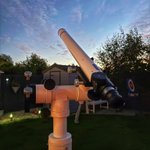
Hey @nameless6021 look what just arrived! We’re scope twins now!! 😂🔭👍🏻
Excited to get first light on my new Sightron D50L 50mmm f/16 Refractor!


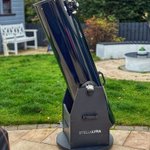
New Astro gear arrived this afternoon…just need some clear skies for testing!! 🤣🔭📸
Results coming soon to my YouTube Channel…stay tuned! 🎥

Scotia Astro retweeted

I've made an introductory video about The Lunartric. This is an interactive lunar atlas and exploration tool. I'm pretty pleased with the realism I've managed to achieve on a mobile device. Check it out! #TheLunartic #Moon
youtu.be/gntlxRJiXO4

A cool case of ‘Two Birds With One Scope’ in my latest image from southern Australia! 🤣
I managed to capture the beautiful Eagle and Swan Nebulae in one frame, thanks to the wide field view of the awesome wee SeeStar S30 Pro, which I’m running remotely at Martin Pugh’s excellent facility.
The Eagle Nebula, classified as M16, lies around 7,000 light years from Earth in the constellation of Serpens. It contains a feature known as the Pillars of Creation, which is famous from the image taken of it by the Hubble Space Telescope.
The Swan Nebula (sometimes referred to as The Omega Nebula) is classified as M17 and is located in the constellation of Sagittarius, some 5,500 light years away. It’s a massive star factory, where new stars are formed within the mass of gas and dust of this stunning deep sky object.
Hope you’re all getting some time at your scopes and clear skies to you all…🔭📸🦅🦢
⏱️ 276 x 30s
🎯 M16 ‘The Eagle Nebula’ & M17 ‘The Swan Nebula’
🔭 SeeStar S30 Pro – at Yass, New South Wales

After a recent house move, I’m glad to be back in the ‘Astro Zone’ and processing some images again!
Here’s the latest offering from my remote setup in South Africa, featuring the stunning Small Magellanic Cloud with a nice dose of H-alpha signal in the mix.
As a far northerner up here in Scotland, I have no chance of seeing these wonderful targets from my own backyard, so remote imaging is my outlet to the southern skies!
With a wide field refractor and the awesome square sensor of the IMX533 chip, I was able to frame this massive deep sky collective quite nicely.
The Small Magellanic Cloud is an irregular dwarf galaxy, containing several hundred million stars and countless regions of bright emissions.
It’s located around 200,000 light years from Earth and sits (from our perspective) in the constellation of Tucana.
I have been very fortunate to have a great wee rental setup at the excellent Kagga Kamma Observatory and I’ve got loads more data incoming, so stay tuned!
Thanks for looking and clear skies to you all! 🔭📸✨
📍 Kagga Kamma Remote Observatory
⏱️ 3h 24’
🎯 Small Magellanic Cloud
🔭 Askar FRA300 Pro
📸 ZWO 533MM Pro
🔭 ZWO AM5
⭕️ Antlia 31mm RGB
🔴 Antlia 31mm H-Alpha
💻 ZWO ASIAIR Plus

The Eye of Sauron, The Eye of God, The Helix Nebula or just plain ol’ NGC7293…whatever you choose to call it, this deep sky object is a beauty!
Located around 650 light years from Earth, in the constellation of Aquarius, the Helix is a planetary nebula (named from their disc like appearance).
Its shape was formed in the distant past when a star ended its days and exploded in spectacular fashion, into the cosmos. The resulting cataclysm spewed enormous amounts of energy and the outer layers of the star were expelled at tremendous speed. This left the bright glowing gases that we see today (or more correctly from 650 years ago!) which shape this fantastic deep sky object.
I shot this with a remote SeeStar S30 Pro, sited under the pristine skies of southern Australia at Martin Pugh’s excellent observatory.
I can’t image the Helix from my backyard up here in Scotland, so it was a real treat to see this stack going on live on my iPhone.
Wishing you all a great weekend and clear skies! 🔭📸
⏱️ 396 x 30s
🎯 NGC7293 ‘The Helix Nebula’
🔭 SeeStar S30 Pro


My tour of the southern skies continues with a short study of the truly massive Large Magellanic Cloud.
Located around 200,000 light years from Earth, it straddles the constellations of Dorado and Mensa in the southern hemisphere.
The Large Magellanic Cloud is a highly active region which is teeming with new stars being born amongst its many brilliant objects, including the large Tarantula Nebula in the upper section of the image.
The constant activity of this deep sky region, collapses dense gas clouds, which erupt in powerful emissions and a collection of bright vivid colours (when viewed with astro filters).
The awesome wide field capabilities of the SeeStar S30 Pro means that I’m able to take in a huge swathe of this gargantuan target.
I took this image with a remote scope located in southern Australia, at Martin Pugh’s excellent facility.
⏱️ 210 x 30s
🎯 Large Magellanic Cloud
🔭 SeeStar S30 Pro

I’ve recently taken on another remote rental scope to continue my quest to cover as much of the night sky as I can!
I’m super excited to be operating an awesome SeeStar S30 Pro at Martin Pugh’s excellent observatory in Yass, Australia.
For my first light image, I wanted to make the most of this wee smart scope’s field of view and opted for a quick study of the Small Magellanic Cloud.
I’ve got no chance to see this wonderful dwarf galaxy from my backyard here in Scotland, so the benefits of remote imaging are a no brainer for me.
Located around 200,000 light years from Earth, in the constellation of Tucana (with a bit peaking into nearby Hydrus), the Small Magellanic Cloud contains hundreds of millions of stars!
Stay tuned for more southern objects coming soon and thanks for looking! Clear skies to you all! 🔭📸✨
⏱️ 67 mins
🎯 Small Magellanic Cloud
🔭 SeeStar S30 Pro

Horrific news! 😭🔭🤬
UK's iconic Jodrell Bank telescope faces axe in science cuts bbc.co.uk/news/articles/c5y6…

I’m continuing to have great fun with my remote scope in South Africa, even when the Moon is up! ;)
While awaiting more favourable conditions, I couldn’t let a clear night go to waste, so I started to scout Sagittarius for some brighter objects.
M22 (aka The Great Sagittarius Cluster) fit the bill nicely and I spent some time collecting photons from the beautiful Globular Cluster.
Located around 10,000 light years from Earth, M22 was ‘discovered’ in the mid 17th century and was one of the first globulars detected in the night sky.
As it sits (from our perspective) in the dense star fields of the Milky Way around the Galactic Bulge, its actually true brilliance is somewhat dimmed, as its light has to fight through the copious amounts of gas and dust between us.
Thanks for looking and clear skies to you all! 🔭📸✨
📍 Kagga Kamma Remote Observatory
⏱️ 3h
🎯 M8 ‘Lagoon Nebula’
🔭 Askar FRA300 Pro
📸 ZWO 533MM Pro
🔭 ZWO AM5
⭕️ Antlia 31mm RGB
💻 ZWO ASIAIR Plus

Here’s the result of a quick wee project that I recently completed with my remote scope in the southern hemisphere!
While scouring the Milky Way, I took some time to pay a visit to LDN66, aka The Snake Nebula in the constellation of Ophiuchus. It is located close by (in cosmic terms) at around 650 light years from Earth.
The dark dust lanes of this deep sky object act as a shroud for some of the background stars, which it so aptly obscures.
Its a striking contrast to the surrounding dense star fields of our home galaxy and I’ll certainly be paying this area another visit and trying for a larger mosaic, to take in the many dark dusty areas of this portion of the souther skies!
Clear skies to you all! 🔭📸🐍
📍 Kagga Kamma Remote Observatory
⏱️ 5h
🎯 LDN66 ‘The Snake Nebula’
🔭 Askar FRA300 Pro
📸 ZWO 533MM Pro
🔭 ZWO AM5
⭕️ Antlia 31mm RGB
💻 ZWO ASIAIR Plus

Does this budget SV535 APO from
Svbony come up with the goods?! 🤔
Come and find out in my latest video here 👉🏻 youtu.be/joYgYKRLt3k?si=EsGW…
#space #astrophotographer #telescope #astrophotography #svbony

I don’t know why, but I’ve always been really drawn to images of Centaurus A.
From my location here in Scotland at 56 degrees North, there was no way to image it…until now.
Using a remote scope in South Africa, I’ve finally ticked another box on my astro imaging bucket list!
Centaurus A (or Caldwell 77) is an awesome elliptical galaxy in the constellation of Centaurus and lies around 11 million light years from Earth.
Its unique shape is thought to be the result of an ancient collision between two galaxies which left a trail of glorious star clusters and stunning dark dust lanes in its wake.
As if this isn’t cool enough, Centaurus A goes one further as it’s also home to a supermassive black hole, located at its centre.
This is just a quick study with LRGB filters, but I’ve seen other excellent images with a good amount of H-alpha in the core and in the galaxy’s environs, so I’ll certainly be paying Centaurus A another visit!
For now though, thanks for looking and clear skies! 🔭📸
📍 Kagga Kamma Remote Observatory
⏱️ 7h 30’
🎯 M20 ‘Trifid Nebula’
🔭 Askar FRA300 Pro
📸 ZWO 533MM Pro
🔭 ZWO AM5
⭕️ Antlia 31mm RGB
💻 ZWO ASIAIR Plus


My Southern studies of Sagittarius continues with a short wee visit to M20 aka The Trifid Nebula.
This whole area is a nice mix of open star clusters and emission nebulae both within and surrounding the Trifid.
Located ‘just’ 5,000 light years away, it’s relatively close by cosmic standards.
I shot this in straight RGB with a mono camera to bring out the bright pinks and blues of M20, but my camera also picked up a nice amount of Hydrogen emissions in the environs…will need to revisit with a nice dose of SHO to combine with this first set.
This is my first attempt at the Trifid and as it’s nowhere near high enough from my home location in the UK, I took this image with a remote scope in South Africa.
Thanks for looking and clear skies to you all! 🔭📸✨
📍 Kagga Kamma Remote Observatory
⏱️ 7h 30’
🎯 M20 ‘Trifid Nebula’
🔭 Askar FRA300 Pro
📸 ZWO 533MM Pro
🔭 ZWO AM5
⭕️ Antlia 31mm RGB
💻 ZWO ASIAIR Plus


I’m super excited to be operating another remote scope beneath my cloud covered skies in Scotland!
Here’s a (very) quick first light image from the Kagga Kamma Remote Observatory in South Africa, which will be the first of many over the coming months…I’m renting a nice wee wide-field refractor with a great mono setup, so I’ll be traversing as much of the southern skies as I can! 🇿🇦
A big shout out to @AstroCapetown and Gerhard for their help, advice and super friendly service in getting me up and running from over 6,000 miles away.
I’ve always wanted to image the lovely Lagoon Nebula, but it’s waaaay too low from my vantage point here in the UK.
This giant star forming region is rich with interstellar gas, bright emissions and dark dust lanes making it a place of contrasts and I’m so thrilled to finally have a go at it.
This image is a short integration test of pure RGB and I’m keen to go back and go deeper with my SHO filters on this wee rig.
The Lagoon (classified at M8) is located in the constellation of Sagittarius and lies some 5,000 light years away from Earth.
Thanks for looking and clear skies to you all! 🔭📸✨
📍 Kagga Kamma Remote Observatory
⏱️ 3h
🎯 M8 ‘Lagoon Nebula’
🔭 Askar FRA300 Pro
📸 ZWO 533MM Pro
🔭 ZWO AM5
⭕️ Antlia 31mm RGB
💻 ZWO ASIAIR Plus


