

Innovative isolation gown redefining infection prevention globally. Safer healthcare for patients & providers.
Tampa, Florida, USA
Joined August 2025
- Tweets186
- Following35
- Followers9
- Likes22




If you can't see contamination, it's easy to forget that it exists.
That is one of the challenges of infection prevention.
Microorganisms don't announce themselves.
They don't leave visible fingerprints on a stethoscope.
#InfectionPrevention #InfectionControl #ScopeShield
They don't change the colour of a door handle or tell us which surface they have contaminated.
This is why infection prevention requires intentional behaviour.
Clean-looking ≠ microbe-free.
Dry-looking ≠ uncontaminated.
Frequently used ≠ automatically safe.
#PatientSafety

A clean-looking stethoscope can still carry microorganisms.
That statement can make us uncomfortable but infection control is not about what something looks like. It is about what we cannot see.
#InfectionControl #InfectionPrevention #PatientSafety #ScopeShield
Good infection prevention relies on evidence-based practices, appropriate decontamination and consistent adherence to protocols.
#InfectionControl #InfectionPrevention #PatientSafety #HealthcareWorkers #ScopeShield #HealthcareInnovation
This is why visual cleanliness and microbiological cleanliness are not the same thing.
A surface can look spotless.
A piece of equipment can look new.
A healthcare environment can smell clean.
And microorganisms can still be present.
#ScopeShield #HealthcareInnovation

A stethoscope can move between multiple patients during a clinical shift. If it is not appropriately cleaned and disinfected between patient encounters, it can become contaminated.
The same principle applies to many frequently touched surfaces and pieces of clinical equipment.
We go to hospitals because we expect to get better. Yet sometimes, the place where we seek care can also become a place where infections are acquired.
Healthcare-associated infections (HAIs) can develop during or after a patient receives care.
#ScopeShield #InfectionPrevention

Every infection prevented means one less patient exposed to avoidable harm.
The safest hospital is not necessarily the one that looks the cleanest. It is the one that consistently prevents contamination from becoming transmission.
#InfectionControl #PatientSafety #GlobalHealth
Microbes don't need to be visible to move from one patient, surface or piece of equipment to another.
It requires consistent hand hygiene, environmental cleaning, appropriate PPE, equipment decontamination, safe clinical practices and systems that make the safer choice easier.
Healthcare-associated infections (HAIs) may be associated with contaminated hands, surfaces, equipment, devices, or gaps in infection prevention practices.
You cannot always see the problem.
A bed may look clean.
A clinical room may look spotless.
An equipment may look normal.
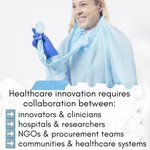
#Healthcare innovation cannot achieve meaningful impact alone.
It requires #collaboration between:
➡️ innovators and clinicians
➡️ hospitals and researchers
➡️ NGOs and implementing partners
➡️ procurement teams and manufacturers
➡️ communities and healthcare systems

We are working with professionals in healthcare, infection prevention, NGO programming, procurement, distribution, or global health, and exploring how practical innovation can contribute to safer healthcare environments.
#HealthcarePartnerships #Procurement #InfectionPrevention
As we continue engaging stakeholders across Africa, we are interested in conversations around:
🔹 Product evaluation
🔹 Clinical feedback
🔹 Pilot opportunities
🔹 Healthcare partnerships
🔹 Distribution
🔹 Institutional procurement
Our goal is bigger than introducing a product
Healthcare systems across the globe are diverse.
🖋️ Resources & Clinical workflows differ.
🖋️ Procurement systems differ.
🖋️ Healthcare priorities differ.
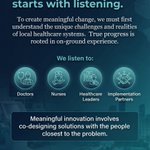
#Healthcare innovation cannot simply be transferred from one setting to another without listening to local realities.
🤖 Made with AI

Our market engagement approach at #ScopeShield includes listening to #doctors, #nurses, #healthcare leaders, and potential implementation partners.
We want to understand:
* What #challenges exist?
* What #solutions are practical?
* What #barriers could affect adoption?
Healthcare workers do not operate in perfect conditions.
They work during busy shifts.
They respond to emergencies.
They manage multiple patients.
They work under pressure.
That is why infection prevention solutions must be practical.
#ScopeShield #InfectionPrevention #IPC

A stethoscope is one of the most frequently used tools in patient care.
It moves from patient to patient, ward to ward and shift to shift.
But how often do we stop to consider what may be travelling with it?
#ScopeShield #InfectionPrevention #InfectionControl #PatientSafety
ScopeShield combines a disposable isolation gown with an integrated stethoscope cover, helping address an often-overlooked opportunity for cross-contamination during patient care.
#ScopeShield #InfectionPrevention #InfectionControl #PatientSafety #HealthcareInnovation
In busy healthcare environments, consistent cleaning between every patient interaction can be challenging.
This is not about blaming healthcare professionals but about designing practical solutions that support safer workflows.
#ScopeShield #HealthcareInnovation #Healthcare
Introducing an innovation into healthcare is not simply a marketing exercise. It is a responsibility.
Our goal is to generate the evidence and partnerships needed to determine where, when and how it can create meaningful value.
#ScopeShield #HealthcareInnovation #GlobalHealth