
Where the world turns to talk about science.
New York, NY
Joined May 2009
- Tweets11.4K
- Following176
- Followers9.7K
- Likes716





ScienceBlogs retweeted

So excited to share that I’m starting a PhD in Mathematics at @Cambridge_Uni this October!
I’ll be joining the Department of Applied Mathematics and Theoretical Physics (DAMTP) specifically in the Astrophysics group.
This group carries out research into a wide range of topics involving astrophysical fluid dynamics (my favourite!) and nonlinear dynamics. This includes the dynamics of astrophysical discs, planetary formation and evolution, extrasolar planetary systems and stellar magnetohydrodynamics!
So excited to finally share this, and even more excited to start!

ScienceBlogs retweeted

Who has made a lasting difference in your field? Nominate an exceptional ASBMB member as an ASBMB Fellow. Self-nominations are welcome!
Deadline: Sept. 30
asbmb.org/about/asbmb-fellow…
ScienceBlogs retweeted
Last week to submit a proposal for ASBMB 2027!
Help shape the scientific program for #ASBMB2027 in Boston by submitting a proposal for a mini-symposium, workshop, interest group or career talk.
➡️Submit your proposal by July 15: asbmb.org/annual-meeting/pro…
#MolecularBioscience

ALT Four panelists seated on stage during a discussion, one woman is speaking into a microphone while others listen attentively.
ScienceBlogs retweeted

Acupuncture works as well as homeopathy but isn't as refreshing during a World Cup hydration break.

ScienceBlogs retweeted

How to tell us you don't live there and are just engagement farming.

unavailable

ScienceBlogs retweeted

Pleased to announce the first patient has been dosed in our Phase 1 clinical trial, evaluating our lead candidate for optic neuropathies. This marks a key milestone as our epigenetic restoration therapy enters the clinic for glaucoma & NAION. Read more: bit.ly/4urPcMn
ScienceBlogs retweeted

Every family is paying about $30k annually for healthcare they barely use, and that typically comes with a high deductible and out of pocket costs.
The median healthcare spend is $500 annually.
Now imagine an alternate version. Every American has a tax exempt HSA, but to participate, you must purchase at least a catastrophic insurance plan. If we allowed pre-ACA plans, we are looking at $6000-12000 per year. For the poor, instead of Medicaid or an ACA subsidy, the government just funds their HSA for them.
Now every family is putting $15k a year into an HSA. Most people would barely touch that. Maybe use some to pay for a DPC and the occasional lab or prescription. But by retirement, everyone would have $2-5 million saved up. That could pay for all lifetime medical expenses for 95% of Americans.
The only people who have to deal with insurance companies are those with catastrophic high cost events (trauma, cancer, etc). The only role government has is as a reinsurance to keep premiums low and help people with pre existing conditions get plans. Or for the truly destitute who burn through their HSA and cannot care for themselves (universal backstop coverage).
This would provide truly universal coverage, give money back to patients, simplify healthcare, and make every American richer.

this always gives me such sticker shock - the average annual health insurance premium for families is nearly $27K now!
I updated the numbers for the upcoming Healthcare 101 course (starts July!) - one of the points I try to get across is that most people don't realize how much of their paycheck is getting eaten by healthcare. It feels indirect because
- it happens in the form of not getting wage increases
- it's deducted from your paycheck
- it happens in the form of Medicare taxes too
- Deductibles are only incurred when you actually get care, so you only "feel" that when you actually see the doctor but it is coming out of your pocket
Pretty crazy!

ScienceBlogs retweeted
Don't tell either of them psychology isn't science and this claim proves it yet again.

A Stanford psychologist spent 4 years proving that the simple act of walking generates 60% more creative ideas than sitting, and the experiment she designed to kill every alternative explanation is one of the most decisive findings in modern psychology.
Her name is Marily Oppezzo.
She got the idea for the study while walking with her advisor at Stanford to discuss her thesis topic, and the paper she eventually published in the Journal of Experimental Psychology in 2014 is sharp enough that it should have ended the seated meeting on the day it came out.
She ran 4 experiments on 176 people. Same person tested twice. Once sitting, once walking. The creativity tasks were the standard ones psychologists have used for decades to measure how good a brain is at generating novel useful ideas.
The result was almost too clean to publish.
81% of participants in the first experiment produced more creative ideas while walking than while sitting. In the second experiment, 88%. In the third, 100%. Every single person walked into a more creative version of themselves.
On average, people generated 60% more novel useful ideas the moment their legs started moving.
The skeptical question is the obvious one. Maybe it was the fresh air. Maybe it was the scenery passing by. Maybe it was the change of environment doing the work, not the walking itself.
Oppezzo killed every one of those explanations with one experimental decision.
She put people on a treadmill facing a blank wall. No scenery. No fresh air. No environmental change. Just legs moving in place while staring at white drywall. The 60% boost held.
Then she ran the experiment that closed the case completely. She took participants outside in two conditions. Half of them walked through a Stanford courtyard. The other half were pushed through the exact same courtyard in a wheelchair. Same outdoor stimulation. Same scenery passing at the same speed. The only difference was whether the legs were moving.
The walkers produced dramatically more novel high-quality ideas than the wheelchair group. The outdoors did almost nothing on its own. The walking did everything.
This is the part of the study that hit hardest when I read it the first time.
She also tested the opposite kind of thinking. Convergent thinking. The kind where there is one right answer and you have to narrow down to it.
Word puzzles where 3 words share a hidden fourth word that connects them. The seated participants did slightly better on these. Walkers got slightly worse.
Walking is not a general intelligence enhancer. It does one specific thing. It opens up the divergent search inside your brain. The part that generates options. The part that produces unexpected connections. The part that takes a problem and finds five ways into it instead of one.
When you need to converge on the single right answer, sit down. When you need to find the answer in the first place, get up.
The mechanism is now well understood. Walking selectively activates what neuroscientists call the default mode network, the system inside your brain that runs when you are not consciously focused on anything. The DMN is where mind-wandering happens. Where memories cross-reference each other. Where ideas that have been sitting in separate folders inside your head finally bump into each other.
When you sit at a desk and force yourself to concentrate, you suppress the DMN. When you walk at a natural pace, the executive part of your brain gets just busy enough handling the walking that the DMN comes online and starts doing the work that focus was blocking.
The most useful finding in the entire paper is the one almost nobody quotes.
The boost did not turn off the moment people stopped walking. Participants who walked first and then sat back down stayed elevated. Their next round of seated creativity work was still significantly better than people who had been sitting the whole time. The rest lingered for at least several minutes after the legs stopped moving.
You do not need to do creative work while walking. You need to walk before the creative work. The brain holds the state.
The history of this is the part that should haunt anyone who still does meetings in chairs.
Charles Darwin built a gravel loop behind his house in Kent called the Sandwalk and walked it 3 times a day for the rest of his life. The theory of evolution was developed one lap at a time on that path.
Nietzsche walked up to 10 hours a day during the years he wrote his most important books and openly said the work was conceived on his feet.
Beethoven composed for the morning and walked for 5 hours every afternoon with a pencil in his pocket for when something landed.
Kahneman said the best thinking of his Nobel Prize-winning career happened on leisurely walks with Amos Tversky. Steve Jobs refused to take important conversations sitting down. He held them on foot.
Every one of them was using the system Oppezzo would not measure until 2014. They just did not know what to call it.
The question worth sitting with is the one almost nobody asks.
Every meeting you have ever attended sitting around a table was a meeting held at a fraction of the brain power that was actually available to the people in the room. Every brainstorm that got stuck inside a conference room. Every problem you tried to solve at a desk and gave up on. Every idea you could not quite get to.
The intervention is the easiest one in modern science. No supplement. No app. No subscription. No training program. Just a pair of legs and 15 minutes.
The Stanford lab proved it. The philosophers knew it. The neuroscience explains it.
And almost everyone reading this is still trying to think their way out of problems sitting completely still.

ScienceBlogs retweeted
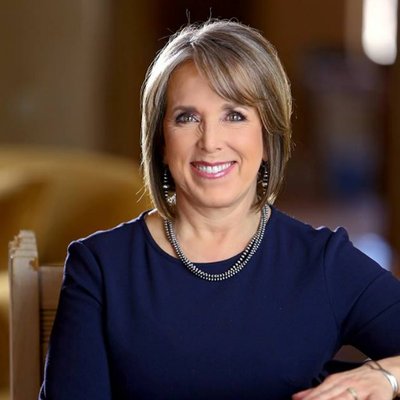
To every medical resident and physician looking for a place to plant roots: New Mexico is calling. Free child care. Tuition-free college for your kids. And now up to $300,000 in student loan repayment for physicians. We’re working to make New Mexico The best place in America to practice medicine and build a life.
Applications for student loan forgiveness open June 1. Link in the first comment.
#NewMexico #Physicians #LoanForgiveness #NMHealth
ScienceBlogs retweeted
A US company had one ready to test over a decade ago but there's no need in the US and the Obama administration refused to fund it.

ScienceBlogs retweeted

Tesla reports one major collision every 5.3 million miles with FSD engaged. The US average: one every 660,000 miles. That's approximately 8x SAFER.


ScienceBlogs retweeted

Medicine is the only profession where people willingly give up their youth to study for twelve years beyond high school while accumulating interest on $300K worth of student debt, only to be told they’re:
1) Pharma Shills
2) Doing it all wrong
3) Unsafe without supervision from folks with a fraction of the training
As thanks, Doctors work nights, weekends & holidays, pay thousands out of pocket for ever increasing “merit badges” like “maintenance of certification”…
And still have to ask for permission to prescribe drugs or perform a procedure….from people who aren’t at the bedside.
Those bureaucrats also give them 10-15 minutes to spend with each patient, while documenting minutiae that is completely irrelevant to care.
They top off the week with uncompensated documentation time so hospitals can make more money off of their work.
God forbid they prescribe an opioid…
That’s career ending.

ScienceBlogs retweeted

How long until the EU admits that banning GMOs was a choice and in hindsight, it was a strategic mistake.
ScienceBlogs retweeted

Powerful: Texas A&M wide receiver KC Concepcion on why he decided to talk to the media at the NFL combine despite having a stutter.
“I want to be a role model for those who are not able to speak in front of large crowds.”
KC is a true role model ❤️👏
ScienceBlogs retweeted

The official journal of the Canadian Paediatric Society has just acknowledged that more than 100 of its case reports are fabricated. Incredible reporting from @RetractionWatch: retractionwatch.com/2026/03/…

ScienceBlogs retweeted
Women with breast cancer who use alternative medicine instead of conventional therapy have survival rates no better than getting NO treatment at all.
But women who did BOTH also did worse.
A thread on a sobering new study. 🧵
1/11


