

Senior Software Engineer | Data Engineer
Nicaragua
Joined July 2011
- Tweets5.3K
- Following169
- Followers96
- Likes3.5K



Saul Burgos retweeted

notes on using AI productively:
- you can separate most work into two buckets: AI-verifiable and not. how you should work depends on which bucket your work falls into
- "verifiable" boils down to whether AI can independently tell (verify) if work that it completes is good or not.
- if your work is verifiable, design a verifier or system of verifiers and "let 'er rip." use as much AI as you can and get out of the way. you're not the bottleneck anymore, so no marginal attention is required as tasks scale.
- if it might be verifiable, you can try building an AI judge. but you need evals to test the judge's competence. @hammer_mt is my go-to on how to do this well. if you can get your judge good enough, you have verifiable work. back to throwing as much ai at your work as you can
- sometimes a good judge is easy to build, sometimes it's so hard that you may as well not bother.
- if your work can't be verified by an AI, that leaves you or someone else as the judge. treat it like the olden days but with AI help. one or two tasks at a time, avoid context switching, protect your focus
- sometimes, there are verifiable sub-tasks within larger pieces of work. The same process re: judgment and eval-building applies to these sub-tasks. The more you can automate these away, the more you can focus on the pieces that you're uniquely suited for.

"The codebase is the materialized snapshot of the state in which you want your agents to extend, and you want that codebase to be so pristine, so great, that the next one that comes along is just very likely to continue that pattern and keep it really, really good." By @poteto
Saul Burgos retweeted

Wow. This is potentially life changing.
Claude driving Codex computer use.
In fact: can we please have all OpenAI interfaces with Anthropic models?

everyone thinks codex computer use only works inside codex
it doesn't, it's a local mcp server in the chatgpt mac app and claude code can just call it, even headless with claude -p
same 8-task test: opus 5.5 on codex's engine got 6/8, codex itself got 6/8, cua driver got 3-4/8 at 4x the cost
cua's background mode on mac only goes through accessibility, so canvases and drags just don't land
codex's engine sends real clicks and drags to the app without touching my cursor
no hover though, and it's unofficial, so enjoy it until a chatgpt update breaks it
give this to your claude:
"Set up Codex's computer use as an MCP server for you on my Mac. Find the "cua_repl" entry in ~/.codex/plugins/cache/openai-bundled/unified-computer-use//.mcp.json and register it as a user MCP server called "codex-cu" with the same command, args and env. Then test it by using Calculator in the background to work out 12 × 12."
Saul Burgos retweeted

One of the most difficult questions I get asked is something you'd think is among the most simple.
"How do I learn AI?"
Such a simple question, but the truth is I dont have a clue how to answer it. 95% of the things I learned no longer apply. Everything has changed so much.
I don't use AI like I used it even 3 or 4 months ago. Yeah, I can share the fundamentals, about what LLMs are and such, but that doesn't teach someone how to make it useful for them in the real world. And that's where the real magic is.
Who are the best educators for complete novices? If you were to "start over" what would you focus on first?
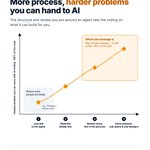
The hardest problem you can give an AI coding agent isn't set by the model. It's set by your process.
Chart based on HumanLayer's "Hitchhiker's Guide to Riptide" (Feb 2026). @humanlayer_dev

"Laws without enforced consequences are merely suggestions." - Ron Brackin
This is why I strongly recommend using hooks over adding more instructions to CLAUDE.md. Your agent can rot the context window & forget & just flat-out ignore them.
Guardrails > Guidance
– via djd0723
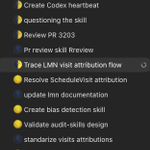
I created a public repo with the skills I use every day at work. The collection grew from critical-thinking techniques such as breaking down problems, separating symptoms from causes, checking evidence, and spotting bias.
github.com/SaulBurgos/thinki…
#OpenSource #AI

being able to recognize clean code from dirty code does not mean that we know how to write clean code.
By uncle bob
Check out my latest article: Use Your Critical Thinking When Working With AI linkedin.com/pulse/use-your-… via @LinkedIn

Saul Burgos retweeted

True a year ago and still true now:
Agents think that the way you solve 99% of problems is Just Add More Code.
Your job is to fight against that.
When you got this answer "You are absolutely right." from AI Agents.... you know it's time to go back, open a new session and think what you did wrong.
My new problem: "The problem isn't whether I can parallelize agent workloads... it's whether I can keep up with the output.
Cognitive load speaking. "
Saul Burgos retweeted

Ask ChatGPT to roast your computer usage after a day. Install the Computer History plugin, do things as usual and kindly ask it to roast your behavior. It's ... insightful 👀
=====
- You don’t use Slack. Slack uses you. It accounted for 48% of your recorded activity. Your Mac is essentially a $3,000 Slack notification with a keyboard.
- Your productivity system is clicking “Clear” until God intervenes. You clicked it 339 times while submitting 253 Slack messages. You are playing Whac-A-Mole against an organization chart.
- Your most-used keyboard shortcut is Delete. 1,191 times, including 1,065 in Slack. You’re not drafting messages. You’re negotiating peace treaties between your first thought and your executive function.
- You pressed ⌘C 133 times and ⌘V just 26 times. You acquire information like a Victorian gentleman collecting exotic birds and then apparently release most of it into the clipboard wilderness.
- You opened 42 tabs and closed 53. Technically, this makes browser-tab management your most successful project of the day.
- You switched between actual applications more than 200 times, while reading an X post that literally said, “You probably hate tab switching.” The call is coming from inside the Chrome window.
- Your busiest hour was 9 p.m., with more than 1,500 Slack events. Apparently “end of day” is less a time than a theoretical concept you enjoy discussing in meetings.
- Your document at the center of several important workstreams was called “Hello.” Nothing says organizational clarity like running half the company through a Google Doc named after the first thing software prints.

Every day I ask myself: do I am fast enough? do I am triggering enough agents in parallel ?
AI mode is really frustrating me
Benchmarks give agents the full context upfront. Real dev work isn't like that; it's about discovering edge cases as you build.
by aithatworks
Saul Burgos retweeted

recommended reading.
blog.senko.net/code-was-neve…
