

McLure II Professor | University of Pennsylvania | Director, PennLINC | neuroimaging, neurodevelopment, neuroinformatics, & mental health
Philadelphia, PA
Joined April 2017
- Tweets2.6K
- Following835
- Followers4.2K
- Likes10.1K





Pinned Tweet
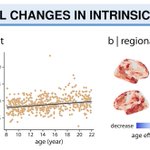
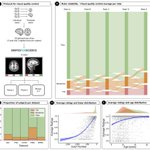
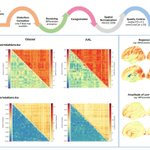
Huzzah for @stevenmeisler.com, whose preprint on our new fully-processed ABCD dMRI data resource is now out. The super-clear results from this monumental effort will undoubtably change the way we approach studies of white matter development going forward.

Diffusion MRI (dMRI) is a powerful tool to study white matter maturation. In our new preprint, we process and distribute a new resource of >24,000 ABCD dMRI scans using open source tools! We then evaluate how methods shape inferences about development.
🔗 bit.ly/3QMLG0K

Delighted to see this now out in Neuropsychopharmacology -- our living meta-analysis, dashboard, and open data for RCTs of MDMA for PTSD. Congrats to Brooke Sevchik + @singletonion + the whole team.

Now out in NPP (open-access): doi.org/10.1038/s41386-026-0…

Looks beyond cool!!! Congrats!!!!!

1/ 🚨 Just out in @NatureNeuro! 🧠
We profiled >6,000 features of brain dynamics across humans + monkeys, mice, fish and worms 🧑🐒🐒🐁🐟🪱 to find a shared neural endpoint of anaesthesia: spatiotemporal isolation of local activity 🧵
🔗 doi.org/10.1038/s41593-026-0…

Check out our new open data resource on myelin sensitive imaging! Includes many image types, test retest data, and fully processed derivatives. Massive congrats to @StevenMeisler Taylor Salo and a superb team!!!!

Check out this incredible work by @jorittmo and @_JakeVogel_ showing distinct functional axes of aging and AD!!

The first paper from my PhD is out in @NatureNeuro!
Aging and Alzheimer's disease both reshape how the brain communicates. But not in the same way: aging vs AD related alterations follow two distinct axes of brain organization
Paper → nature.com/articles/s41593-0…
🧵⬇️

Ted Satterthwaite retweeted

The ABCD Study at Yale is hiring a new post-baccalaureate research assistant! This is a great position to gain hands-on research experience in the field and to learn more about adolescent brain and behavioral development! 🧠 candlab.yale.edu/sites/defau…
Ted Satterthwaite retweeted

Just discovered this review and best practice guidelines for AI/ML for Neural Engineering. Some of the best illustrations I've seen of all the different ways cross validiation can (and should not) be done with time series data.
Carlson et al (2025). doi.org/10.1088/1741-2552/ad….

Ted Satterthwaite retweeted

⚠️ Preprint alert ⚠️
How does the brain's fixed anatomy support flexible function? We explore this using recurrent neural networks with increasing levels of brain-like constraints, comparing them to empirical fMRI activity. (1/8)
biorxiv.org/content/10.64898…
check out this incredible new work by the amazing @MJaskir, integrating information across many different dMRI measures to look at brain organization across the lifespan + variation in epilepsy.

Diffusion MRI (dMRI) is sensitive to the brain's microstructure, but a myriad of dMRI measures exist. Can their similarities be captured concisely by a few factors? How are these factors organized in the brain? How are they altered in focal epilepsy? A 🧵 biorxiv.org/content/10.64898…

Ted Satterthwaite retweeted

Diffusion MRI (dMRI) is sensitive to the brain's microstructure, but a myriad of dMRI measures exist. Can their similarities be captured concisely by a few factors? How are these factors organized in the brain? How are they altered in focal epilepsy? A 🧵 biorxiv.org/content/10.64898…
Awesome new work by Taylor Salo and @singletonion — a small but valuable test-retest dataset comparing single & multi-echo fMRI. Completely open + fully processed!!!!
New dataset out in Data in Brief 🧠
We're releasing an open, test-retest neuroimaging dataset built for directly comparing single-echo vs. multi-echo fMRI, head-to-head, in the same people.
🔗 sciencedirect.com/science/ar…

Postdoc opening w/ a great team inc close collab Dan Wolf! fMRI + computational modeling in NIH-funded clinical high risk for psychosis study. U. Maryland in collaboration with UPenn + Mt. Sinai. Full posting here: umb.taleo.net/careersection/…
So excited to see this fabulous work by stellar MD-PhD student @briana__macedo out as a preprint. Briana reports some of the strongest results I've ever seen -- very strong (25% variance, out-of-sample) associations between the childhood environment and white matter. 🧵

How much does the childhood environment shape the brain?
In our new preprint, we study the exposome (300+ environmental exposures) and link it to white matter structure in 8,000+ kids. 🧠✨
Read here: bit.ly/4wfsybZ
🧵Thread below
Incredible work by the absolutely stellar Brooke Sevchick and @singletonion — the second installment of our open-science living meta-analysis of psychedelics for mental health; check out sypres.io.
🍄 Our second installment of sypres.io, a living systematic review and meta-analysis on MDMA for PTSD is now live on medRxiv. Here's what we found and how we built upon our open science infrastructure to support it 🧵
medrxiv.org/content/10.64898…
Beyond delighted to see this paper -- our first from the SYPRES initiative -- now out at Nature Mental Health. Check out Parker's awesome explainer below, w/ links to dashboard + all code + data.
🍄 Our first sypres.io living systematic review and meta-analysis on psilocybin for depression is out now in @NatMentHealth. Here's what we found and the open science infrastructure we built to support it: 🧵
Open-Access Link: rdcu.be/fbU5V
Ted Satterthwaite retweeted

New paper in Imaging Neuroscience by Remika Mito, Andrew Zalesky, et al:
TRAMFIX: TRavelling Across Melbourne for FIXel-based analysis (a reproducibility and reliability study)
doi.org/10.1162/IMAG.a.1153

Ted Satterthwaite retweeted

Are you interested in detecting brain changes in individuals with higher precision over shorter intervals?
Check out our new paper in @NatureComms. With @RandyLBuckner, @jingnandu049 and others
Link - doi.org/10.1038/s41467-026-6…

Ted Satterthwaite retweeted

Synaptome architecture shapes regional dynamics in the mouse brain | doi.org/10.1371/journal.pbio…
How do diverse synapses relate to the spatial patterning of whole-brain dynamics? @JustineYHansen explores @PLOSBiology ⤵️

Beyond delighted to see this awesome paper from superstar Audrey Luo now out. See her wonderful thread below re: two highly-replicable axes of white matter development in youth.

We think of white matter as highways of the brain. But when we followed development along those highways, we were surprised. The journey is more complex than we thought. My PhD paper, “Two Axes of White Matter Development”, is now out in @NatureComms!🧠
🔗bit.ly/wm2axes
