







ALT Bhagwan Ganesh, remover of obstacles; Bhagwan Ganesh is shown in a dancing pose. His mouse mount is seen at his foot. (16/17th century CE; Gilt bronze repoussé; Katmandu Valley, Nepal)


ALT Eighteen Armed Devi Durga, the Unconquerable one, the Slayer of the Buffalo demon Mahishasura. (Copper Alloy Sculpture inlaid with semiprecious stones; 14th Century, Nepal)


ALT Rama, Sita, Lakshman, and Hanuman being honored (Sculpture, Wood & Ivory, 17-18 Century CE, Tamil Nadu, India) The Sanskrit epic Text Rāmāyaṇam (रामायणम् by Maharishi Valmiki), narrates the life of Bhagwan Rama of Ayodhya. This small panel, likely intended for worship within a household shrine, portrays the seated figure of Rama, the seventh incarnation of Vishnu. Accompanying him are his consort Sita and, to her right, Rama's younger brother Lakshmana, who holds a bow. The regal assembly is revered by a group of holy men (rishis) and Hanuman's monkey army, all with hands joined in the anjali mudra, a gesture of devotion. Hanuman himself kneels before his Lord, respectfully touching his foot. The divine ambiance is suggested by the architectural elements reminiscent of a south Indian temple shrine. This setting is further enriched by celestial musicians and garland bearers.

ALT Karttikeya, God of War & Commander of the divine army; Schist sculpture; 600CE-1200 CE, India. Karttikeya, the God of War & commander of the divine army, is the son of Shiva and Parvati and the brother of Ganesha. Here, Karttikeya is seen standing alongside his peacock mount and accompanied by his wife, Devasena. She holds his emblem, the rooster.

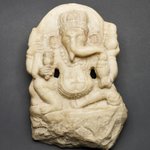
ALT Seated Bhagwan (God) Ganesha, Marble with traces of Pigment, 600-800 CE, Afghanistan. Ganesha holds a significant role within the Sanatana Dharma (Hinduism). He is the son Bhagwan Shiva and Devi Parvathi, and he shares his divine family with his brother, Bhagwan Karthekeya. The tale of his creation is narrated in the Sanskrit scripture known as the Shiva Purana. Ganesha is revered as the remover of obstacles and the bestower of success, making him an essential figure invoked at the commencement of any new endeavor. Ganesha is characterized by his unique appearance, featuring a stout and chubby body along with an elephant's head, which is a notable aspect of his divine form. Additionally, he is typically depicted with four arms. In this representation, one of his hands firmly grasps a weapon, typically a battle axe. Another of his hands holds a broken tusk, a distinctive feature that is integral to his iconography. #sanskritlessons #hinduism #india
