

Tweets abouth Ukraine war, editing (slowmo freezing sharpening coloring) videos and posts about the war in Ukraine since 24.02.2022.
Nederland
Joined August 2011
- Tweets95.2K
- Following5.3K
- Followers18.9K
- Likes83.8K


Pinned Tweet
22/1
Het verhaal van "No inch expansion of nato to the east" wat zo graag gebruikt wordt, al dan niet begeleid met een screenshot, een youtubelinkje, of screenshot van youtube. Welnu, hier is het volledige document, vrijgegeven waar Gorbatchov, Baker & Shevardnadze over praatten.


Sander retweeted

This video should unsettle anyone who takes the United States seriously as a nation.
Because it exposes something dangerous: the trivialization of the world's most consequential office. It shows how carelessly the power, credibility, and accumulated moral authority of a superpower can be squandered for a few seconds of viral attention.
In any other major democracy, this behavior from a head of state would trigger a constitutional crisis. Paris would burn. Berlin would convene emergency sessions. In the Nordic countries, resignation would follow within hours. Across functioning democracies, the public, institutions, and political class would recognize this for what it is: an assault on the dignity of the state itself. Leaders are not free to perform as entertainers without consequence. National honor is not personal property, it's held in trust.
But the United States is not just another country with a provocateur in charge. It is the linchpin of global order. It maintains formal alliances and security guarantees with forty to fifty nations. It underwrites the financial architecture, trade systems, and diplomatic frameworks that billions of people depend on daily. When the American president speaks—or posts—it doesn't land as satire, meme, or personal whim. It reads as a signal about what the country is becoming.
American power has never relied solely on carrier strike groups or economic output. It has rested on something more fragile and more valuable: trust. The belief that beneath domestic turbulence lies institutional seriousness, predictability, and a baseline commitment to dignity. That belief is now disintegrating in real time.
Millions of American companies operate globally. They negotiate multibillion-dollar contracts in environments where reputation is currency. Boardrooms in Frankfurt, Singapore, and Dubai aren't debating whether a post was clever—they're asking whether the United States remains a reliable partner. Whether agreements signed today will be honored tomorrow. Whether American leadership has devolved from institutional to purely theatrical.
Consider tourism, which sustains millions of American jobs—airlines, hotels, restaurants, museums, entire regional economies. Soft power isn't an abstraction. It materializes in flight bookings, conference locations, study-abroad programs, and decades of accumulated goodwill. A quiet, decentralized boycott doesn't require government action—only a collective sense that a nation no longer respects itself.
Now picture this image being studied by foreign ministers, central bank governors, defense strategists, and sovereign wealth fund managers. Picture them asking a coldly rational question: How do we write binding thirty-year agreements with a country whose public face will be this, relentlessly, for years to come? How do we plan for the long term when the tone is impulsive, mocking, and unbound by the gravity of office?
This is where the real calculus begins. Trillions in foreign capital depend on confidence that America is stable, credible, and rule-governed. That confidence is now being traded for what, exactly? Applause from an online mob? A dopamine rush from manufactured outrage? Content designed to dominate the news cycle rather than serve the national interest?
Every serious nation eventually confronts this choice: burn long-term credibility for short-term spectacle, or safeguard the reputation previous generations bled to build. The United States spent eighty years constructing an image of reliability, restraint, and leadership under pressure. That image wasn't born from perfection—it came from a visible commitment to standards that transcended impulse.
This isn't a partisan issue. Europeans who value democratic norms recognize something ominously familiar here. Americans—Democrat and Republican alike—who believe in responsibility and restraint should see it too. Power attracts scrutiny. Leadership demands discipline. A superpower cannot behave like a reality TV contestant without paying a price.
The presidency is not a personal broadcast channel. It's a symbol carried on behalf of 330 million people and countless international partners who never voted but whose lives are shaped by American decisions anyway. Every post either reinforces or erodes the idea that America can be counted on when it matters most.
So the question is no longer whether this is offensive. The question is whether this is who America chooses to be: a nation that trades a century of hard-won reputation for viral moments. A country that replaces statecraft with content creation. A republic governed like a season of reality television.
History offers a harsh lesson here. Great powers don't fall because enemies mock them. They collapse when they begin mocking themselves—publicly, proudly, and without grasping the cost until it's far too late.
Stay connected,
Follow Gandalv @Microinteracti1
Sander retweeted
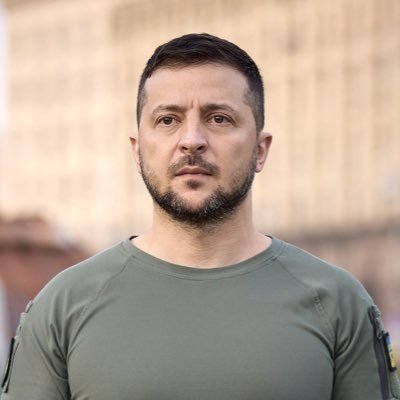
Since the American President announced the energy ceasefire a week ago, Russia has deliberately attacked Ukraine’s energy and oil and gas sectors 76 times. Last night alone, there were strikes on substations in the Vinnytsia, Zhytomyr, Khmelnytskyi, and Odesa regions. Tens of thousands of families remain without power. Energy workers and repair crews are working virtually around the clock to restore electricity supply. Overnight, the Russians also struck residential buildings in our regions. As of now, 12 people have been reported injured, including two children. Two people have been killed. My condolences to their families and loved ones. This morning, there was a strike on an agricultural enterprise in Volyn. All necessary services are working at the site.
In total, over this past week, the Russians have attacked Ukraine with almost 2,700 attack drones, 1,700 aerial bombs, and 66 missiles, most of them ballistic. The main targets of these strikes are energy facilities – the Russians are trying to cause a blackout. And America should see that Russia is not taking any reciprocal steps in response to sanctions relief or agreements. On the contrary, they take every signal of an opportunity to make money as proof that their bet on war is paying off and they can keep fighting. It is because of this position of Russia’s that the war continues, not because Ukraine is rightfully defending itself. It is Russia that must face pressure for peace to have a chance. Thank you to everyone who understands this and helps.
Sander retweeted

1\5
America went much further than that with its recent Starshield/Starlink restrictions on Ukraine. Let me explain the effects.
Starlink is a technology that provides critical communication service to government and civilian sector, I repeat the service is critical.
So what happened, and why it matters?
Someone wanted a 2 cent lower diesel prices before the midterms, or was promised something by putin in exchange for this, maybe he just had a bad mood.
Many say Ukraine is not an ally, so the USA can just do whatever it wants, however the service that was crippled by American political leadership or at their silent approval is sold to Germany and Poland, which are part of NATO and are in critical interests of these countries to keep Ukrainian operations running, you may argue, but it's official position by the elected political leadership of these states.
Many say it's a blow to the starlink, others that it's a blow to American military industries.
I think it's much wider, it's a significant in blow to the American tech and industrial sector which has been driving Americans economy for the past decades.
I am a cloud infrastructure engineer developing on premise, hybrid and sovereign solutions. This cloud infrastructure hosts data services used in production facilities, telecom, AI, mining industries and energy sector. Essentially all critical services to a functioning state.
Right now everything is run via remote control planes. Here are more concrete 3 example in the thread below:

6/7
13–14 Oct – Starshield speed cap; Musk blames "POTUS"; White House cites a glitch
15 Oct – Partial restoration; Lukoil waiver extended to Apr 2027
16 Oct – Telegraph (unconfirmed): Musk proposed the slowdown, Trump agreed; Dmitriev says US "brainstorming" sanctions relief
5/7
11 Oct – Trump's "energy ceasefire"; Russia hits Ukraine's grid three nights
12–13 Oct – Grynkewich "Theory of Victory" speech; Kyiv gets no missile warnings two nights (cause disputed)
13 Oct – 12 senators (6 Republican) urge Trump to rescind the diesel deal
4/7
9 Oct – Diesel deal and General License 135; Miami talks with Ukraine, reported intelligence-cut threat; ~Sofia Starlink antennas burned
10 Oct – Trump tells Zelensky to stop refinery strikes; Musk says Zelensky has "gone too far"
3/7
28 Sep – Dmitriev meets Treasury and Energy officials (per TASS)
29 Sep – Musk at White House luncheon
8 Oct – Musk awarded National Medal of Science
2/7
6 Sep – First envoy visit to Kyiv; 3-day strike pause; no concrete guarantees
16–18 Sep – House passes Graham Act; Trump signs it
23 Sep – Starlink ground-station arson in Poland; Rubio meets Lavrov
24 Sep – Dmitriev meets Witkoff and Kushner, New York

4/4
His conclusion: Israel has taken more measures to prevent civilian casualties than any other army in the history of urban warfare.
Watch the full interview on CBN and judge for yourself.
cbn.com/news/israel/urban-wa…
