

Geopolitics and Strategic Affairs | Civilizational Perspectives and Research | Publications, Briefs, Academic Engagement, and Nurturing Emerging Scholars
Bengaluru
Joined November 2020
- Tweets12.4K
- Following104
- Followers4.5K
- Likes575




Pinned Tweet
#SharpScope April 2026 | India’s Oil Dependence and the Anatomy of Energy Vulnerability
India imports nearly 90% of its crude oil. Around half of it passes through the Strait of Hormuz. Strategic reserves remain critically limited.
In this Sharp Scope, data analyst Divyanka Tandon analysis examines:
* Oil import dependence
* Russia vs Gulf supply risks
* Hormuz chokepoint exposure
* Strategic reserve gaps
* Conflict shock scenarios
* India’s energy vulnerability outlook
A serious data-driven study on one of India’s biggest strategic risks.
Read more: samvadaworld.com/sharp-scope….
#DataAnalysis #India #OilCrisis #StraitofHormuz

The Bay of Bengal: South Asia’s Emerging Frontier of Maritime Friction
By Hridbina Chatterjee
* The Bay of Bengal occupies a central position at the receiving end of these cascading disruptions.
* Challenges, ranging from freedom of navigation to anti-access and area-denial capabilities, grey-zone naval deployment, and maritime domain awareness, now dominate the strategic talks of the states along the coast, putting significant pressure on consensus-driven diplomatic institutions.
* This rapid, competitive expansion of port infrastructure and operational bases transforms commercial trade nodes into permanent military outposts, heightening security dilemmas and locking the Bay into a cycle of structural militarisation.
* The convergence of global conflict spillovers, institutional vulnerabilities, subsea infrastructure exposure, and dual-use port infrastructure has made the Bay of Bengal a focal theatre of great-power rivalry.
Read more: samvadaworld.com/featured/th…
#SamvadaWorld #BayOfBengal #MaritimeSecurity #Geopolitics #IndoPacific #IndiaForeignPolicy

Conflict as Statecraft: Understanding Iran’s Strategic Culture and Anti-Americanism
By Dr Mohmmad Rizwan
- Iran currently pursues a policy of rivalry with the United States and its regional allies.
- Iran’s national consciousness was filled with paranoia that the outside powers would not tolerate a normal-functioning, autonomous Iran.
- The eight-year conflict helped the Islamic world solidify its authority over Iran through a variety of results.
- Iran is leveraging its rivalry with the United States and its allies to achieve its national and foreign policy goals.
Read more: samvadaworld.com/featured/co…
#Iran #PolicyofRivalry #USA #WestAsia

Debt, Dissent and a Divided Parliament: What Is Breaking in France?
By Aayush Pal
- France is standing at a critical juncture, and arguably, the biggest litmus test for President Macron is yet to come.
- Years of state-led fiscal policies have created a state debt of around €3.6 trillion, equivalent to nearly 119% of France’s overall GDP.
- The country’s politics became deeply divided, with one section of the political spectrum becoming more sympathetic towards immigrants in France, while the centre-right and other political forces increasingly opposed immigration.
- As France moves towards the 2027 presidential elections, President Macron faces a complex political environment both at home and abroad.
Read More: samvadaworld.com/world/europ…
#France #FrenchPolitics #EmmanuelMacron #France2027 #EuropeanPolitics #Europe #PoliticalCrisis #FrenchEconomy

Manufacturing a Crisis: Disinformation, Impersonation, and the Contest Over the BRICS Summit 2026
By @dikshabharti128
🔹 The central argument is that the disinformation around BRICS 2026 was not spontaneous online noise but an event-anchored influence operation, a campaign that exploited a moment of peak global attention to inject a pre-scripted narrative of Indian instability into the international conversation.
🔹 The four cases documented during the summit window differ considerably in their surface content; one alleges a terrorist attack, two allege state violence against protesters, one alleges a private act of diplomatic servility.
🔹 The techniques on display constitute a portable methodology, indifferent to the specific target.
🔹 The first line of defence is not faster debunking, valuable as that remains. It is a clearer understanding of the method, held widely enough and early enough to blunt it before it strikes.
Read more:
(samvadaworld.com/featured/ma…)
#BRICS2026 #BRICS #Disinformation #InformationWarfare #FakeNews #Misinformation #AI #Deepfake #SyntheticMedia #DigitalWarfare #InfluenceOperations #Geopolitics #India #NewDelhi #BRICSSummit #CyberSecurity #MediaLiteracy #InformationSecurity #StrategicCommunications #GeopoliticalSecurity

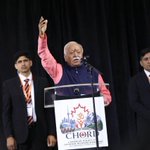
Vasudhaiva Kutumbakam and the Search for Global Solidarity @DrMohanBhagwat
By Anjali Singh
🔸The significance of this speech from the point of view of international relations is that it attempts to portray India not just as a nation-state but as a civilization with a global role.
🔸A central theme of Bhagwat’s address was that humanitarian concerns should transcend political, religious and national divisions.
🔸According to Bhagwat, Dharma must not be viewed as a mere concept of religion or worship; rather, it is a principle of sustenance through which man, society, and the environment develop hand-in-hand.
🔸By invoking the ideas of unity, responsibility, empathy and Vasudhaiva Kutumbakam, Bhagwat presented Bharat’s civilisational identity as a potential contribution to global dialogue.
Read more: samvadaworld.com/featured/va…
#Bharat #MohanBhagwat #RSS #UniversalOnenessCelebrations #USA

India–Uzbekistan: Why Central Asia Is Becoming a New Geopolitical Frontier
By Aayush Pal
• Both countries have agreed to further foster their relationship in areas such as trade and investment, critical minerals, energy and uranium, digital public infrastructure, nuclear cooperation and many more. @narendramodi
• India has agreed to work towards securing long-term uranium supplies from Uzbekistan, which is particularly important for India’s energy security and its efforts to diversify its sources of nuclear fuel.
• In recent years, Central Asia has become a new geopolitical frontier for Asian as well as global powers.
• India’s relationship with the Central Asian countries is therefore of great importance, as both sides see each other as reliable partners that can contribute to their economic, strategic and geopolitical interests while respecting their strategic autonomy.
Read more: samvadaworld.com/analysis/in…
#India #Uzbekistan

A Tectonic Shift in Eurasian Security: Decoding the Mecca Pact and the Counter-Alignment of India, the UAE, and Israel
By @Paraggilada
* The agreement, signed by Saudi Crown Prince Mohammed bin Salman, Turkish President Recep Tayyip Erdoğan and Pakistani Prime Minister Shehbaz Sharif, declares a mutual defence pact, which says an attack on one country will be considered an attack on all countries.
* It is not a matter of an isolated diplomatic sphere, but rather Saudi Arabia and Türkiye’s explicit willingness to choose Pakistan’s side, coinciding with a structural realignment on the opposing side, with the United Arab Emirates (UAE) and Israel choosing to form a close alliance with India.
* The loose arrangement is by design, acknowledging the fundamental principle of India’s foreign policy: strategic autonomy. New Delhi doesn’t seek to be bound by any formal military alliance that might limit its policy choices or involve it in foreign commitments.
* The worsening military polarisation along with regional disruptions from the Iran war directly overlap with Eurasian trade dynamics, thus affecting the viability of significant global connectivity projects.
* The two separate clusters are emerging, marking a fundamental shift in the global order, which is being hastened by geopolitical shifts after the Iran war.
Read more: samvadaworld.com/analysis/a-…
#Eurasiansecurity #India #Israel #MeccaPact #Pakistan #SaudiArabia #UAE

The Strait of Hormuz Doctrine Gap: Why India Needs a Joint Warfare Framework for Energy Chokepoint Defence
By Diksha Bharti
🔹India imports more than 85 per cent of its crude oil requirements, while a substantial share of its energy supplies remains linked to the Gulf region. Yet despite these ambitions, India lacks a clearly articulated joint warfare doctrine specifically designed for energy chokepoint defence.
🔹The challenge is therefore not merely one of naval presence. It requires integrated military planning across domains.Yet doctrine has not evolved at the same pace as capability.
🔹India possesses many of the instruments necessary to protect critical sea lanes but lacks an integrated framework defining how these assets would be employed during a prolonged energy security crisis.
🔹The Strait of Hormuz has exposed a critical gap in India’s strategic architecture. Closing that gap will require more than additional ships or larger reserves. It will require a doctrine that recognises a simple but often overlooked truth: in the twenty-first century, securing energy flows is no longer a support function of national security; it is national security itself.
Read more: samvadaworld.com/world/west-…
#EnergyFrontier #India #StraitofHormuz

Bharatiya Citizen – The Responsibilities of Being Connected to Bharat
By @AnandaMathews
🔹The responsibilities of a Bharatiya citizen extend far beyond obeying laws or enjoying rights. You are the temporary steward of a civilisational inheritance preserved for the benefit of humanity.
🔹Every Bharatiya citizen has three core responsibilities— Learn. Earn. Serve. Seek Truth and Knowledge continuously.
🔹Contemplate deeply the wisdom you receive until its understanding becomes clear.
Use this lifetime as a Bharatiya citizen to serve humanity selflessly. This is the highest use of human birth. This body is meant to serve others in every possible way.
🔹For you are not the owner of Bharat but its generational caretaker. Your responsibilities are to strengthen its reputation, safeguard its wisdom and contribute to humanity’s collective well-being by sharing its knowledge through your actions.
Read More: samvadaworld.com/reviews/mov…
#Bharat #Citizen's Responsibility

Myanmar’s Civil War and India’s Northeast: A Regional Crisis Unfolds
by @KumarSheni
• The crisis is now not seen only as a humanitarian problem, but as a strategic, demographic and security problem that impacts federal politics, border management and regional peace.
• The lack of a uniform refugee regime, as such, has therefore made the crisis a challenge to the federal structure and administrative coordination of India.
• The refugee situation has also exacerbated ethnic and political tensions in the North-East of India.
• The borderlands have become something of a strategic frontier, where humanitarian, security and geopolitical interests converge in the conflict.
Read more:
samvadaworld.com/analysis/my…
#CivilWar #Myanmar

Representation versus Recognition: Madhesi Identity in Nepal’s Emerging Political Order
By @KumarSheni
In Nepal, the question of Madhesis’ demands in the new political order remains stuck in a paradox, which is the difference between representation and recognition.
Balen Shah’s triumph was a symbolic success as it showed that a Madhesi-origin leader can win capital city support. But there needs to be greater shifts in state attitudes and public awareness.
The citizenship rights of citizens have long been problematic in Nepal, especially for women who are married across the India-Nepal border, and their children.
At the end, the future of Madhesis in the new political order of Nepal will rely on the state’s ability to overcome symbolic diversity to substantive inclusion.
Read more: samvadaworld.com/featured/re…
#India #MadhesiIdentity #Nepal

UAE bids farewell to OPEC: A “Crude” necessity or a “Refined” move?
By Abhishek Kumar Singh @_sheksaab_
The UAE’s shift likely reflects a broader objective of maximising returns from its hydrocarbon reserves before global fossil fuel demand begins to decline more sharply.
Rather than remaining bound by Saudi-dominated OPEC arrangements that constrain its production and revenues, Abu Dhabi appears to be opting for greater strategic autonomy.
Jorge León, a former OPEC official, has argued that the cartel would become “structurally weaker” without the UAE, particularly given the concentration of spare production capacity among a small number of members.
From once playing a role akin to a central bank for the global oil market to now striving to maintain internal cohesion, OPEC has traversed a remarkable trajectory.
Read more: samvadaworld.com/analysis/ua…
#OPEC #UAE

India and Vietnam Are Closer Than Ever -The Timing Is No Accident
By @AayushPal55
India and Vietnam have agreed to elevate their relationship to an Enhanced Comprehensive Strategic Partnership, marking an important milestone, with cooperation expanding in trade, critical minerals, etc.
Defence and security cooperation has emerged as a new pillar of the relationship, while one of the biggest common concerns between India and Vietnam has been China.
For India, strengthening relations with Vietnam is part of boosting engagement with Southeast Asia under the Act East Policy, while for Vietnam, engagement with India is strategically advantageous as India is emerging as one of the next major forces in the global economy.
Read more: samvadaworld.com/analysis/in…
#India #Vietnam

Coal, Power, and Pollution: Why India’s Energy Choices Still Choke Its Cities
By @AnusreetaDutta4
Indian cities are suffering because the country’s power grid relies too much on coal.
Urban India needs a steady supply of electricity, but the electricity that comes in often makes life in cities worse.
India needs to close down its dirtiest power plants faster, keep a closer eye on emissions, enforce the rules more strictly, and make a real push for renewable energy along with storage, grid reform, and demand management.
The real choice is between a future with less sickness and one with cleaner, more reliable energy. India needs to stop linking progress with coal dependence if it wants its cities to breathe.
Read more: samvadaworld.com/analysis/co…
#GreenEnergy #India #Pollution

From Minerals to Microchips: India’s Multi-Sectoral Strategy in Post-Conflict Sudan
By Hridbina Chatterjee
The 9th Foreign Office Consultations (FOC) between India and Sudan, which took place in Port Sudan on May 4, 2026, were an important step in strengthening the relaunch of diplomatic relations between both countries after a period of hiatus.
In 2026, one of the major talking points during consultations was the growing bilateral cooperation regarding the extractive industries and energy sectors.
The addition of Digital Public Infrastructure (DPI) in the 9th FOC reflects the contemporary development of relations between India and Sudan.
The Port Sudan meeting encompasses more than just bilateral trade; it also encompasses broader geopolitical factors surrounding the Red Sea region’s balance of power.
Read more: samvadaworld.com/featured/fr…
#FOC #India #Sudan

From Trudeau’s Allegations to Carney’s Reset: How Canada Is Rethinking Khalistan
By @AayushPal55
Canada’s intelligence agency has identified Khalistani terrorism as a national security threat within Canada.
Bilateral relations deteriorated sharply in 2023 when Trudeau accused the Indian government of involvement in the killing of Hardeep Singh Nijjar. India firmly rejected these allegations.
Since 2024, with the arrival of the new Canadian Prime Minister Mark Carney, relations between India and Canada have entered a phase of reset. The new leadership has demonstrated a more pragmatic approach.
The recent report by Canada’s intelligence agency is a positive signal. It reflects a shift toward realism and an acknowledgement of security concerns that India has consistently highlighted.
Read more: samvadaworld.com/analysis/fr…
#Canada #India #Khalistan #KhalistaniMovement

The Indian Diaspora and Australia’s Indo-Pacific Turn
By @AnjSinghg
India-born citizens are now Australia’s largest immigrant population, which represents a historic demographic change with important ramifications for regional geopolitics, internal politics, and international relations.
Migrants from England, who had dominated the population since colonial times, have been surpassed for the first time in more than a century, signifying Australia’s shift from a Eurocentric identity to a more Indo-Pacific orientation.
Skilled migration from India improves human capital and increases economic interdependence between Australia and India, especially in industries like IT, healthcare, and education.
Read more: samvadaworld.com/analysis/th…
#Australia #India #Migration

Bharatiya Cinema and the Responsibility of Influence
By @AnandaMathews
Cinema in Bharat has long held a unique and far-reaching influence, extending well beyond entertainment into the cultural identity of millions.
At its core, cinema does more than tell stories—it shapes perception.
Those who create and contribute to Bharatiya Cinema are not merely producing entertainment—they are participating in a global cultural dialogue, one that shapes how individuals understand identity, purpose, and coexistence.
Read more: samvadaworld.com/featured/bh…
#BharatiyaCinema #Cinema #India

Wellington’s Wager: Why New Zealand Chose India in an Age of Uncertainty
By @AayushPal55
In a landmark bilateral development, India and New Zealand have agreed on a Free Trade Agreement allowing 100 per cent duty-free access to Indian products in New Zealand.
New Zealand has also agreed to invest 20 billion dollars in India over the next 15 years.
India has taken a cautious and pragmatic approach by excluding the dairy sector.
Read more: samvadaworld.com/analysis/we…
#FreeTradeAgreement #India #NewZealand
