

Cognitive Neuroscientist. Interested in oscillatory dynamics, working memory and attention. Assistant Professor at the University Utrecht.
Utrecht
Joined April 2020
- Tweets32
- Following87
- Followers175
- Likes67
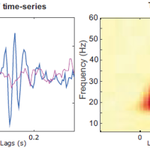
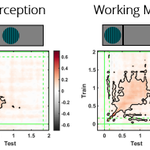

Very cool RIFT study by @arora__borealis!
Do we engage early visual areas when prioritizing VWM versus Perception? Does space play the same role in both? Which measures of attention (RIFT, Alpha, Microsaccades) dissociate internal and external selection?
Check the preprint!


Samson Chota retweeted

In a dynamic world, items appear, disappear, and reappear within seconds. In our latest preprint we show: the reappearance of maintained items guides the prioritization of non-reappearing memory items.
biorxiv.org/content/10.1101/…

Samson Chota retweeted
How can you study each phase of visual working memory using pupillometry? In our new review, we outline how encoding, maintenance and prioritization are reflected in pupil size.
Open access:
wires.onlinelibrary.wiley.co…

Samson Chota retweeted

🚨Hi Tweeps, please allow me proudly present the CAP-lab website: cap-lab.net/
Where CAP stands for Consciousness, Attention, & Perception (and coincidentally refers to my favorite clothing attribute).
Please, have a look, and don't forget to follow my PhD students!

Can highly recommend Teuni and Stefan as supervisors! You will find yourself among very open communicators and incredibly smart researchers.
This Post is from an account that no longer exists. Learn more
Samson Chota retweeted

We had a blast visiting the @rolfslab in Berlin! Two wonderful days of talking science and seeing each others' cool projects. See you in Utrecht!(?)

Samson Chota retweeted

Tomorrow at 4 pm (CET), Prof. Sabine Kastner will provide the upcoming Helmholtz lecture, "Neural dynamics of the primate attention network." Refer to the link to find the abstract and location, or if you want to request to join online bit.ly/3PeMjOa
Beta doesn’t simply vanish following tactile stimulation. Like alpha's perceptual echoes, beta responds with phase-locked bursts to white noise and single pulses.
Echoes aren't confined to vision - they're a basic supramodal signature of sensory processing bit.ly/46059hW

Samson Chota retweeted

Microsaccades are interesting. Maybe. Great work by the indomitable Dr. Shawn Willett. pnas.org/eprint/9GNBSYTWKTCM…

Why spend resources to represent information that is already available in the external world? "Surprisingly" we don't: Our new paper in Cereb. Cortex (OA) shows better decoding of stimulus features during working memory than perception. doi.org/10.1093/cercor/bhad0…

Samson Chota retweeted

Very excited to share our new preprint on visual processing in the octopus! Led by Judit Pungor @traceofpink, together with @jsongco_ and @climbing_octo, we measured the functional organization of visual responses in the octopus brain. 🐙👁️
biorxiv.org/content/10.1101/…
1/n
Samson Chota retweeted

**JOB POSITION ALERT**
Join me in Toulouse (France) for a 3 years postdoc in Computational Neuroscience, working on Predictive Coding and Travelling Waves!
Please RT and spread the word!
More details here: artipago.github.io/open%20po…
2-Minute read on location prediction of moving objects. Fantastic summary (eLife insight) by @DKoevoet and @AndreSahakian. Got more than 2 minutes? Highly recommend reading the full paper by @phil__johnson and @HinzeHogendoorn.


Samson Chota retweeted

When we open our eyes, we feel we see the present moment. But because neural processing takes time, the brain only has access to outdated information. So how does it create our experience of the present? I propose a possible answer in @TrendsCognSci: go.unimelb.edu.au/fv9i 1/15

Samson Chota retweeted

New paper out in PNAS! (we question the conclusion of a recent PNAS paper)
Check the summary in this thread by @SuryaGayet!

🚨New paper alert🚨 in @PNASNews, where we call into question a recent study claiming that we overestimate the prevalence of minorities (e.g., 5 blue among 80 red marbles) MORE when in line with social knowledge (5 ethnic minority among 80 majority faces). pnas.org/doi/10.1073/pnas.22…

Samson Chota retweeted

We are looking for a postdoc to join us in the Dynamics of Cognition Lab. We are investigating the neural basis of cognitive flexibility associated with selective attention and working memory. If you’re potentially interested, DM. And please RT!
Samson Chota retweeted
Brookshire shows that a widely used approach to identifying rhythms in behavioral data can misclassify consistent, non-rhythmic patterns as rhythmic. Importantly, evidence for rhythms in attention isn’t limited to behavioral data. My comment from bioRxiv: tinyurl.com/5fckyu48

Brookshire shows that widely reported 3-8 Hz periodic rhythms of human attention may be artefactual.
buff.ly/3xzwtUZ

Attention to items in working memory oscillates!
Check out our new paper:
nature.com/articles/s41598-0…
