

I find where Pakistan’s financial system breaks between policy and practice | Cross-border payments | Fintech | Infrastructure The Correspondent Co. 👇
Pakistan
Joined February 2026
- Tweets920
- Following59
- Followers88
- Likes870







Pinned Tweet
1/4
Pakistan’s IT exports are now around $4.6B.
Most people see that number and think:
“more payment apps.”
Wrong layer.
The bigger opportunity may be the routes that turn cross-border payments into usable money for businesses. 🧵
🤖 Made with AI

Crypto is the future.
Stablecoins are the future.
Tokenization is the future.
AI is the future.
Meanwhile, in Pakistan, people still want one thing:
A cross-border payment that just works.
AI writing code is cool. AI making cross-border payments work for everyone, regardless of where they live? That’s the real excitement.
The real challenge is what happens after USDC enters these markets. Getting dollars across borders is one thing. Making them usable locally is another.

🚨𝗝𝗨𝗦𝗧 𝗜𝗡: @circle is coming for ~𝟰𝟬 emerging markets at once 🌍
And it's a direct shot at @tether.
CEO @jerallaire told Reuters that blockchain is leaving the early adopter phase. Now it's about mainstream scale, and Circle wants to be everywhere when that happens.
The targets:
• Southeast Asia
• Latin America
• Africa
• The Middle East
The money behind the push:
• $400M acquisition of @tazapay
• $100M strategic investment from @binance
• A US federal bank charter since July
And Circle needs it. USDC grew to $73.3B in circulation (+19% YoY), but Tether's USDT still controls nearly 60% of the market. Circle sits at roughly 25%.
Interesting timing as well. The GENIUS Act kicks in this January, which Allaire calls "a watershed moment" for legal digital dollars.
As for the banks building their own stablecoins in the US 🇺🇸 and Europe 🇪🇺? Allaire's take: "they are no longer in charge, and the innovators are having their day."
Can Circle close the gap with Tether in these 40 markets?

When a powerful outsider hits local rules that slow him down, he calls it a "conspiracy" instead of accepting sovereignty.
Are stablecoins really replacing old payment rails, or are banks quietly turning them into the new settlement layer underneath the old rails?

6/7
That creates an important product question:
Are we building for higher transaction volume?
Or are we building for increasing customer complexity?
Those are not the same thing.
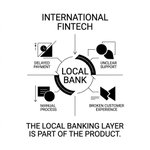
A payment can succeed and still be a bad customer experience.
The money arrived.
But who handled the FX, documentation, reconciliation and support?
Moving money is only part of the product.
Samra Kanwal retweeted

For anyone building a "business agent" (in comparison to a "consumer agent"), I'd love to chat with you for 5-10 minutes to learn how @stripe can help you. I have ideas!
My hunch is there will be many industry-specific business agents, as there are many vertical SaaS companies.
The stablecoin angle is the one I’d be most curious about. If they go beyond storing credentials and actually hold balances, that changes what “wallet” means here pretty quickly.

Wallet coming to @ChatGPT soon? 👀
Suspect it’s a way to store card credentials with a control layer, but would be fun to see if they build their own wallet to hold balances and support stablecoins!

3/4
Pakistan is building better rails, from Raast to cross-border connectivity through Buna, while ESFCA rules are also evolving.
But the same rules can produce very different customer journeys across banks.
That creates an orchestration problem.
4/4
As rails become faster and cheaper, value can move upward:
compliance → treasury → reconciliation → orchestration.
Because businesses don't just buy a payment.
They buy the confidence that the money will arrive, clear, settle and become usable.
thirdworldhuman.substack.com…