
“Life — the way it really is — is a battle not between good and bad, but between bad and worse” - Joseph Brodsky
Mumbai
Joined August 2009
- Tweets13.5K
- Following1.1K
- Followers659
- Likes534K
Samar Gupta retweeted

I have known Sanjeev @sanjeevsanyal for almost one and a half decades. He has always been generous with his time to upcoming talent and scintillatingly brilliant with his entire focus being how to make India better. Even when he was in the private sector, his Deutsche notes were much sought after.
He has been a thorough pragmatist. Whatever works in whatever context. If it’s free markets, then so be it. If it’s industrial policy so be it. Lower or higher rates, lower or higher currency - everything is context specific. Everything is rightly linked to history and politics. Similarly, he embodies both tradition and modernity in what would be called a “fusionist” conservative, though I don’t like the term and perhaps he doesn’t either.
It is rare to have such multidisciplinary talent. To then compare Sanjeev to Jean Dreze whose entire policy and political universe has revolved around povertarian ideas - not at all how to generate wealth - is a bit baffling. We of course need a welfare state. But a JAM-enabled stated that does transfers and asset creation modularly is different from one that, in extremis, wants spoons to dig trenches.
Anyway, Dreze has his following and good for him. I have worked in J-PAL so I know some of the folks and I appreciate different views. But honestly, there is no comparison between Dreze and Sanjeev. And the latter will probably not appreciate my tweeting all this in any case. But I had to put my two cents on this.

Jean Dreze reminds me of this Milton Friedman exchange:
'While visiting a worksite in the 1960s, Friedman was shocked to see that, instead of modern tractors and earth movers, the workers had shovels. He asked why there were so few machines. The bureaucrat explained: “You don't understand. This is a jobs program.” To which Friedman replied: “Oh, I thought you were trying to build a canal. If its jobs you want, then you should give these workers spoons, not shovels.”'
I am very glad we are reforming our welfare programs to increasingly separate asset creation from income redistribution. Conflating of objectives is one of the most common policy errors around. While my views on industrial-trade policy have evolved and I would disgaree with Friedman there, his basic point is rock solid here. Even in welfarism, 'how much help' should be separated from 'how to help'. Conflating them creates problems.
Many years ago, I have myself seen NREGA type programs being abused by JCBs doing the actual work in the dark, so to speak, with the payrolls being manipulated by village officials. And quite frankly to force people to work with shovels, when better machines are available, is masochism even if it would be even worse if they were forced to work with spoons.
In a modern economy, we need redistribution. The less corrupt and more efficient it is, the better. The more identity neutral, the better. The more skill-creating than dependency-creating, the better. But we do need redistribution. To take the 2004-09 fiscal boom and redistribute it did not take a genius. To do it smartly and honestly was a different thing.
And worst are those folks who say just because he is a white Belgian who has taken Indian nationality and works in villages - we have to somehow put him on a pedestal. Please get a grip: you are embarrassing yourselves with such outdated self-hatred.
Samar Gupta retweeted

Heartbreaking 💔
Copenhagen climate politicians push elderly in retirement homes onto minimal meat to cut CO₂
Birthday wishes for beef are sometimes rejected “for the CO₂ accounts”
Residents pay for the food but often get organic vegetarian instead of what they want
archive.ph/wo9OV
Guidelines (p.45): max 500g meat/week, max 80g beef/veal/lamb (~one kid’s burger/week)
maaltider.kk.dk/sites/defaul…

Samar Gupta retweeted

Saw this at the Nikko shrine literally an hour ago.
Last lesson from the first Tokuwaga Shogun who unified Japan.


Samar Gupta retweeted

The highest per-capita user penetration of this app anywhere in the world is Japan (almost 60% of the population are on Twitter). One reason for this is that early Twitter with the strict character limit was very favorable to the Japanese language. You can cram a lot of meaning into 140 characters if you write in Japanese. English not so much. By 2013 when character restrictions eased a little Japanese use was already ahead.
English is obviously the most common language on Twitter with 34-38%, but 14-18% of tweets are written in Japanese.
Samar Gupta retweeted

100 million tonnes it too ambitious. We will probably achieve 40-50 million tonnes of coal gasification by 2030, which isn't bad at all.

India is committing ₹46,000 crore to coal gasification, targeting 100 million tonnes of annual capacity by 2030. The economics are compelling: Jindal Steel produces syngas at $7–8 per MMBTU versus $12–16 for imported natural gas.
India imports over 80% of its crude oil and all its ammonia. But gasification plants require about $500 million per million tonne of annual capacity, and Indian coal’s high ash content raises costs. Without assured buyers, competitive pricing and carbon capture, subsidies alone won’t make these projects viable.
The test is whether India can turn its 400 billion tonnes of coal reserves into domestic chemicals and industrial feedstock without locking itself into another expensive subsidy cycle.

Samar Gupta retweeted

When Europe was debating four-day workweek, China was building its manufacturing muscle and technological capabilities.
When Europe was promoting 6 hours a day office time, China was working 12 hours a day om robotics, AI, drones, advanced manufacturing and scientific research.
When Europe was questioning inclusion, China was strengthening its industrial base, developing military capabilities and preparing its population for a technology-driven world.
When Europe was organising pride march, China was upskilling its population to win Olympics, Nobel and Wars
You may like it or not, but in a few decades, China will have created wealth for its population, preserved the culture of its ancestors, and built the defence capabilities to protect its people. Europe, meanwhile, will be overtaken by immigrants, its centuries-old buildings and libraries will be destroyed, and its native population will be at the mercy of others.
Samar Gupta retweeted
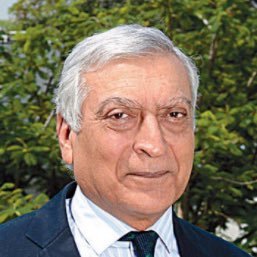
Look at her record in viciously targeting India on human rights during her career.
She never condemned during her tenure as UN High Commissioner for Human Rights (2008–2014) and her subsequent international work Pakistan-sponsored terrorism against India.
Much worse, she did not explicitly condemn Pakistan by name for the 2008 Mumbai terror attacks during her tenure as the UNHCR.
Her personal rhetoric on the attack was condemnable. Instead of pointing to external state sponsorship or naming Pakistan, she said this:
"Whenever there is an act of terrorism, one points fingers at neighbouring countries, thereby absolving oneself of all responsibility... Terrorists need not be from outside; they can be home grown. When you accuse others, you fail to take steps to correct the problem at home."
And here we have Indians wanting us to congratulate her!!

Richly deserved Nobel Peace prize - Bravo ma'm @NaviPillay1 - odd that Indian government has still not felicitated the courageous Justice - "Honouring Pillay is therefore not only about her biography; it is about upholding a principle."
scmp.com/opinion/world-opini… "I place Pillay firmly in the Socratic-Confucian lineage : might may prevail but that does not make it right, and even the strongest state is bound by law......the world needed to understand that the alternative is the situation Thrasymachus and Han described. The 2026 prize is a reminder that we can still choose the normative path." @SAMonitor @APLNofficial #NobelPeacePrize #GazaGenocide #Rwanda

Samar Gupta retweeted

If you believe the 3 idiots were put in jail for waving a flag, you are the fourth one.

Fraaand. Release Ashuthosh and Sourav immediately. .. don’t be a fool . The Nation is watching . #justasking


Samar Gupta retweeted

🚨 Tata Trusts plans to establish 40-50 not-for-profit hospitals across India.
- says Noel Tata
Samar Gupta retweeted

Perhaps abandoning or pushing out national minorities that do and have done all within their power to integrate, assimilate, embrace the national culture, and contribute to the national project while coddling those who hold your national culture and national project in complete contempt while wishing to deconstruct it at the first opportunity wasn’t such a great idea as a long-standing de facto domestic policy. Just saying.
Samar Gupta retweeted

We don't give enough credit to India. From what I understand, they attacked areas where police presence was low because of them being pulled away elsewhere for duty.
Now, think about India. Our police:people ration is SO low, yet, you rarely ever see such vandalism happening.
We REALLY don't give ourselves enough credit.


Samar Gupta retweeted

The europoor meme can be funny, but it's also midwit and wrong.
As someone with both EU and US passports who's lived in both sets of elite poles (SF/NYC and BCN/BER/PAR), let me just give you the TLDR:
-The percent of GDP spent on welfare in the US is the about the same as the EU (smidge under).
-The effective tax rate in the coastal US is about the same as the EU (smidge under).
-Both are (former) middle-class societies where much of society feels the social contract is broken. In the US, elites abandoned the middle-class decades ago, and the well-to-do in states like CA/NY have reconciled themselves to paying almost half their paychecks and getting nothing in return, planning to insulate themselves from the suck by paying for private everything: neighborhoods, schools, medical care. If their earnings keep on rising, they're OK with it.
In France, that bourgeoisie hasn't been decimated yet, and they still expect (delusionally perhaps) basic social infra like schools to function (which is what these protests were initially about). The infra in Europe is a lot better than in the US, despite the GDP delta (New Yorkers can only dream of a subway like Madrid's). But that's clearly eroding in time, without the wage growth (or private social infra) to allow for a paid workaround.
-The free healthcare blah blah meme is fake: the public health systems in Europe have collapsed to the point it's mostly a public/private hybrid, for anyone with a solid paycheck, and fuck you if you're poor, go to the public system (which is the ER in the US). Guess what? In Europe you've got deductibles, in/out of network and all the same shit as in the US (though yes, the cost is still lower, though more or less correlated with wages).
-Boomers on both sides of the Atlantic are living in a dated lala land, but they vote to keep the system in place. In Europe it's legislation and printing money to prop up pensions; in the US, it's legislation and printing money to prop up housing prices and the stock market, which is the American 'free market' version of pensions. Rampant inflation and cost-of-living problems in both, with youth locked out of housing and living in precarity.
-Both are struggling with having been historically middle-class societies
US better positioned only because it has more economic growth (hello 80 hour weeks), and (obviously) leadership in critical fields like AI. But the foundational problems of an out-of-touch elite, incoherent immigration policy, and general social malaise that sees no meaning or purpose at the End of History is absolutely the same in both polities.
Americans who mock what's happening in Europe simultaneously believe some X mirage about what Europe is (and have never lived there), as well as don't understand what's going on in their own country. The French Revolution happened a few years after the American one, and once again, the two countries are echoes of each other, as similar countries tend to be. France is probably the most 'American' country in Europe, in all the republican senses of the word (and no the Yookay isn't in Europe).

Samar Gupta retweeted

What’s happening in Paris and Milan is no surprise to anyone who has spent time around young people in Europe during the 2010s:
Virtually all of them were working on their 4th masters degree in social welfare, were unmarried, attended communist dinners every night, and regularly participated in riots.
Now the economy is suddenly transforming and they have nothing to show for it.
Samar Gupta retweeted

Sorry, Yglesias is right here. The US flight hours requirement for commercial airline pilots is *famously* overloaded
In 2013, it went from 250 hours (to obtain a commercial certificate) to 1500 hours in response to a crash where both pilots had over 1500 hours of flight time
This has created a bottleneck for pilots where they have to run hundreds of hours in low-paying flight roles (instructors, running skydiving flights) trying to run up those hours.

Matt Yglesias wants you to die in a plane crash, apparently. nytimes.com/2026/10/16/opini…

Readers added context they thought people might want to know
Yglesias argues US 1500-hr pilot rule (vs Europe ~200) is job protection raising fares, not safety. Europe has comparable safety per IATA. He says he wants no crashes, just to end a pretextual rule. Colgan pilots exceeded 1500 hrs.
iata.org/en/pressroom/2…
x.com/mattyglesias/s…
Samar Gupta retweeted

In the summer of 2020 in NYC there was a solid two days where it looked like things were getting out of hand. Rioting, organized looting in SoHo. The mayor didn't seem interested in doing anything about it, and then the NYPD just... kind of ignored him and started policing again? They even arrested his daughter and posted about it on Twitter. It was kind of a low-level coup that no one comments on anymore.

Samar Gupta retweeted

Next, the middle-income country average. This group includes growth stars such as China and Vietnam, making it a more demanding benchmark.
India’s GDP per capita has reached 64% of this average in 2025.
This catch-up began in earnest over the past decade. 🚀 (4/n)

Samar Gupta retweeted

This is a very revealing post on process engineering rigour. Weapon design & manufacturing is no different. I can fully attest to a lot of the problems & solutions. Several years back (we were novices then) a senior officer put me on the backfoot with a question “if the Americans can make guns in their garage, how difficult can it be”. Now, Americans who make custom AR15’s in their garage just buy everything COTS. Barrel from one of the guys in Wisconsin or Iowa, trigger groups in a pack, carriers from one of 20 makers & then it’s assembled by hand in a couple of days. But that eco system which could produce as per standards took them many decades of physical experiments to build. If it’s not an AR15 based design, 💥 the supply chain is there but restricted. This is where process engg magic just dies.
Making any product in India requires us to build the organizational machinery but also the memory that makes manufacturing learn and improve faster than anyone else. It’s not going to come because of AI or when somebody puts out a statement saying 100% ToT successful. Will hazard a forecast - all things considered, firms that don’t invest in process engg in defence hardware will no longer exist 10 years from now. They’ll be skinned alive by their foreign OEM partners. The user will bear the brunt of this in conflict

I've spent years in China building robots. I can tell you this playbook won't work:
Pre-seed $: Invent the ultimate actuator.
Seed $$: Figure out mass production.
The hard part isn't inventing a beautiful topology. It's process engineering.
The real delta between the US and China is the ability to execute the enormous amount of physical x mental work required to iterate thousands of times on product designs and manufacturing processes. Partly because much of the tacit knowledge / management systems has left the US, but also because of the sheer human labor required.
This isn't something you can solve by buying traditional automation lines either. It requires:
1. Ideation driven by human intuition. Walking up and down the line, talking to assembly workers, and developing hypotheses about what and where improvements can be made. Raw human hours and attention spent understanding a specific manufacturing process.
2. Large batches of experiments across multiple variables. Coordinating experiments that can easily involve 50+ people, issuing instructions, and tracking the execution and results of each experiment.
3. Purpose-built test design to identify key metrics. For example, a change in gear hobbing profile might require accelerated aging tests on a dyno, while a change in bearing tolerance might require NVH testing.
4. Data + human intuition-driven analysis. Interpreting test results and deciding whether to implement a process change or run the next set of experiments.
5. Strict process control. Reissuing work instructions to the line and ensuring every process is followed to the letter.
The best manufacturers in Asia, from Foxconn to TSMC, have built their competitive advantage on systematically turning thousands of physical experiments into better manufacturing processes.
Their moat isn't just production scale. It's the organizational machinery that makes manufacturing learn and improve faster than anyone else.
I don't think most people in SF clock this.
Say you're manufacturing actuator gears in-house in the US. After you've made your first article, will you hire a team of 10 process engineers to coordinate the 50 technicians running concurrent experiments with designs, processes, and materials?
To understand wear patterns across every pin in a cycloidal drive after 10,000 hours? To reduce backlash from 15 arcmin to 5, then to 1? Just to keep pace with China's progress over the next few years?
Do you have the skill set and management systems in place to do this?
That's why our approach isn't just to automate manufacturing. It's to automate the process of learning how to manufacture better.
Automate simulation and design optimization.
Automate assembly and physical testing.
Automate the design and execution of process experiments.
Feed real-world experimental data back into simulation to continuously improve sim-to-real accuracy.
The goal is to turn what currently takes 50 engineers coordinating thousands of experiments into a closed-loop system that continuously learns and improves.
Then the same robotic line mass-manufactures the product.
PS: Coming back to actuator design, many actuator designs are already commoditized in China. The project in the video is open source, and CNC machining cost in China is just $27 (watch the video).
I hope people understand this reality. I'll link more examples in the replies.
Samar Gupta retweeted
Washington & Beijing worry that if India can grow at nearly 8% a year amid global wars, $100 oil, trade tariffs & El Niño drought, what might its growth rate be when the clouds clear? My @firstpost column firstpost.com/opinion/head-o…


