

Humble yourself or life will do it for you
Nature 🍃
Joined June 2017
- Tweets12.4K
- Following9.3K
- Followers66.8K
- Likes8.9K






Pinned Tweet
Like galaxies, our hair grows in a spiral pattern, Like trees, our hair grows toward the sun:
The reason our hair grows in a spiral pattern is to give us a stronger connection to the universe and to the world around us...


ІМРОРНOMA:
“iMpophoma ayinakho ukungcola, ihlanzekile ngaso sonke isikhathi ngoba iyisiqalo nesiphetho samanzi futhi yenqabile.”
iMphophoma yilapho okuqala khona isiziba samanzi, awekho amanye amanzi “agelazayo” ahambha ibanga ngaphandle kwalapho amanzi eqala khona. Okusho ukuthi iMpophoma isiqalo nesiphetho samanzi akuleyo ndawo. iMpophoma akuyeki kuyo, ivame ukuba sendaweni ebucayi ngempela lapho okungelula ukuthi abaNtu befike kuyo. eMpophomeni akuyi noma ubani, uma uke waya khona uhlangabezana nezinto eziningi ezingajwayelekile endleleni. Eziyizimpawu noma izexwayiso ezithile. Howick Falls, Showe, okanye iNtshongweni akuzona iziMpophoma. IziMpophoma zinqabile futhi iningi lazo libiyelwe Abelungu namaBhunu bazigadile. Uma amanzi esehambhe ibanga elide enza uMfula ogudlayo wase uyochithela eweni, leyo akuseyona iMpophoma.🍃🫶🏽

Lapha ekwelapheni ngesiNtu kuningi abaNtu abangatshelwa khona, futhi abaphanjaniselwe kukho ngamabomu. Ziningi izinto ezenziwa abaNtu abazibiza ngabelaphi ezazingenziwa okanye ebezingekho kamuva. Isibonelo uzwe kuthiwa iNyoka emnyama emaphusheni iyisitha, uphinde uzwe kuthiwa iDlozi lakoMalume yilo elinamandla, le iyakususa ukukhuluma. Ngisazobuye ngiyichaze yonke lento uma ithuba livumile.🍃🫶🏽

In software engineering, a firewall's job is to block incoming data that doesn't match its programmed security protocols. In the context of the westernised mind, academic training operates exactly like this. Western education is built on rigid materialism and logical positivism. It dictates that if a frequency cannot be measured by a factory-made machine, it does not exist. When a westernised African is confronted with the reality that a teething baby’s nervous system is a porous electrical grid fighting off unauthorised spiritual tenants, or that a woman's menstrual blood runs a heavy magnetic purge linked to the moon, the cognitive firewall reacts instantly. It produces a feeling of intellectual superiority, causing the person to dismiss the knowledge as "unscientific" or "backward." They are not thinking for themselves; their institutional programming is simply executing an automatic deletion of native software.🍃🫶🏽

These organic womb-cleansing capsules are master-formulated strictly from wild, natural tree barks to restore total sovereignty to the female reproductive matrix. They perform a deep physical and energetic purge, sweeping away stagnant biological waste, clearing out residual DNA signatures, and thoroughly decalcifying the fallopian tubes to ensure optimal cellular flow and prevent blockages. This natural formula completely eliminates foul discharge, neutralises chronic inflammation, and stabilises heavy, excessive bleeding.
Beyond the physical structure, these tree barks work on a deep metaphysical frequency to dissolve tumors, cysts, and fibroids, while clearing the energetic footprints of past trauma and spiritual miscarriages. They soothe high-voltage metabolic friction, allowing the body to cycle effortlessly without the burden of debilitating pain or cramping. Your womb is a sacred portal; restore its original software. Available for global shipping. For more details or to secure your batch, send a direct message via DM.🍃🫶🏽


The South African Tiger’s Eye found in the Northern Cape is the literal Third Eye of the landmass. Fusing solar-charged quartz with iron, this optical amplifier interfaces directly with human neuromelanin to burn out generational submissiveness and fear.🍃🫶🏽

THE RESTRICTIONS SURROUNDING MENSTRUATION IN NGUNI COSMOLOGY ARE NOT PRIMITIVE TABOOS OF SHAME; THEY ARE ADVANCED PROTOCOLS OF QUANTUM FREQUENCY MANAGEMENT:
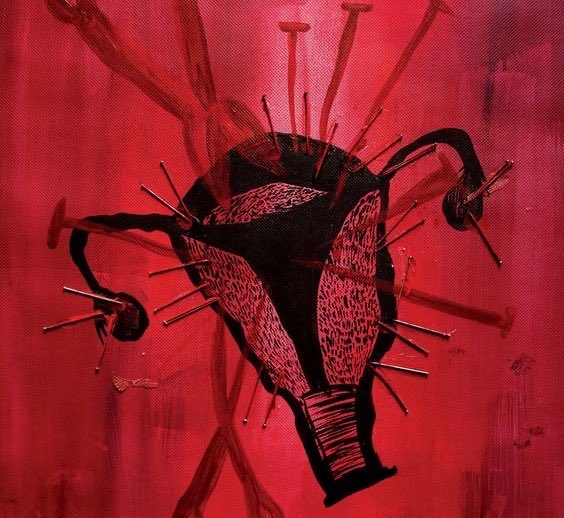
During her cycle, a woman acts as a high-voltage cosmic power station locked into the exact gravitational and electromagnetic tides of the Moon. Her body undergoes a profound magnetic purge, expanding her auric field to maximum capacity. Because plants and traditional medicines (iMithi/amaKhambi) are living, hyper-sensitive crystalline intelligences operating on delicate healing scripts, a menstruating woman does not contaminate them, she overcharges them, completely scrambling the plant’s software with her raw, celestial voltage. This same high-frequency fire is absorbed into food during cooking, altering its energetic structure.
This immense downward-pouring magnetic current explains the restriction of ukweqa umuNtu wesilisa(stepping over a man); passing this heavy, primal sacral force directly over a man’s upward-pointing upper chakras creates an immediate polarity shock, clouding his third eye and fracturing his personal drive. This structural disruption extends even to the act of crossing directly in between two people, especially men; walking between their physical bodies acts as a literal blade cutting through the invisible bio-magnetic communication lines woven between their fields, snapping their shared focus and draining their energetic voltage.
This same high-voltage law governs the absolute restriction against women entering iSibaya (the cattle kraal) during their cycle. iSibaya is not a mere animal enclosure, but the supreme ancestral altar and primary biomagnetic vortex of the homestead, continuously charged by the low-frequency electromagnetic currents of the herd. A menstruating woman entering this consecrated portal acts as a massive auric vacuum, destabilising the fragile ancestral grid lines and draining the protective life force straight out of the soil.
This process reveals a profound cosmic paradox: during this time, the woman is not low in power, but running an intensely demanding, purging spiritual current at maximum authority. The accompanying physical pain, cramping, and exhaustion are not a punishment, but the raw friction generated when this massive celestial voltage meets a physical vessel burdened by modern stress and systemic toxins. Her surface vitality drops precisely because 100% of her metabolic energy is directed toward tracking the lunar tide and cleansing her bloodline.
To ease this high-voltage friction, the system does not require synthetic chemical drugs or pharmaceutical sedatives that dull the nervous system and suppress the purge. Instead, specific living, traditional herbal medicines, such as iMpepho to regulate the internal heat and flow, and isiGqiki-somkhonto to soothe nervous system tension, are deployed. These alive, uncorrupted botanical extractions do not override her biology; they match her frequency, calming the metabolic fire and balancing the energetic currents so she can anchor her immense spiritual power without physical suffering.
Crucially, because her raw, expansive frequency is operating at an disruptive maximum, she cannot harvest, touch, or prepare these balancing herbs for herself. Her own hands emit a bio-electromagnetic charge so volatile during the purge that any direct interaction would prematurely scramble the plant's delicate healing software before it even enters her body. The medicine must be prepared, infused, and handed to her by another un-compromised, low-voltage set of hands. This requirement underscores the original communal software of African medicine: she is not cast away as an outcast, but fiercely protected as a living catalyst of bloodline clearing, requiring the community or family network to serve as her external grounding wire while she channels the heavy tides of the earth…
As Western systems and colonial mindsets invaded the continent, they could not understand the delicate math of African frequency control. They took these advanced protocols of energy management and re-wrote them as a tool of oppression. By doing so, the colonial architecture achieved its ultimate psychological coup: it shifted the blame onto the Nguni man, framing him as a tyrant who oppresses women. This manufactured gender war weaponised a profound science into a tool of domestic division.🍃🫶🏽
6. RECLAIMING AFRICAN LINGUISTIC AND ANCESTRAL SOVEREIGNTY
The marginalisation of languages such as isiBhaca, Khilovedu, isiHlubi, and isiCele demonstrates why linguistic sovereignty matters. The survival of these languages is not merely a matter of preserving words or maintaining regional speech differences. It is about protecting the cultural knowledge, identities, histories, and spiritual understandings carried through generations.
The colonial project did not simply influence how African languages were written. It helped establish hierarchies through which certain languages and identities received institutional recognition while others were pushed towards the margins.
That legacy continues wherever children are taught that the language spoken by their families is incorrect, inferior, or unsuitable for formal education simply because it differs from an officially recognised standard.
The fierce determination of communities to preserve their languages is therefore not mere nostalgia. It is a refusal to allow inherited identities and knowledge systems to disappear under the authority of externally imposed classifications.
Reclaiming linguistic sovereignty means recognising that African communities have the right to preserve, develop, and define their own languages without being forced to measure their cultural legitimacy against standards established by colonial institutions.
It means understanding that a standardised language cannot represent the entirety of the linguistic history from which it emerged, and that the recognition of one language should never require the erasure of another.
Ultimately, the struggle over African languages is also a struggle over identity, memory, knowledge, and the authority to define a people. Whoever controls the language through which a people are educated, classified, and taught to understand their history holds considerable power over how that people perceive themselves.
The reclamation of African linguistic sovereignty is therefore a necessary step towards rejecting colonial hierarchies within the African mind and restoring the dignity of the continent’s diverse linguistic and cultural heritage.🍃🫶🏽

THE COLONIAL STANDARDISATION OF AFRICAN LANGUAGES: LINGUISTIC ENGINEERING, TRIBAL IDENTITIES, AND THE PSYCHOLOGY OF SUBJUGATION
The standardisation of languages was a deliberate, violent bureaucratic tool used to engineer entirely new tribal identities, flatten complex civilisations, and streamline colonial administration. Through missionary institutions, linguistic classification, dictionaries, and educational systems, colonial authorities and missionaries helped reshape Africa’s diverse linguistic landscape to serve their religious, political, and administrative interests.
The roles of Carl Meinhof, the Berlin Missionary Society (BMS), the creation and institutionalisation of Lingala, and the amalgamation of diverse communities under broader linguistic and tribal classifications reveal the deeper psychology and sociology of colonial subjugation.
1. CARL MEINHOF AND THE CLASSIFICATION OF AFRICAN LANGUAGES
Carl Meinhof, a German linguist who worked within the European scholarly tradition of African language classification, approached Bantu languages through a rigid framework that reflected European grammatical and intellectual assumptions. Rather than recognising African languages solely on their own cultural and linguistic terms, European scholars sought to classify them according to systems that made them understandable within Western academic traditions.
Meinhof’s work contributed to the systematic classification of Bantu noun classes, imposing a formal comparative framework upon languages whose expressions, meanings, and usage were deeply connected to their cultural contexts. The problem was not the identification of grammatical structures themselves, but the broader colonial tendency to reduce complex African linguistic systems to categories defined and controlled by European scholarship.
Worse, Meinhof supported the Hamitic Hypothesis, a deeply racist theory claiming that signs of advanced civilisation, complex language, or sophisticated governance in Africa must have originated from a supposedly superior, light-skinned population that migrated into the continent. This theory reflected the racial hierarchy through which European scholars attempted to explain African achievements by attributing them to external influences rather than recognising the capabilities of African societies themselves.
Such classification was never entirely separate from the colonial environment in which it developed. It formed part of a wider intellectual project through which European authorities claimed the power to define African languages, interpret African civilisation, and determine how African societies should be understood.
2. THE INVENTION OF TRIBAL IDENTITIES THROUGH CARTOGRAPHY AND DICTIONARIES
Before colonial administration imposed its rigid systems of classification, African identities were shaped by clan, lineage, territory, political affiliation, and relationships between neighbouring communities. People identified through their iziduko, izithakazelo, ancestral lineages, and local identities rather than always conforming to the fixed tribal boundaries that later became prominent in colonial administration.
A person from an amaHlubi community could live alongside an amaCele community, with neighbouring populations speaking overlapping forms of ukutekela, Lala, and other regional linguistic varieties while maintaining relationships through trade, kinship, and shared territories.
Colonial authorities could not easily govern a complex and fluid social landscape through rigid classifications alone. They required identifiable populations, recognised boundaries, administrative authorities, and systems through which people could be recorded, taxed, and controlled…
The marginalisation of isiBhaca, Khilovedu, isiHlubi, isiCele, and other indigenous languages and regional varieties illustrates the consequences of this hierarchy. Communities whose languages fall outside dominant standards can find their cultural expressions excluded from formal education and their linguistic identities denied the recognition afforded to more widely institutionalised languages.
In Limpopo, the codification and promotion of Sepedi as a standard language raised questions about the recognition of other languages, including Khilovedu, spoken by the Balobedu. In the eastern regions of Southern Africa, the dominance of standardised isiZulu and isiXhosa similarly raises questions about the historical treatment of communities whose languages and speech varieties differ from those institutional standards.
The issue is not simply that languages change or that standards develop. It is that institutional power determines which forms receive recognition, resources, and authority, while others are left struggling for survival.
4. LINGALA AND THE COLONIAL ADMINISTRATION OF LANGUAGE
A parallel process occurred in the Congo, where Lingala developed from contact among different riverine linguistic communities and was subsequently shaped and promoted through colonial military, administrative, missionary, and urban institutions.
Colonial authorities required a practical language through which people from different linguistic backgrounds could communicate within the army and administrative system. The promotion of Lingala helped fulfil this purpose, while its institutional expansion altered the linguistic relationships among communities in the region.
This example illustrates how colonial institutions could accelerate the development and spread of selected languages to serve administrative objectives. When a particular language receives institutional support, it gains opportunities for expansion, while other languages may lose ground in official communication and education.
The broader pattern is significant: language becomes an instrument of governance when authorities determine which languages will be used to administer populations and which will remain excluded from institutional power.
Across different African regions, the promotion of selected languages could strengthen broader classifications of identity while reducing the visibility of local linguistic distinctions. Complex societies were increasingly represented through simplified linguistic and ethnic categories that were easier for colonial administrations to manage.
The consequences extended beyond communication. They affected how communities were classified, how their identities were represented, and how future generations came to understand their own cultural and linguistic histories.
5. THE PSYCHOLOGY, SOCIOLOGY, AND SPIRIT OF LANGUAGE
Language is psychological, sociological, emotional, and spiritual.
When the linguistic varieties spoken by African communities were displaced by missionary-approved standards, the consequences extended beyond the sounds coming out of people’s mouths. Language carries identity, memory, cultural knowledge, emotional expression, and spiritual meaning. Changing the status of a language can therefore change how people perceive themselves and their place within the world.
If your ancestors spoke ukutekela or Lala, but the language you inherited is later treated as incorrect while another variety is elevated as the only legitimate form, a profound disconnect can develop between your cultural inheritance and the institutions that shape your education.
A child who grows up speaking a marginalised mother tongue may eventually learn to regard that language as inferior because the school system, religious institutions, and wider society give greater recognition to another linguistic standard. Over time, the child may become distanced from the expressions, knowledge, and cultural distinctions embedded in the language of their own community.
This is one of the deeper psychological consequences of linguistic subjugation: people can be taught to measure the legitimacy of their own cultural inheritance against standards established by external authorities.
The spiritual consequences are equally profound when indigenous concepts are translated without sufficient regard for their original meanings. African spiritual systems are embedded in particular relationships between people, their ancestors, their land, and their communities. When these systems are forced into external religious categories, their meanings can be distorted, reduced, or replaced.
Language is not simply a tool for speaking. It is also a vehicle through which a people preserve their understanding of existence, transmit knowledge, and maintain continuity between generations. To marginalise a language is therefore to risk marginalising the knowledge carried within it.
When someone tolerates your toxic ego because they have a family to feed, do not mistake their silence for weakness. How you treat people who cannot afford to challenge you is the ultimate mirror of your character. Stop using another person’s survival needs as a playground for your arrogance. The universe doesn't read corporate organizational charts. When you use your temporary rank to step on others, you are fracturing your own spiritual weight. You might command the room today, but frequencies of cruelty leave an echo in the ether. That echo always finds its way back to the source.🫶🏽

The modern youth cannot be healed by Western psychology or pharmaceutical pills, because their sickness is an exile from their ancestral frequency. Western psychology operates on the premise of the individual ego, fixing a single mind in isolation. The African spiritual system operates on the premise of the cosmic web, you are a single node connected to a vast network of blood, soil, sound, ancestry and by extension.
To heal this systemic hijacking, we have to look directly at how the traditional African system, specifically through iziyalo (spiritul directives), izithakazelo, rituals, and indigenous medicine (uMuthi), acts as a sovereign technologies to recalibrate the human vessel. The intentional replacement of African indigenous systems with foreign frameworks wasn't just a cultural shift; it was a targeted vibrational disarmament.🍃🫶🏽


THE DIGITAL AGE AND THE SPIRITUAL DISCONNECTION OF A GENERATION:
“By trading the raw friction of the physical world for frictionless digital convenience, we have left the post-1999 generation biochemically inflamed and spiritually isolated. Their coldness is not a lack of a soul, it is a defensive shield protecting a severely exhausted nervous system.”
To look at this deeply, Generation X (born 1965–1980) and Millennials, also known as Generation Y (born 1981–1996), experienced varying degrees of the transition from an analogue world to a digital one. Generation Z (born 1997–2012) grew up during the rapid expansion of digital technology, while Generation Alpha (born approximately 2010–2024) has experienced a childhood in which digital devices and online environments are increasingly integrated into everyday life. Although these generational boundaries overlap and vary depending on the source, the broader transition reveals a significant change in the environment in which human beings develop their identities, social skills, and understanding of the world.
The systematic erasure of unplugged boredom is perhaps one of the most devastating spiritual trade-offs of the digital age. When we traded the quiet canopy of trees and wide skies for a non-stop, synthetic dopamine machine, we did not just change our habits; we severed the anchor of the human soul.
Without quietude, the mind loses one of its mirrors through which it can see itself. Instead of developing an internal identity rooted in nature, stillness, and direct human experience, younger generations are increasingly encouraged to construct their identities on the shifting sands of constant external stimulation. The ultimate consequence of this shift may not be apathy, but a state of psychological survival.
A young spirit was never meant to carry the weight of a hyper-connected world, bearing witness to global tragedies, synthetic social judgements, and thousands of streams of information before breakfast.
To cope with this relentless bombardment, the brain may resort to defensive mechanisms that reduce emotional engagement or sensitivity. What older generations perceive as a cold, spoiled, or heartless attitude may sometimes reflect a deeper form of emotional withdrawal. The spirit appears to retreat behind a defensive wall, attempting to protect itself from a world that has become too loud, too fast, and too overwhelming to process comfortably.
Ultimately, this post-1999 human experience may be understood as a state of deep spiritual exhaustion. These children do not lack humanity or a soul; rather, their capacity for emotional connection, self-reflection, and inner stillness may be struggling beneath the weight of constant stimulation. To awaken that capacity, humanity must consciously unplug from the machine, restore meaningful physical experiences, and reclaim the sacred, quiet spaces where the human spirit can reconnect with the natural world.
If parents fail to take a deep, close look at this growing pattern of emotional disconnection, we may find ourselves approaching a critical turning point in human development. The danger of ignoring this issue is the gradual normalisation of a synthetic way of living in which individuals struggle to function comfortably without constant digital stimulation.
If parents continue to mistake this defensive withdrawal for mere spoiled behaviour or a bad attitude, they risk responding to the symptoms without understanding the underlying problem. In doing so, they may unintentionally drive their children deeper into the very digital matrix from which they need opportunities to disconnect.🍃🫶🏽


Unpolished natural millets often show a tiny dark spot (the germ or "eye") on the side of the seed. Heavily processed grains lose much of this distinct appearance. The bran layer holds the vast majority of the grain's iron, zinc, magnesium, and potassium. Polishing literally scrubs these minerals into the waste bin. Unpolished millet is famous for its low glycemic index because its rich fiber content slows down sugar absorption.
Polished millet loses this fiber, causing it to behave more like refined white rice or white flour in your body. The germ and bran are packed with B-complex vitamins (like thiamin and niacin) and phytochemicals. Once processed, these health-boosting compounds drop drastically. Essentially, you are left with mostly starch. It loses the medicinal and deeply nourishing qualities that make natural, darker millet a superfood.
Choosing unpolished, darker grains is always the best way to get the full health benefits. Genuine, unpolished millets will have a distinct tiny dark spot or dot on almost every single grain. If the grain is completely blank and smooth, it has been polished. Identify the Natural Colors: If the millet is pure white or translucent, it is polished. Unpolished varieties retain their rich, dull, natural colors.🌾🫶🏽

EmNtwaneni akushiwo ukuthi unamazinyo, kuthiwa unabathakathi, abantwana, okanye uyamilisa. Futhi akushiwo ukuthi uzama ukukhuluma, kuthiwa uyabhibhidla uMntwana. Isizathu esibangela ukuba konke lokhu kungashiwo emNtwaneni yingoba kusuke kubukwa esigabeni okanye entweni ethi, lomntwana uma nike namgega okanye kwakhona izinkulumo zomntomdala ngaphezukwakhe uba nezinkinga empilweni. Njenge zinkulumo zofuzo labadala bakwabo zisondele, ezengamelene nemihlathi yomntwana.
Yingakho kwabanye abantu uma kwaba nezinkulumo uthole ukuthi baphathwa zibhobo, omunye uthole ukuthi imihlathi yakhe yamazinyo iba buhlungu yonke. Bese uzwa kuthiwa lomntwana unezinkulumo zabadala ezakhulunywa esemncane ngaphezu kwakhe. Amazinyo kubantu akuyona into encane ayahlonishwa amele abakwabo. uMntwana uma egula kokunye usuke egula ngokuhlaseleka kokuthi kwaba nezinkulumo phezukwakhe okungamele zikhulunywe esasesigabeni sobuntwana.🍃🫶🏽


GENTLY MOISTURISES WHILE HEALING AND SOOTHING THE SKIN:
New skin repair cream made from uFudu lweNtaba plant🌿 for eczema, psoriasis, skin cancer, acne, wounds, burns, ulcers, blisters, insect bites, hyperpigmentation, blemishes, chubaba, nappy rash, and wrinkles. Helps maintain clean, healthy, revitalised skin and promotes healthy blood circulation. Environmental friendly. For more dm.🍃🫶🏽


