

Savanna Science Network Meeting. Annual savanna research conference hosted by SANPArks Scientific Services
Skukuza, KNP
Joined February 2015
- Tweets1.6K
- Following95
- Followers525
- Likes503


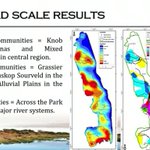
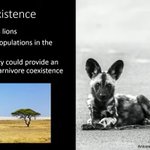

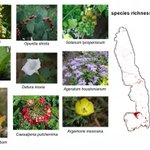
as we celebrate our 20th Installment of #SSNM on 05-09 March 2023. follow the proceedings on @SANParks and @SANParksKNP using #SSNM20.
1
6
670
we are closing this account, but you can still follow our cool science stories @SANParks and on our website sanparks.org/scientific-serv…
1
3
363
SavannaScienceNM retweeted

Apart from their spiky leaves, cycads have developed very potent poisons to make sure that they are left alone. These poisons are neurotoxins that attack the nervous system and protect the plant from herbivores and insects that can cause damage to the seed cones.

Introducing #MeetTheTeamMondays where you get to know the people working behind the scenes in the Savanna Research Unit based in @SANParksKNP.
our first member is Social and Economics Scientist Dr. Louise Swemmer.
@SANParks

SavannaScienceNM retweeted

Are you a young researcher working in invasion science? Check this! 👇🏽😍

Today is the day!
Registration is now open for IyrCIS-2023! The completely free online conference where young researchers can present their work related to invasive species. Click on the link for more info.
Hope to see you there👀😜
iyrcis.webs.uvigo.es/index.h…
SavannaScienceNM retweeted

Ever wonder what @sanparks scientists & bio-technicians do? Check out our annual research report for a peak into our world. Its jammed packed with conservation & protected area research, monitoring, science-management & stakeholder engagement stories sanparks.org/scientific-serv…


Savanna Science Network Meeting 2023-Registration for non-presenting delegates is now open till 20 January 2023.
sanparks.org/scientific-serv… via @SANParks @SANParksKNP #savannascience
South African media treat fire as foe – its ecosystem benefits get lost in the blaze theconversation.com/south-af… via @TC_Africa

SavannaScienceNM retweeted

Great work presented. I don't think they should worry much about their model projected biome ditrib..s not matching 'current' maps from a decade ago. It is predicted for the region that trees/shrubs will invade grasslands. see Moncrieff et al 2015.
SavannaScienceNM retweeted

@nicola_stvns talking on her favourite savanna plant, the mighty Mopani #SSNM – at Skukuza, South Africa
SavannaScienceNM retweeted

@nicola_stvns in her element talking about how certain landscape disturbances can affect the sterility of mopane trees #SSNM

SavannaScienceNM retweeted

Large areas of Africa experience highly seasonal rainfall. Less attention has been paid to the adaptations plants and animals require to survive in these seasonal environments. The purpose of this study is to identify these traits #SSNM


SavannaScienceNM retweeted
@UPEcology presenting on seed and seedling traits which helps with woody establishment #SSNM


SavannaScienceNM retweeted

Survived presenting at my first international conference @SSNM_KNP. A great end to my field season and nice to hear about all the exciting research going on within Kruger National Park #research #SSNM #disease @MolEcolCU


SavannaScienceNM retweeted
Tullia Riccardi gave a very interesting talk on how they're using historical imagery to assess spatial and temporal changes in vegetation dynamics in Kruger NP. A bonus is finding aerial photographs of historical settlements in the park! #SSNM @SapienzaRoma
SavannaScienceNM retweeted
@Jussi43061868 gave us an update on their research projects on soil erosion dynamics across SA @EMSAfrica @SALDi_FSU #SSNM