

Sit at the intersection of clinical, operational, and financial worlds to achieve profitable growth Fmr hedge funder TX Longhorn 🏈
Texas, USA
Joined August 2017
- Tweets2K
- Following1.1K
- Followers547
- Likes5.2K






Saurin Patel, MD retweeted

The dumbass healthcare economists don’t seem to understand that physicians take real payment cuts every year due to devaluation of RVU codes and a larger degree actual pay cuts in the Medicare conversion factor and bundling of codes.
Loss of 31% income for same work since 2000.
Saurin Patel, MD retweeted

Where the money in the fee schedule actually goes.
CMS says the goal is to pay primary care more and lower the cost of care. Follow the dollars and it is doing the opposite.
This week has focused on the problems in the physician fee schedule cuts. Today is about where the money actually goes, because once you track it, the policy makes even less sense. Paying primary care more is a goal we can all get behind. The problem is that budget neutrality means CMS cannot add money. It can only move it. In other words, every primary care raise is funded by a cut somewhere else, and where each half of that transfer lands is the part most haven’t seen.
WHERE THE CUTS COME FROM
Let’s start with total joint replacement. CMS cut the work RVUs on total hip and total knee from 19.11 to 16.70. That is an RVU-level cut. It hits every surgeon who does the procedure whether the independent surgeon through the practice's revenue or the employed surgeon through a comp plan that pays per wRVU. Everyone on the physician side pays in full.
Now let’s look at the modifier 25 cut. Starting in January, an office visit billed with modifier 25 on the same day as a 0-day global procedure is paid at 80%. That is a payment-level cut. The RVUs on the visit do not change. So the independent dermatologist, ENT, or podiatrist bills the claim, collects 80%, and eats the difference on January 1. The employed physician in the same specialty is paid on wRVUs that have not changed. The 20% comes out of what the health system collects. The policy is invisible to the employed physician and fully visible to the independent one. Adding insult to injury, dermatology and podiatry are the least hospital-employed specialties in medicine (under a third by claims data). The cut was aimed, intentional or not, at the specialties where independent practice still lives.
Last year's rule did the same thing with a third lever. CMS cut indirect practice expense RVUs for facility-based services by 50%, roughly 10% off the total RVUs for procedures like TAVR, PCI, and ablation. Practice expense does not flow into a wRVU comp plan either. This means the independent cardiologist or surgeon doing cases at the hospital lost the overhead reimbursement for the billing staff, the malpractice premium, and the credentialing she actually pays for. The employed physician in the next operating room is paid on wRVUs and felt nothing.
We need to ask what each of these does to the physician on the receiving end of the cuts.
The efficiency adjustment cut every proceduralist's wRVUs by 2.5%. The independent surgeon ate it as revenue against fixed overhead. The employed surgeon's health system raised its rate per wRVU and paid him more anyway. The compensation surveys show employed physician pay rising faster than productivity every year. Even the cut that reaches everyone hurts the independent physician more because only employed physicians have someone who stands to make money elsewhere and is therefore willing to backfill the cut.
The facility practice expense cut told the independent proceduralist that Medicare will no longer pay for overhead when they work in a hospital. The hospital, meanwhile, collects a facility fee on every one of the physician’s cases. The obvious move is to sell the practice, drop the overhead, and let the hospital collect both fees.
The modifier 25 cut told the independent dermatologist that same-day care now pays 80% of what it paid last week. The employed counterpart's paycheck did not change. Hospitals and private equity groups will notice the difference and jump on the opportunity.
Every one of these changes teaches physicians that the way to stop losing money to the fee schedule is to stop billing it in your own name. This coming from a government that says it wants to break up consolidated medicine. Meanwhile, it is doing the opposite, one rule at a time, and paying hospitals to finish the job.
WHERE THE GAINS GO
The money from those cuts was supposed to go to primary care, but that’s not the entire story.
More than half of primary care physicians are employed by hospitals or health systems, and most of those are paid on wRVUs. A growing share work for insurers like Optum and CenterWell and are paid off Medicare Advantage capitation, which the fee schedule does not touch at all. Roughly 40% remain in private practice, and they are the only ones who see a fee schedule raise in their own bank account.
For the hospital-employed majority, when CMS raises what an office visit pays, through the conversion factor or through a percentage modifier, the extra dollars show up in the health system's collections. They do not show up as wRVUs, so they do not show up in the physician's paycheck unless the system decides to share their riches.
This year it gets worse. G2211, the visit complexity add-on, was a real line item with 0.33 work RVUs that an employed PCP got credit for on every qualifying visit. In January it becomes modifier B1, a 16% bump with no RVUs of its own. CMS has not even settled whether the 16% applies to the whole visit or only the work component. The fact sheet says one thing and the crosswalk file says another. Most comp plans credit wRVUs by CPT code. A modifier does not impact physician pay. In the end, the employed PCP loses the G2211 credit and the employer collects whatever B1 turns out to pay, which under CMS's own crosswalk reading is less than G2211 on most established-patient visits.
The interesting note is that G2211 was never mostly primary care anyway. In 2024, specialists billed 43% of it, primary care 40%, and fewer than a quarter of eligible clinicians used it at all. The conversion factor took a 2.18% cut that year to fund it, on CMS's assumption that it would go on 38% of visits. It only went on about 11%. Every physician paid for a primary care code that was not mostly primary care and that most primary physicians never billed. That money will never return to the system.
Independent primary care, the only group that would actually see the raise, is a shrinking share of the workforce. The transfer was designed for them and yet mostly misses the group it intended to help.
WHERE THAT LEADS
Put the two halves together. The cuts fall hardest on independent specialists and teach them to sell. The gains are captured mostly by the health systems doing the buying. We are fueling a consolidation engine, and consolidation is the most expensive thing that can happen to Medicare. When a practice is acquired, the same visit in the same room starts generating a facility fee on top of the professional fee, because it is now billed as hospital outpatient. Studies of hospital acquisitions of physician practices consistently find prices rise afterward, and not by a little. MedPAC has spent years documenting the site-of-service differential and asking Congress to fix it. The spending CMS is trying to restrain through budget neutrality on the physician side comes back, larger, on the facility side.
CMS set out to pay primary care more, lower the cost of care, and push back on consolidated medicine. The mechanism it has to work with cuts independent physicians, routes the proceeds to health systems, leaves most primary care physicians no better off, and funds the acquisitions that raise Medicare's total bill. Every stated goal has failed.
I do not think anyone at CMS intended consolidation. I think it is what happens when the only tool the law allows is redistribution inside a fixed pot, and when the people you are trying to help do not bill Medicare in their own name. The fix cannot be a better redistribution formula. There must be an inflationary update for the whole fee schedule so that paying primary care fairly does not require taking it from someone else, and a serious look at who captures the money inside employment. Until then, every fee schedule that claims to help primary care should be read with one question in mind: who actually cashes the check the government writes?

Half ??
Doctors who make $350k have had almost all of their annual savings disappear in the last 7 years. 30% reduction in spending power hits everyone except the $1M annual income(or ultra high net worth) and up crowd, ESPECIALLY if you have a family.
@Jason has clearly been hyper successful - good for him. But he may be at the point where he can’t assess what % of the population is genuinely feeling the cost of living challenge.

As I’ve said on the podcast, one you pass a certain income level inflation means absolutely nothing to you.
I noticed when my strip steaks went from $60 to $80 to $120 — but it had zero impact on my behavior
I have friends who haven’t flown commercial or been to a supermarket since 2000… they don’t understand what persistent 3-5% inflation has had on half the country

8
66
24,727
Been saying this all season. Offensive woes have overshadowed a historic defense.

Since 2004, there have been 2,907 defenses to take the field in the FBS
Here's where 2026 Texas sits among those 2,907 teams
4th - Adj. EPA/Play (Top 0.13%)
34th - Yards/Play (Top 1.17%)
20th - Yards/Dropback (Top 0.69%)
23rd - HAVOC% (Top 0.79%)
We're witnessing greatness

305


This interpretation of the transplants to TX is highly accurate. Almost all are R of center escaping hyper progressivism.

I keep reading that the demographic shift of more liberal NYers and people from Cali moving to places like SC, Fla and Texas accounted for the blue tsunami of Tuesday. I spend a lot of time in SC and Fla for various reasons, and here's a little bit of perspective: The transplants are nearly, to the man and woman, ALL right-of-center from my experience. They are escaping progressivism, not looking to indulge in it while paying lower taxes and enjoying the weather. It's a convenient excuse, IMHO, to blame this purely on demographics (which cant change in just two years given the 2024 election results). Same goes for the Iran war with no boots on the ground and a comparatively marginal increase in gas prices. You know where I stand on this issue, and Ive been warning about it since "Liberation Day" so Ill stop here
82
Both parties can use this message. It’s an opportunity to NOT let the American people down if they work together to solve things.

Last night, Sen. Andy Kim (D-NJ) told me something I keep thinking about: While Democrats may want to celebrate, they need to remember that this isn't a sporting event. This is Americans sending the strongest signal possible that they are in pain, and hurting, and want help. Now Congress needs to answer that call. It was powerful stuff, and if the party is smart they'll follow his instincts.
77

We basically need to hope we’re the 2002 Buckeyes.
Only difference is there wasn’t nearly the talent on the Buckeyes offense then that we have. Nor did they spend close to what we’ve spent.

• 60 rush yards on 32 attempts
• 5 sacks allowed
• 8 TFL allowed
• 5 three-and-outs
It was a 31–3 win, but there remains so much room for this offense to improve.
63
Agreed and understated
Even those at the higher end of the economic spectrum are unable to see a path in the future (not just 12 months) that allows them to have increasing savings/stability.
That alone is one of the - if not the - biggest contributors to a dying society.
Citizens have to feel that the future will be better(or at least the same) than the past

Americans have never been this pessimistic about their finances:
A record 41% of US consumers expect their financial situation to be worse over the next 12 months.
This figure has more than tripled since Q2 2024.
By comparison, during the 2008 Financial Crisis, this metric peaked at 23%.
This proportion is also significantly higher than in the 1970s and the 1980s, when CPI inflation was above 10%.
Furthermore, 31% of US consumers believe their personal financial situation will be worse in 5 years, double the proportion seen in the 1980s.
Americans feel as though we are in a recession.

2
68
The actual low friction way to hedge healthcare inflation I to create an account whereby all Americans invest in the healthcare insurers’ stocks.

Over $28,000 a year for family health insurance premiums, up from $6,000 in 1999.
And that’s before deductibles, copays, and surprise bills.
The system is fundamentally broken.

1
86
Saurin Patel, MD retweeted

This Texas team is good enough to beat anybody in the country.
The only problem is that they’re also bad enough to lose to anybody in the country.
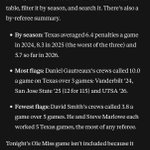
How interesting . Had Claude analyze deeper…
“ His crews call an average game for everyone else, so this one is specific to Texas.”


51
Saurin Patel, MD retweeted

How bad has it been for Texas in the 3rd quarter in 4 SEC games?
*Outscored 31-3
* 13 drives
- 7 3 and outs
- 3 drives of 4 plays
- 10.7 yards per drive
#HookEm


CPI is a sham.
Americans should learn how CPI uses retained earnings as a proxy for healthcare cost inflation
Year 1: $10k premium - $8.5k medical claims = $1.5k insurer margin
Year 2: $12k premium - $10.8k medical claims = $1.2k insurer margin
Your out-of-pocket premium bill went UP 20% ($2,000). But because the insurer’s margin shrank from $1.5k to $1.2k, the CPI officially records health insurance as getting 20% CHEAPER. The CPI tracks their profit margin, not your actual bill.

Average US family health insurance premium...
1999: $6k
2002: $8k
2005: $11k
2008: $13k
2011: $15k
2014: $17k
2017: $19k
2020: $21k
2023: $24k
2026: $28k
That's a 387% increase since 1999 (6.0% per year).
(Note: US CPI inflation has increased 2.6%/year)

67