


Another security incident. Another wave of fear. And here come the miracle solutions.
Too many security vendors and consultants sell fear. Not solutions.
Security theater isn't just expensive. It can make people less safe.
Time to stop buying tickets.

Flock isn’t the real problem. Poor governance is. Powerful surveillance tools require an independent risk assessment, clear requirements, strict policies and continuous auditing. Otherwise, they’re just buying technology.

Is your security assessment truly independent—or a sales proposal in disguise? When the assessor also sells the solution, every problem can look like another camera, alarm, guard post, or monitoring contract. Know who benefits before you buy.
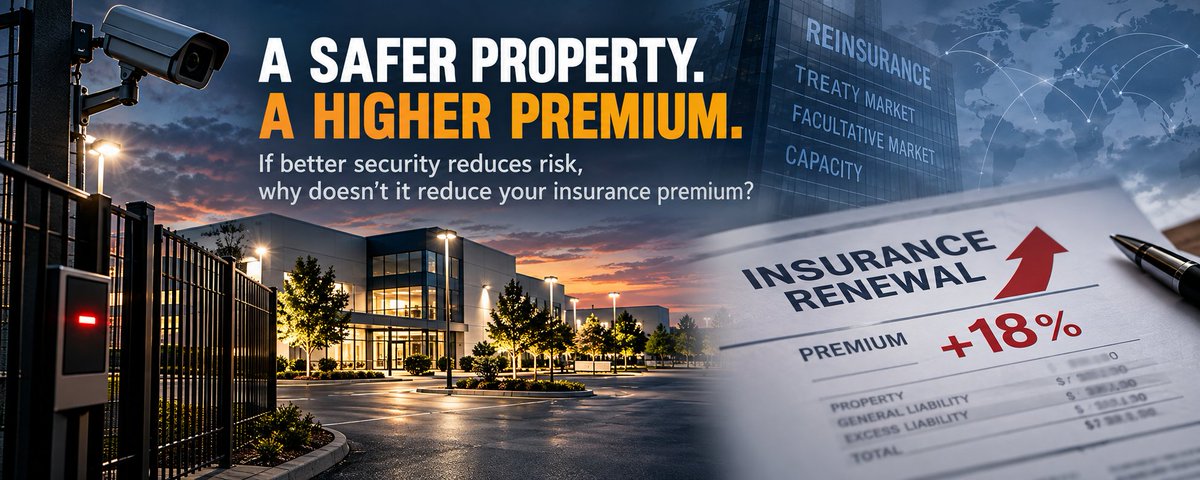
A safer property doesn’t always mean a lower premium. Part of the problem is the insurance market. Part of it is security itself. If we want security improvements valued, we need to prove how they actually reduce risk.
S6RG retweeted

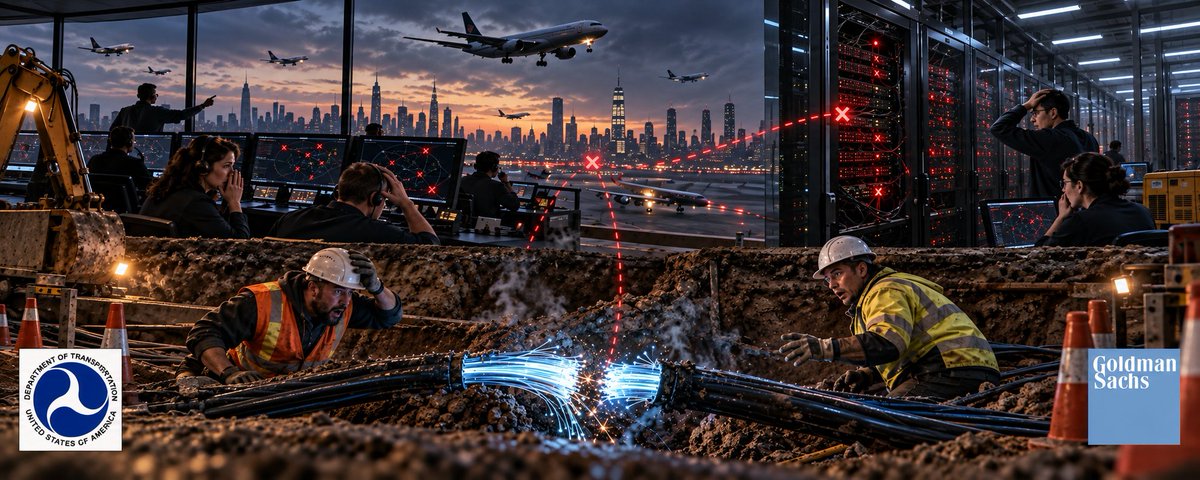
This week’s FAA disruption shows that critical infrastructure is only as resilient as its weakest dependency. Government can learn from the private sector: redundancy isn’t just having a backup—it’s ensuring the backup survives when the primary fails.
S6RG retweeted
It seems almost everyone in security is a “counter-terrorism expert” these days.
They’re not.
A quick look at expertise inflation in the security industry and why knowing when to bring in the right specialist matters more than pretending to be one.

S6RG retweeted
The notice of claim may expose UVU's failures - but it also exposes serious shortcomings in Charlie Kirk’s own protective operation.
Security cannot be outsourced. Planning matters. Verification matters. And ultimately, somebody has to own the risk.

S6RG retweeted
A look at why good security lighting can sometimes do more than another camera—and why truly effective lighting requires more science, independence, and expertise than most “free” security assessments provide.

S6RG retweeted
Interesting article from The Hollywood Reporter on the rapidly changing world of executive protection.
I’ve spent decades working with executive protection programs worldwide, so I’ve seen firsthand how quickly the threat environment and expectations for protective programs have evolved.
The figures are striking. Disney and Netflix each reportedly spent about $1.8 million on executive security last year. Amazon increased its spending by more than 50%, and Warner Bros. Discovery by more than 200%.
By October 31, 2025, documented physical and cyberattacks targeting senior corporate executives had already doubled the previous year's total. But I think the more important story is what companies are buying.
Executive protection today is about much more than bodyguards. It includes threat intelligence, online threat monitoring, residential security, cameras and alarms, secure transportation, travel planning, physical barriers, access control, and highly trained protective personnel.
And the publicly disclosed numbers don't necessarily capture the full cost. Corporate aircraft, vehicles, and workplace protection and security associated with business travel can fall outside the figures companies report as executive-security expenses.
An important philosophical shift is also underway. Understandably, Companies are beginning to treat executive protection less as a perk for a highly compensated CEO and more as an element of business continuity and enterprise risk management.
If a key executive is threatened, attacked, or incapacitated, the consequences can extend far beyond that individual — potentially affecting employees, operations, customers, investors, and the organization itself.
But increasing risk doesn't mean the answer is simply "more security."
It means better risk management - Understanding threats, vulnerabilities, and consequences. Then determine which measures are reasonable and proportional to the actual risk. That's an important part of S6RG's philosophy.
Whether we're looking at an executive, a family, a workplace, or an organization, the objective isn't to turn someone's life into a fortress. And it certainly isn't to make people more afraid.
It's to understand risk well enough to make informed, defensible decisions - and then allow people to live, work, and travel with greater confidence. Security should reduce fear, not institutionalize it.
Hollywood CEOs Are Spending Millions On Bodyguards As Threats Soar hollywoodreporter.com/busine… via @thr

RT @PatrickHurley: A horrible tragedy, but we don't need a year-long investigation to find out what happened. Total pilot error and bad jud…




We haven't used our X account nearly enough. That's going to change, especially considering X's new capabilities. Stay tuned.

