

dep director @devpolicy + econ assoc prof @ouranu. priors @dartmouthecon @stanford @ouranu @pmc_gov_au @uq_news. very personal account. 🧑🧒🧒+🌻+🦋
Canberra
Joined May 2011
- Tweets53.4K
- Following3.1K
- Followers6.5K
- Likes88.3K






Pinned Tweet
Some "overdue" news: my first paper on palm oil, started over a decade ago, was accepted for Christmas and is in print open access at the @JIntlEcon today. It's quite different from earlier versions, and the (excellent) review process improved it a lot.
sciencedirect.com/science/ar…

Ryan retweeted

Now that math has been solved we can finally focus on the true purpose of undergraduate math degrees: getting admitted into Economics PhD programs
Ryan retweeted

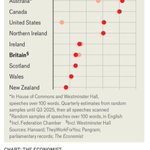
Underrated how low Australia’s pension spending remains. Superannuation has its problems, but at least our ageing population hasn’t got us trapped in a spending doom spiral.


The most important article of 2026 is this piece by @jburnmurdoch, building overwhelming evidence on the unsustainability of the pension systems in many countries and the broken intergenerational contract.
To me this is the single underlying problem explaining the inability of many countries (incluiding my two, UK and Spain) to invest and grow and the malaise in their youth. Every future oriented policy, education, innovation, investment in infrastructure, is being sacrificed to increase pensioners living standards.
But the problem is political, and some countries have solved it. E.g. in Denmark the retirement age increases (years later) semi automatically with life expectancy. See the result in the last graph.
giftarticle.ft.com/giftartic…


Ryan retweeted

Finally! Been waiting for work like this since grad school.
For those who don’t know, nightlights measures have been severely limited up to this point by unobservable changes in sensors over time, together with other issues. This has made the time series dimension in the data basically unusable. Fixing this is a major advance towards analyzing economic outcomes in the most hard-to-measure places.
Looking forward to digging into this one.

Harmonized luminosity series (1992-today), adjusted OLS-DMSP fused into VIIRS, @EJ_RES (@GChiovelli , @tannerwdregan, & Stelios, wisely not in X). Use it (or criticize it!!
Ryan retweeted

I'm on the 2026-27 job market! #EconTwitter
Does technology that displaces workers increase labor coercion?
This is the question of my JMP with @ybcoliveira and @GilDoVigor. In Brazil, the data indicate it does.
Paper 👇 drive.google.com/file/d/1kaA…

Ryan retweeted
New @AEAjournals JEP piece by @deankarlan is v. good aeaweb.org/articles?id=10.12…
On the @devpolicy blog, I explain how its also a welcome reminder of what we knew, where we've regressed, and where we need to do better in terms of evidence and decision-making devpolicy.org/use-it-or-prod…

Ryan retweeted

Podcast -- @rglenner @gamblingondev and I discuss Who Should and Shouldn't Get Aid? [TLDR: Stefan "countries that will use it for growth," me "poor countries."]
cgdev.org/blog/cgd-podcast-w…


Ryan retweeted

It sounds like this is not a book for people who think about what they are reading

I'm at the end of @IsabellaMWeber's book.
My lens while reading was "where do we actually disagree?"
I still can't figure it out.
Often, she describes how economists think but then attaches beliefs/values that aren't needed.
Take the carbon tax discussion as an example:

Ryan retweeted

New version of our paper: how immigration shapes inflation using *firm-level* responses. Idea is to split demand and supply effects through separate inflows based on where firms *sell* (retail) vs where they *produce* (establishments)
Prices and Immigration: Firm-Level Evidence


Ryan retweeted

After a lull in the RCT wars, the revanchist randomista revolution is upon us:
- Michael Kremer at the World Bank
- Now Karthik at the ADB!

I am pleased to welcome Professor Karthik Muralidharan (@karthik_econ) as ADB’s next Chief Economist and Director General of the Economic Research and Development Impact Department (ERDI). He brings the expertise and leadership we need as our members face increasingly complex development challenges.
Mr. Muralidharan is a leading development economist who serves as the Tata Chancellor’s Professor of Economics at the University of California, San Diego. His research spans public finance, education, health, social protection, governance, and public service delivery. He is an excellent choice to lead ADB’s economic research, policy analysis, and forecasting for Asia and the Pacific, with this experience and expertise, coupled with economics degrees from Harvard and Cambridge Universities.
When he starts the role next July, Karthik will bring a practical perspective to ERDI’s strategy and advance research on the economic development challenges facing Asia and the Pacific today and in the years ahead.
Congratulations, Karthik! I look forward to working with you.
News release: adb.org/news/adb-appoints-ka…

Ryan retweeted

The thing I avidly believe:
You can offload anything you want to AI. For example if you are writing a blog you can have it help you with research, do all the research, or write the entire thing.
Be VERY conscious about what you are offloading. Offload the things that let YOU get better/smarter/faster/more experienced. Don't offload the things you want to become, because if you do you will never become them.
If you offload writing your blog, it isn't your blog. It won't have your ideas, your perspective, your voice.
Ryan retweeted

🤦♂️

We built Australia’s own AI model, and today it’s open to the world.
Agentaus 1 (@AgentausTD): 220B parameters. 84.4% on MMLU-Pro. Ranked 43rd in the world.
It runs on Australian servers. Nothing ever leaves Australia, and nothing you type is used to train AI. Delete a chat and it’s gone for good.
Most of the world’s AI answers to somebody else. This one answers only to you.
Free to start: agentaus.com.au


Ryan retweeted

Nine months is a lifetime in AI. After becoming hopelessly outdated, Claude Blattman is newly refreshed!
My motto: Agentic AI for professionals who don't code
The idea is to get it to write first drafts in your voice, triage your inbox, manage project teams, and fix your oven.

Ryan retweeted

Very cool model plus data. It's substitution elasticities all the way down, friends.

New working paper: Maritime Vulnerabilities and Geopolitical Disruptions in Global Shipping
In a new paper with @SimonFuchs4 and @WoanFoongWong, we quantify maritime vulnerabilities around the world.
We combine novel data on shipping routes, vessel characteristics, and international trade to measure countries' exposure to maritime chokepoints, their ability to reroute, and their dependence on foreign vessels.
Motivated by this evidence, we develop a quantitative spatial model of global trade with endogenous shipping markets. The model allows us to quantify how disruptions affect shipping routes, freight rates, and economic welfare across countries.
We find that the busiest shipping routes are not necessarily the most vulnerable. What matters is how easily ships can reroute and how shipping markets adjust. Vulnerabilities differ substantially across countries, with U.S. exposure spread across distant chokepoints and China's more concentrated in East Asia.
Finally, we study two geopolitical scenarios: disruptions to maritime routes in East Asia and restrictions on Chinese-built or Chinese-operated ships. We quantify their economic consequences, including spillovers to third countries.
Paper: fernandoleibovici.github.io/…
