


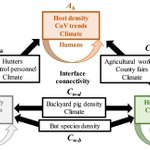



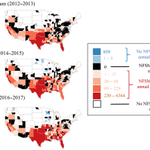
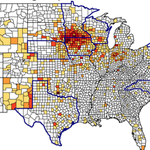

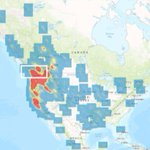


ALT cover page of paper "The forecast trap"


ALT cover page of paper "Optimal control of an invasive species using a reaction-diffusion model and linear programming"

ALT Predicted density of tegus (Salvator merianae) in 2016 in the study area. The prediction of tegus density is provided in km2 for three different models. The first prediction (a) is obtained by using the least likely combination of the growth rate e and the standard deviation r of the Gaussian dispersal kernel, while the third prediction (c) is obtained by using the most likely combination. The second prediction (b) is obtained by using the average value of the growth rate e and the estimated value of the standard deviation r using the EDDMaps data (https://www.eddmaps.org/).


ALT cover page of paper "An integrated path for spatial capture–recapture and animal movement modeling"

ALT The standard spatial capture–recapture (SCR) point process model (a) describes the abundance and distribution of animal activity centers (purple circles). The standard SCR observation model (b) describes how detection probability decreases with distance between activity centers and traps (black crosses). When integrating movement and SCR models, the process model (c) describes the abundance and location of individuals through time (purple lines), and the observation model (d) describes how detection probability decreases with distance between individual locations and traps. In this example, the movement trajectories follow a biased random walk with a static center of attraction for each individual. Abundance and distribution of activity centers in (a) and initial locations (or centers of attraction) in (c) are governed by an intensity function (represented here by the density surface, where darker shades indicate higher density), which can depend on covariates and spatial random effect

ALT Discrete-time random walks (RW) initiated at the origin with T = 1,500 and σ. Examples include (a) simple RW, (b) correlated RW with γ and β, (c) biased RW with central tendency where and ρ, (d) biased correlated RW, (e) state-switching correlated RW with σ and σ, and (f) correlated RW with potential function constraining movement to preferred habitat (in white) with δ.

ALT cover page of paper "Camera traps are an effective tool for monitoring insect–plant interactions"

ALT Screenshots from our game cameras displaying insects from multiple orders on or near a variety of focal flowers. Photos (b–e) are cut-outs of larger images. (a) Monarch Butterfly (Danaus plexippus; order Lepidoptera) on butterfly milkweed (Asclepias tuberosa); (b) Carpenter Bee (Xylocopa virginica, order Hymenoptera) on hyssop (Hyssopus officinalis); (c) Bumblebee (Genus Bombus, order Hymenoptera) on spiked speedwell (Veronica spicata); (d) Fly (order Diptera) on tickseed (Coreopsis spp.); (e) Ant (Family Formicidae, order Hymenoptera, circled in red) on spiked speedwell (Veronica spicata)


ALT first page of paper "Predicting carnivore habitat use and livestock depredation risk with false-positive multi-state occupancy models"

ALT Predicted carnivore site use probability and livestock depredation risk in the western Pamir Mountains, Tajikistan.

