

Solar astrophysicist | author | speaker ☀️ I research the Sun for a living. Let's talk about it! ☀️ Solar flares • aurora • eclipses 📚 *Space Hazards* out now
Boulder, CO
Joined April 2010
- Tweets3.7K
- Following632
- Followers13.9K
- Likes20.8K




Pinned Tweet
It's been a crazy week on social media, so hello to all my new followers! I'm a Sun scientist researching solar flares, and value the importance of communicating the facts (and combating the fiction) of that science to the world. My first book, The Sun, was published last year ☀️


Just attended an observatory open evening as a visitor, where one of young resident astronomers confidently pointed (multiple times) to formations of high flying migrating geese to announce to the group… “Look up at the Starlink satellites!!” 🤦🏻♂️
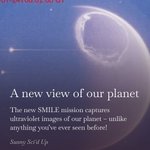
i really can’t stop thinking about these new SMILE images. So much so, I wrote a new Substack article diving deeper into our new view of Earth!

If you’re interested, you can check it out here:
ryanjfrench.substack.com/p/a…
Dr. Ryan French retweeted

#GIVEAWAY 🔭🌈
We have partnered with Celestron to give away a Celestron StarSense Explorer Telescope worth £299.99 and a copy of #CosmicLight by @tomkerss and @RyanJFrench!
Enter now: collins.co.uk/pages/win-a-ce…
#CollinsAstronomyWeek @WorldSpaceWeek #Competition

Dr. Ryan French retweeted
#DidYouKnow we’re offering 40% off astronomy books during #CollinsAstronomyWeek? 🏷️
Use code ASTRONOMYWEEK2026 to receive a discount on our fantastic collection of astronomy books.
collins.co.uk/collections/sa…
Offer ends 10th October!
@WorldSpaceWeek #Discount


Wow, so this is actually insane! Check out some of the first data from the Solar wind Magnetosphere Ionosphere Link Explorer (SMILE) mission, capturing the full northern lights oval around the north pole in ultraviolet light. All in daytime, whilst invisible to the naked eye!

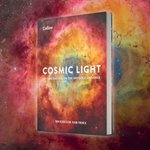
If you want to learn more about how light beyond our visible range can teach us about the universe, I recommend my new book “Cosmic Light”! It’s full of beautiful space images across the spectrum (maybe SMILE images will make it into a future edition!) amzn.to/4u2hhKo

Dr. Ryan French retweeted

You have a say in how we color @SunCETcubesat extreme UV images! Our bandpass is a new one that encompasses two of the traditional ones. Should we just pick one of the colormaps? Should we be inspired by sunsets? Vote for as many as you like at
suncet.github.io/suncet_inst…

Whilst solar activity is a bit quieter, I’ve been posting semi-regular explainer videos over on Instagram – covering fun Sun facts, science updates, and more. If you don’t already, I recommend following me over there!

Dr. Ryan French retweeted

Huge congrats to Ryan! If you aren't following him already, now is the time!

I am honoured to announce that I have received the 2026 Athelstan Spilhaus Award from the American Geophysical Union (@theAGU)! The award is given annually to an honoree in recognition of their enhancement of the public's engagement with Earth or space sciences.

I am honoured to announce that I have received the 2026 Athelstan Spilhaus Award from the American Geophysical Union (@theAGU)! The award is given annually to an honoree in recognition of their enhancement of the public's engagement with Earth or space sciences.
Scientific research and public engagement have always gone hand in hand throughout my career, and it means a great deal to have that work recognized by the AGU. I believe that sharing the excitement and importance of science with the public is an essential part of being a scientist, and I look forward to continuing to bring the wonders of the Sun to new audiences!
Athelstan Spilhaus Award link: agu.org/honors/spilhaus
Announcement of AGU 2026 honorees: agu.org/honors-home/announce…
Institutional announcement: lasp.colorado.edu/2026/09/23…
A nice surprise to spot my book “Space Hazards” in the window of my local independent bookstore! The book just passed its first anniversary, and explores how the Sun, near-Earth objects and space junk (alongside other more obscure threats) can affect our lives here on Earth! ☀️


However… the window display is labeled “Published CU Professors”… did I somehow get multiple promotions I didn’t hear about? 🤔
Book link for those interested: amzn.to/3ZLuL0f

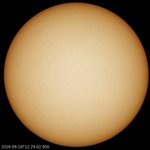
The Sun is NAKED, spending at least a few hours today without a single sunspot. This has only happened a couple of times since 2021, but will become more common in the next few years (although further strong activity in this period is still likely). This is bad timing, because…

I have been co-leading the campaign pointing this week, choosing where the telescopes (which observe a tiny patch of the Sun at a time) should point to try catch a solar flare. Needless to say, this has been very challenging when the Sun looks like this (producing no flares!)

