

Rwanda Biotech Capacity Building Project
Kigali,Rwanda
Joined December 2025
- Tweets79
- Following19
- Followers88
- Likes52






Pinned Tweet
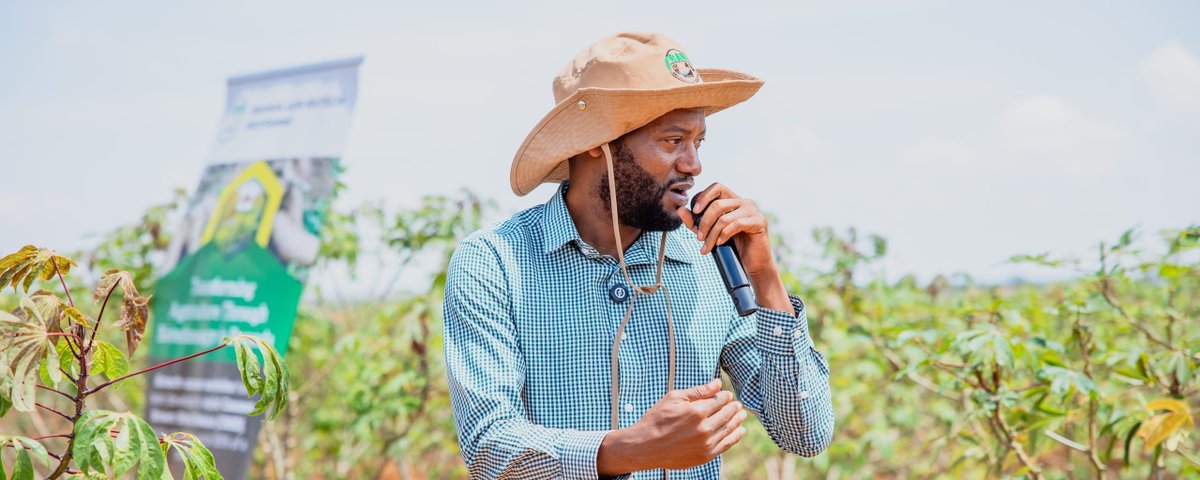
Under the Rwanda Biotech Program, we partnered with @RwandaAgriBoard and @aatfafrica to host a “Seeing Is Believing” event yesterday at Nemba, bringing farmers and seed multipliers together to witness the field performance and potential benefits of biotech cassava varieties.

Rwanda Biotech Capacity Building retweeted

𝐅𝐚𝐫𝐦𝐞𝐫𝐬 𝐒𝐞𝐞 𝐍𝐞𝐰 𝐁𝐢𝐨𝐭𝐞𝐜𝐡𝐧𝐨𝐥𝐨𝐠𝐲-𝐃𝐞𝐫𝐢𝐯𝐞𝐝 𝐂𝐚𝐬𝐬𝐚𝐯𝐚 𝐕𝐚𝐫𝐢𝐞𝐭𝐢𝐞𝐬 𝐚𝐬 𝐚𝐧 𝐎𝐩𝐩𝐨𝐫𝐭𝐮𝐧𝐢𝐭𝐲 𝐭𝐨 𝐁𝐨𝐨𝐬𝐭 𝐏𝐫𝐨𝐝𝐮𝐜𝐭𝐢𝐨𝐧 𝐚𝐧𝐝 𝐄𝐱𝐩𝐚𝐧𝐝 𝐌𝐚𝐫𝐤𝐞𝐭 𝐀𝐜𝐜𝐞𝐬𝐬.
Farmers and cassava seed multipliers have welcomed the introduction of new biotechnology-derived cassava varieties, describing them as a promising opportunity to increase productivity, strengthen disease resilience and expand market opportunities. They noted that conventional cassava varieties have often been vulnerable to diseases and climate-related stresses, limiting production potential and affecting their livelihoods.
They shared these views during a Seeing Is Believing field visit organised by the Rwanda Agriculture and Animal Resources Development Board (RAB), in partnership with Science Ally Rwanda, the African Agricultural Technology Foundation (AATF) and other stakeholders under the Rwanda Biotech Program. The event took place at Nemba in Bugesera District, where the biotechnology-derived cassava varieties had been established in the field approximately one year earlier.
The field visit brought together farmers and cassava seed multipliers to assess the performance of the new varieties under field conditions, learn about their characteristics and explore their potential contribution to improved cassava production and disease management.
Kantarama Césarie, Chairperson of the @INGABOFAMERS association of cassava seed multipliers, said that farmers in the sector have long struggled with limited access to quality planting materials and inadequate market opportunities.
She commended RAB, Science for Science Rwanda and other partners under the Rwanda Biotech Program (@RwandaBioCap) for their continued efforts to equip farmers with knowledge and practical skills on agricultural biotechnology.
According to Kantarama, the field visit provided an important opportunity for farmers and seed multipliers to observe the new varieties firsthand and appreciate their potential. She noted that, following approximately one year of field growth, the varieties were showing promising performance, particularly in their ability to withstand disease pressure and cope with climate-related stresses.
She further welcomed the planned distribution of the new planting materials by RAB in the following week, expressing confidence that their availability would create new opportunities for seed multipliers to expand production and serve more farmers, in line with RAB's established guidelines and procedures.
From a research perspective, Dr. Athanase Nduwamuntu, a senior research fellow and Roots and Tubers Program coordinator at Rwanda Agriculture and Animal Resource Development Board (RAB). described the development as an important milestone for Rwanda's agricultural sector. He noted that Rwanda would become the first country in the region to embark on the distribution of these biotechnology-derived cassava varieties to farmers and seed multipliers nationwide.
He explained that agricultural research and technological innovation play a critical role in addressing emerging food security challenges, particularly in the face of a growing population and increasingly limited agricultural land.
Dr. Nduwamuntu urged farmers receiving the new planting materials to adhere to the technical guidelines provided by RAB to ensure their proper management and use. He also encouraged seed multipliers to support knowledge-sharing among fellow farmers and promote a better understanding of the varieties and their characteristics.
The introduction of these new biotechnology-derived cassava varieties marks a promising step towards strengthening Rwanda's cassava value chain. By expanding access to improved planting materials, supporting seed multiplication and harnessing agricultural science and innovation, the initiative has the potential to enhance productivity, improve farmers' resilience and contribute to sustainable food security.
Pictorials: @ScienceAlly_Rw


Rwanda Biotech Capacity Building retweeted
I was pleased to participate yesterday in the “Seeing Is Believing” event at the Nemba site in @BugeseraDistrict, organized by @RwandaAgriBoard under the @RwandaBioCap programme, in partnership with @aatfafrica.
The event brought together farmers and seed multipliers to witness the field performance and potential benefits of biotech cassava varieties.
One of my key takeaways was the importance of responsible seed stewardship and good agronomic practices in ensuring the proper handling, management and multiplication of biotech cassava planting materials.
These biotech cassava varieties also show potential for improved resilience to drought and changing climatic conditions, offering an opportunity to strengthen cassava production and enhance farmers' resilience to climate change.
It is expected that @RwandaAgriBoard will distribute these varieties to seed farmer multipliers to facilitate their multiplication and wider dissemination, enabling more farmers to access and benefit from improved cassava planting materials.
My sincere thanks to @ScienceAlly_Rw , @RwandaBioCap and @RwandaAgriBoard for this valuable learning opportunity and their continued commitment to advancing agricultural innovation in Rwanda.


Rwanda Biotech Capacity Building retweeted

Cabbage productivity measurement was successfully conducted today in Bahimba Irrigation Scheme , @rulindodistrict , to assess crop performance, inform strategies for improving productivity, and guide planning for the next season’s production.

Rwanda Biotech Capacity Building retweeted
Today, with support from @FAORwanda, 2 million Juncao grass seedlings have been planted in @NyagatareDistr, contributing to the national target of 13 million seedlings across . This initiative will improve livestock feeding and boost milk production.
Rwanda Biotech Capacity Building retweeted
Big Congratulations to #NAEB and its leadership on this incredible achievement! 🇷🇼☕ Setting a new record for @Rwanda_Coffee on the international market reflects the power of teamwork, quality, and dedication. Keep raising Rwanda’s flag high! 👏🇷🇼 #NAEB

Rwanda Biotech Capacity Building retweeted
Rwanda is preparing farmers to multiply six biotech cassava varieties and two Irish potato varieties that have been recommended for release, pending publication in the Official Gazette.
newtimes.co.rw/article/39645…

Rwanda Biotech Capacity Building retweeted
Greenhouse technology is driving productive, climate-resilient agriculture in 🇷🇼 Today in Kigali, @HGTRwanda, in partnership with The #QuintaGroup, is convening key stakeholders & farmers to explore solutions for higher yields, efficient water use, and year-round food production.


Rwanda Biotech Capacity Building retweeted
Happy and Blessed Sunday! 🙏🇷🇼 To our hardworking farmers, may God bless your hands and grant you a productive and prosperous 2027A season. Together, we strengthen Rwanda’s food security.
HoReCo: No Agriculture, No Food! No Food, No Life!

The meeting brings together key stakeholders, Project Partners, PIs and Technical teams to reflect on progress, share insights, strengthen collaboration, and align priorities for the year ahead, advancing agricultural biotech, building research capacity, and accelerating......1/2


Today, @aatfafrica , in partnership with the @RwandaAgriBoard
and the @Cipotato,convened a two-day Joint Annual Review and Planning Meeting for the RABP-CMP and Rwanda BioCap projects at Park Inn Hotel.


This week in Musanze, farmers, seed multipliers, researchers and regulators came together to discuss how late-blight-resistant biotech potato can move responsibly from research to farmers.
For BioCap Project, this is an important part of the journey. …


Building trust in agricultural biotechnology starts with science-based communication.
Over the past two days, experts and communicators gathered for the “Practical Risk Assessment and Management for Effective Communication and Advocacy of Biotech Crops”.
#BioCapRwanda


Rwanda Biotech Capacity Building retweeted

The evaluation of biotech maize varieties at Karama&Cyabayaga sites in @NyagatareDistr has shown promising results, with strong resistance to fall armyworm under the district’s warm tropical savanna climate, characterized by high temperatures, abundant sunshine, and low rainfall.


Under the Sister Project RABP-CMP, From May 26–29, the @RwandaAgriBoard , in collaboration with @aatfafrica and partners, is conducting a multi-location evaluation of 12 TELA maize varieties as part of ongoing efforts to develop and deliver fall armyworm-resistant maize varieties


Rwanda Biotech Capacity Building retweeted
Connecting Science, Media, and Society: OFAB Rwanda Charts the Next Phase of Agricultural Biotechnology Awareness
The OFAB Rwanda Chapter, through the sister project RABP-CMP, convened a 5-day workshop bringing together researchers, media professionals, communicators, digital influencers, and development partners to review achievements under OFAB 3.0 and contribute ideas toward the design of OFAB 4.0.
The workshop provides a strategic space for participants to assess the progress made in promoting public awareness and understanding of agricultural biotechnology and biosafety in Rwanda. Through media engagement, science communication, public dialogues, and awareness campaigns, OFAB 3.0 has played a key role in strengthening access to reliable scientific information and encouraging informed conversations on agricultural innovation.
Participants are also exchanging experiences, lessons learned, and recommendations aimed at enhancing future communication approaches, partnerships, and outreach strategies under the next phase of OFAB.
Over the years, OFAB has continued to bridge the gap between science and society by connecting researchers, journalists, communicators, and the public in evidence-based discussions that support innovation and sustainable agricultural development.
As the workshop continues, it highlights the growing value of collaboration between science, media, and communication in advancing agricultural transformation and public engagement in Rwanda.
Open Forum on Agricultural Biotechnology in Africa (OFAB) is a platform established by the African Agricultural Technology Foundation (AATF) to promote awareness and informed discussions about agricultural biotechnology and innovation in Africa. It brings together researchers, journalists, policymakers, farmers, and youth to share knowledge on modern agricultural technologies that can improve food security, climate resilience, and sustainable agriculture. Through trainings, workshops, and public engagement activities, OFAB helps strengthen science communication and supports agricultural transformation across Africa.
✍️ Alexis Nyandwi
