

Author of well received non-fiction "The Northumbrian Kiap" also novels "Crown Lane" & "The Sperm Carrier". Was horse rider & farm journalist. Still rugby fan.
Northumberland
Joined October 2011
- Tweets10.4K
- Following882
- Followers928
- Likes6.9K




Robert Forster retweeted

Nothing makes it easier to oppose modern agriculture than never having experienced its absence.
Full supermarkets. Affordable food. Reliable harvests.
Then we sit comfortably inside that abundance and declare the tools farmers use to create it unnecessary.
Robert Forster retweeted
It's a provocative title. And what is the significance of the shell?
What made Jack so ruthless in defence of his family?
Why has he a profound distrust of Catholicism?
You can find out by ordering "The Sperm Carrier" through Amazon.
It's a good read And cleverly written too.

Robert Forster retweeted
GB's R4 steers averaged 643p dwkg last week even though Rep of Ireland's was just 554.6p.
Northern Ireland's was 621.6p.
Euro 83.47p.
Top prices were in North of England (average 652p).
Elsewhere in GB they averaged 640p.

Robert Forster retweeted

Details on the surveillance finding of beavers with bTB…..
naturalengland.blog.gov.uk/2…

Robert Forster retweeted
It’s quite hard for the public to get fair & balanced facts around badgers & TB. Groups tend to select only the bits that support their cause. The Welsh technical group has produced quite a good summary….
gov.wales/sites/default/file…
Robert Forster retweeted
It's non-fiction and it's hard to believe someone born in the UK as late as 1947 saw and heard what it describes in such detail.
It's a good read and it's also on Amazon.
Pre-Independence Papua New Guinea was wonderfully strange.
It offered experiences that can never be repeated.

Robert Forster retweeted
Ok this is just the press release, but I’ve never read such non-specific waffle in my life…..

Nearly 96% of herds in Wales are now TB free, but we need to go further.
We're taking a new, science-led approach across 3 pillars: cattle, people and wildlife.
A mass, non-selective badger cull is not being pursued.
Read more: gov.wales/new-and-pragmatic-…

ALT Two cows with ear tags peering through metal bars in a barn feeding area.
Robert Forster retweeted

If she hadn't killed it the PRIVATE reserve it was in would have.. Difference is $15,000 to support the reserve and all the wildlife in it vs $0. Fkn retards.
Robert Forster retweeted
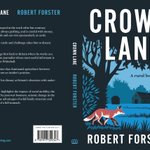
Who, or what, is the fox? You can only find out by reading Crown Lane. Buy through Amazon. It's ideal for a range of Christmas stockings.

Robert Forster retweeted

A terrific and true paragraph from George Packer
theatlantic.com/ideas/2026/1…

Robert Forster retweeted
Grown men have cried at Hilda's story.
And cheered when Ben held his final chapter party on Crown Lane.
And British farmers have enjoyed inside descriptions of agriculture's post-war triumphs and travails.
Buy on Amazon this Christmas.
It's good.

Robert Forster retweeted
Two very different novels written by same author. Unlikely love and family life is a common theme. But one concentrates on rural living and agriculture. The other on quarrying and construction - with sudden death thrown in. Both would be an ideal gift for Christmas. (Buy Amazon)


Robert Forster retweeted
How to use statistics to bamboozle the public.
RSPCA case against tackling TB in Wales’s badgers is that 95% of herds are TB free.
An infection rate of 5% is sky high, other than Northern Ireland the highest of any that purports to tackle the disease.
rspca.org.uk/getinvolved/cam…
Robert Forster retweeted

This historical picture seems particularly relevant today. It's the wedding in July 1958 of Alan Clark, 30, to Jane, 16, who had 'noticed' her when she was 14.

Robert Forster retweeted
"Felled: The Killing at Sycamore Gap. (Andrew Hankinson). The communal grief that swept green-wellied Britain when this weed of a tree was cut down in 2023 by a pair of no-hopers was astonishing. Media claimed Britain was collectively weeping FOR THE TREE. Not two hapless humans


Robert Forster retweeted

Some of the dietary guidelines out there are just insane. The Netherlands now recommends a red meat cap of max 100 g ... a week (!) For Homo sapiens, - a species that has evolved on meat and animal fat as staple foods.
Even chimps eat more than that.


Legumes just took centre stage in national policy. 🇳🇱🫘 The Netherlands has revamped its food guide, cutting red meat to 100g/week, halving dairy cheese, and boosting legumes to 250g/week – a major step toward a 50% plant-based future. #ProVeg #FoodPolicy #PlantBasedNetherlands


Robert Forster retweeted

The decline of the hedgehog is mainly caused by the huge recent expansion of the badger population. In both time and place there is a strong negative correlation between badger numbers and hedgehog numbers.
The scientific evidence that an increase in Mr Brock may well be the chief cause of Mrs Tiggywinkle’s demise is overwhelming.
There’s the direct evidence – the hollowed-out prickle-bearing skins left behind after a badger eats a hedgehog. Only badgers can open a hedgehog after it rolls up in defence with prickles on the outside. Foxes and dogs cannot. Badger predation is often found to be the main cause of hedgehog death in studies in this country.
There’s the timing evidence. The decline in hedgehogs coincided with the rise in badgers since the latter’s protection began in the 1970s and was strengthened in the 1990s. Anecdotally, there are clear-cut cases to show this is likely to be cause and effect, not coincidence. Kew Gardens had a thriving hedgehog population until the mid 1980s when badgers first arrived there. Today, says the Royal Botanic Gardens’ website, “Kew is teeming with badgers”. There are now more than 20 badger setts and hedgehogs are hardly ever seen, and if they are don’t last long. Habitat change and development cannot be the cause in Kew, because there has not been any.
There’s the spatial evidence. Throughout England hedgehogs (great worm eaters) have vanished from worm-rich pastureland, where badgers thrive, and cling on only in suburban gardens and amenity grassland, where badgers so far have not penetrated much. Even here, as one study put it: “the probability of hedgehog occurrence in suburban habitats declined towards zero in areas of high badger density.” As a general rule, wherever badgers are present at a density higher than about one main sett every four square kilometres, hedgehogs are absent. In most of rural England, sett density is two or three times higher.
There’s the behavioural evidence. Back in the 1990s, ecologists discovered that the smell of badgers alone is enough to deter hedgehogs from entering an area. And hedgehogs released into areas of excellent habitat high-tailed it out of there if they smelt badger. They do not wait to be eaten.
There’s the international evidence. Sweden has also blamed its decline in hedgehogs on rising badger numbers. In the Netherlands, scientists reported this yearthat hedgehogs are now confined mostly to urban areas, despite roads and development, because of the spread of badgers in rural areas.
There’s the experimental evidence, which is the clincher. The randomized badger control trials, carried out between 1998 and 2006 in 30 different parts of the country, provided an opportunity to see what happened to hedgehog numbers if badger numbers were reduced.
In pasture land, where hedgehogs are mostly extinct, there was of course little effect. But in “amenity grassland” – parks, lawns, gardens, playing fields etc – there was a dramatic explosion in hedgehog numbers in those areas where badgers were culled: hedgehog density almost trebledfrom an average of 0.9 per hectare to 2.4 per hectare in just five years. By contrast in the control areas where no badgers were culled, the hedgehog density remained unchanged at 0.3 per hectare over the same period.
So we know one way to increase hedgehog numbers: reduce badger numbers. No other approach has been demonstrated to have such an effect. Given that badgers are highly effective predators of bumble bees (those who try to study bumble bees complain that most of the nests they find get dug out and eaten by badgers) as well as of ground nesting birds, and that they carry bovine tuberculosis, there is little doubt that lower badger densities would be good for the ecology of the British countryside as well as for farming.
There is nothing natural about the density at which badgers and foxes live in Britain today.

