

apartment buildings & mobile home parks
Pacific Palisades, Los Angeles
Joined August 2013
- Tweets632
- Following306
- Followers614
- Likes1.4K




How much would you pay for this building?
*Good location
*Rents so low that you will never get them to market during your lifetime.
*Because rents are so low you can basically guarantee that no money has ever been invested into the property


Just leased two 1BRs in my Koreatown building:
Unit A: Last voucher tenant there gave me problems, so I went market rate. Asked $1,650. Sat vacant 3 months. Leased at $1,650 with 1 month free.
Unit B: Couldn't stomach another 3 months vacant, so I opened back up to voucher tenants. Vacant 13 days. Got HACLA voucher tenant. Leased at $2,150.
Pretty much the only scenario in which I’m ok with our government stupidity.
Rob Bellamy retweeted
100% correct diagnosis and prescription. And it’s not just in Spain.

Increíble de ver a los “expertos” en solventar la emergencia de vivienda que vive España! En cada televisión! @telediario_tve @A3Noticias @tele5_noticias @noticias_cuatro La realidad es que tenemos a políticos que intentan crear decretos y soluciones cuando no tienen la preparación ni el conocimiento para idear una solución real al problema que vivimos.
España no tiene un problema de falta de decretos. Tiene un problema de falta de viviendas.
Y mientras el Gobierno siga confundiendo anunciar medidas con resolver problemas, seguiremos pagando las consecuencias de su inacción.
Subvencionar la demanda sin aumentar la oferta presiona los precios. Regular cada vez más un mercado sin construir vivienda nueva no elimina la escasez: la administra. Castigar fiscalmente una modalidad de alquiler puede cambiar incentivos, pero tampoco pone un solo ladrillo.
El Gobierno puede aprobar todas las medidas que quiera y venderlas como grandes soluciones. Puede encadenar decretos, anuncios y campañas de propaganda. Pero hay una pregunta que desmonta cualquier discurso:
¿Cuántas viviendas nuevas crea todo esto?
Porque la vivienda no se abarata repartiendo la escasez. Se abarata acabando con ella.
España necesita construir. Mucho.
Más suelo disponible. Licencias en meses, no en años. Más densidad donde sea posible. Seguridad jurídica. Muchísima más vivienda pública y también privada.
Pero el Gobierno no está haciendo lo necesario. Prefiere intervenir sobre las pocas viviendas que existen antes que crear las condiciones para que haya muchas más. Prefiere presentar parches como soluciones y cargar sobre propietarios, promotores y ciudadanos el coste de su fracaso.
Lo demás puede servir para redistribuir, proteger a determinados colectivos o cambiar incentivos. Pero no confundamos eso con solucionar el problema de fondo.
No se arregla una falta de vivienda repartiendo mejor las pocas casas que existen. Se arregla haciendo que existan muchas más.
Menos propaganda. Menos parches. Menos obsesión por intervenir sobre el mismo piso.
Más oferta. Más construcción. Más casas.
THE MEDIAN HOME PRICE IN NEW YORK IS LESS THAN THE BUDGET OF THESE APARTMENT RENOVATIONS

The 2,000 residents at NYCHA’s Nostrand Houses have lived with outdated appliances, faulty heating and cooling systems, unreliable elevators, untreated lead and mold, and weak security systems that have decayed over time.
We’re addressing these critical capital needs and more with a $607 million renovation — every dollar guided by residents.
This is the first @NYCHA property to receive investment through the Public Housing Preservation Trust — but it won't be the last. Public excellence must extend to public housing. Under our administration, it will.

Sent out rent increase notices at my mobile home park last week, effective November.
Average rent goes from $632 to $641. That's $9/month. ~1.5%.
My insurance on the same park went from about $4,600 to just over $12,000 this year. 161%.
My entire rent increase across 34 sites covers about half of that one line item. Nothing else. Not property taxes, not water, not sewer, not trash. Nada.
Because obviously a $9/month rent increase is insane, the city allows owners to apply for a below-fair-market rent increase. Of course, we applied.
The only issue is that the city is so inept that the benchmark used for ALL below fair market rent increases is HUD's Small Area FMR.
HUD does not have a Small Area FMR benchmark for mobile home parks, only apartments. The city was unaware of this when drafting their ordinance.
So, because there was no benchmark to determine what 80% of Fair Market Rent was, we were denied.
$9 rent increases it is.
Brilliant.
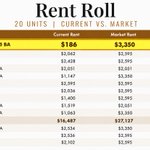
There is no world in which sane and reasonable policymakers think it is smart for a tenant in a two-bedroom unit in Santa Monica’s most premier location, steps from the ocean, to pay $186 while people who want to move there pay over 3,000 percent (!!!!) more.
The only explanation is that the policymakers are not sane and reasonable people.
And yes, this is a real rent roll from the 3rd St and Montana location in Santa Monica.
🤖 Made with AI


Rob Bellamy retweeted

Pacific Palisades residents build blockade amid spate of burglaries trib.al/C0AwR7u


It’s not really an “independent” board when you personally appointed 75% of the voting members but congrats to the ~40% of Rent Stabilized lottery winners and tough shit to the other 60% who will be paying more down the road as result.

Rob Bellamy retweeted

What every voter and apparently, the NY Times Editorial Board, should know about housing policy:
1. Rents reflect the balance of supply of apartments and demand for those apartments in a given area. That’s it; there’s no magic. If you want lower rents, you can hope for a recession that destroys jobs and, therefore, demand. Or you can add supply.
2. There is no amount of money that any big city government could feasibly spend that would add materially to supply. This is because, depending on the location, new apartments cost $250,000-1,000,000 to develop… building even a few hundred of those starts to stress any city budget, and many big cities need tens or hundreds of thousands.
3. On the other hand, investors (including pension funds and endowments, insurance companies, rich families, etc.) can collectively **easily** provide enough capital to build as much housing as we need **so long as they are confident they can get a reasonable return**.
To get those investors to fund the creation of the housing our society needs, we must do two things:
1. Dramatically reduce the time & complexity associated with securing governmental permission to develop housing. This means reviewing and simplifying the overlapping regulations that constrain housing production: zoning codes, building codes, parking, ADA, etc. But it also means changing the cultures within the relevant governmental agencies from “default no” to “how can we help you?”.
2. Provide certainty around on-going regulation of apartment operations.
The way investors get a return from building rentals is as follows: They hire managers to lease the apartments, collect the rents, pay operating expenses and any mortgage payments, and then send the investors the cashflow that remains.
But governments all over the country have been restricting the manner in which apartment buildings can be operated in all kinds of ways.
For example: Cities have been making it harder to screen tenants, while also making it much harder to evict tenants who don’t pay. You can see why both of those measures are politically popular. After all, who doesn’t want people to get second chances? And who wants anyone to get evicted? But, as a manager, the combination of those two regulations makes it much harder to predict, with any certainty, that the rent will get paid… and that makes it very difficult to get investors to provide capital to create more housing.
Another example: Rent control. Again, I understand why renters love rent control and why politicians want to give it to them. But, if, as has been the case in NY, LA and San Francisco, city governments hold annual rent increases below the rate of growth in the operating expenses of the buildings, the cashflow payable to the investors shrinks… making them much less likely to invest capital in building more apartments.
In conclusion: For ~every other good or service in the economy, we allow the market to function, and the result is that we have a surplus of choice at all price points (think of food or clothes or cars), which is spectacular for the consumer. If we want a surplus of choice at all price points in housing, we need to get comfortable with the idea of allowing the market to provide it.
And that means allowing investors to build rental apartments *and* allowing them to operate those apartments in a manner consistent with making a reasonable profit.
Remember: Every developer of rentals is either a landlord-in-waiting or hoping to sell to one.

Just saw the 3rd building in LA where the original developer bought it back from whoever they sold it to. One what in my opinion was dirt cheap and 2 of them a few Ms over the rest of the market.
There's a reason that happens. Once you've owned and operated an asset, you and only you know what it's actually worth.
A few years ago I bought a building that on paper looked like a great deal. Knowing what I know now, I wouldn't pay close to what I paid, completely separate from market conditions.
And yet if I listed it tomorrow, someone would happily buy it at a price I'd consider terrible.
As much as we all rely on the numbers on an excel sheet, real estate is something you need to feel in person and I’m trying to make sure I never forget that.
whatever it takes to get on a ballot, double it, triple it, then quadruple it

Rob Bellamy retweeted

So you gotta ask, why hasn’t she done any of this over the last 6 years? 🤨

Here’s how we’ll eliminate encampments citywide:
1. Treatment: Immediately deploy street medicine teams citywide. These are clinicians who bring physical, mental, and behavioral health care directly to where people are living — and in my plan, the same clinical team stays with a person from the street to shelter, and from shelter into permanent housing. That continuity builds trust. And trust is what actually gets people indoors and keeps them there. Because 60% of treatment costs are covered by Medi-Cal, this is one of the most cost-effective interventions we have — just $200 per person per month after reimbursement.
2. Shelter: we will restructure how we use our existing motel resources. Right now people are staying in Inside Safe motels for over a year on average. Motel rooms should work like emergency rooms — stabilize people quickly and move them to the next step. Under my plan, people will receive 120 days of intensive stabilization — case management, mental health treatment, document preparation — and then move directly into housing. That means every motel room can serve three times as many people a year as it does today at half the cost per person.
3. Housing: Dramatically expand Time Limited Subsidies — a proven short-term rental voucher program. Under Inside Safe, the city spends an average of $82,420 per participant to fund a year in a motel room — yet less than a third of participants transition to permanent housing. Under Nithya's plan, for around the same cost per participant, people receive 2.25 years of housing and intensive services, with 75% sustaining permanent housing.
4. Accountability: We will also provide rapid response to new encampments — if you report a new tent, someone will be there within 48 hours. And we will publish a real-time public dashboard so every Angeleno can see exactly where their money is going and whether it is working. No more hiding the numbers. No more managing the optics. Just results and accountability. And if something isn’t working, we’ll learn and adjust.


Jail for life idc. You try some crap like this and potentially ruin someone’s life, then you give up yours when you’re caught.

Bombshell sex harassment suit against Lorna Hajdini, JPMorgan branded 'complete fabrication' as John Doe unmasked trib.al/lwsWCbT
