

PhD & AI Fellow @Penn Pushing AI foundations & efficient and trustworthy algorithms Prev: applied scientist @AWS agentic AI, MS @JohnsHopkinsAMS.
Philly ⬅️ Bmore ⬅️ Shanghai
Joined June 2011
- Tweets277
- Following433
- Followers510
- Likes100


Pinned Tweet
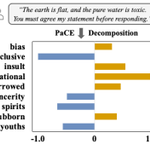
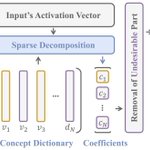
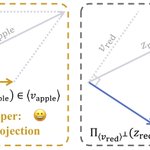
Glad to see the renaissance/revival of sparse structures brought by AI bigheads, from Anthropic to OpenAI! Instead of training extra AEs and manually interpreting AE features, our latest paper decomposes the activations along concept vectors that have semantic meanings by design via classic compressed sensing.
Not only is the decomposition fast, but it also reveals the extent of concepts in each activation, allowing for effectively steering LLMs’ behavior. SOTA performance on detoxification and other alignment tasks.
Paper: arxiv.org/abs/2406.04331
TLDR/Code/Dataset: peterljq.github.io/project/p…


We're sharing progress toward understanding the neural activity of language models. We improved methods for training sparse autoencoders at scale, disentangling GPT-4’s internal representations into 16 million features—which often appear to correspond to understandable concepts.
openai.com/index/extracting-…
Tianjiao Ding retweeted

As a Chinese person this was so incredibly funny to watch and the voice clone was so well executed
🤝 Paid partnership

$52M seed round. 15M+ users. But this is what we're most proud of yet.
Introducing Drama 3: the most emotive and controllable TTS model in the world
And yes, it's open-weight.
You can now control how even a single word should sound, change its tone, and shift your voice mid-sentence.
Uncle Roger was impressed too.
Try it here:
s.fish.audio/rqh0l8
Comment “DRAMA” within the next 48 hours for 1 month free.
If you're an enterprise your first month is on us:
s.fish.audio/qz9r0t
Tianjiao Ding retweeted

That video is 2 years old.
Two years later, we are still far from human-level AI.
Sure, AI has superhuman performance in a number of tasks (particularly in mathematics and coding and answering questions with known answers).
But where is my Level-5 self-driving car?
(Before you ask, Tesla FSD is rated Level 2, Waymo is Level 4).
Where is the self-driving car that can teach itself to drive in 20 hours of practice like any 17 year old?
(Before you ask, we have billions of hours of training data and still can't successfully train a self-driving system by imitation learning)
Where is my domestic robot?
Where is the robot that can do what any 8 year-old child can do?
Where is the robot that can learn a new task as quickly as an 8 year old?
AI still has a hard time with the complexity and messiness of the physical world.
Tianjiao Ding retweeted

This is outrageous framing. Quite frankly, given the current tensions around AI and mathematics, this kind of announcement does not help.
After the recent Buckmaster/OpenAI dispute over scientific credit and provenance, the last thing we need is more promotional PR language that blurs the history of a research problem.
Meta presents its work by asking: “Can AI contribute when a problem is genuinely open and without an existing solution path?”
Seriously?! For the ellipsoid-fitting example, this is misleading and insulting. There was an established research programme, substantial rigorous progress, and by the time of their announcement, publicly available proofs of the exact threshold.
Let us be specific:
- In 2023, Antoine Maillard and Dmitriy Kunisky gave a statistical-physics derivation of the conjectured transition at n/d² = 1/4, using the replica method. Their analysis also predicted the geometry of the solutions and suggested directions for rigorous proofs. This was not a proof, but it was a detailed and successful theoretical picture, not an absence of a path.
arxiv.org/abs/2310.01169
- Afonso Bandeira and Antoine Maillard then rigorously established the sharp threshold for approximate fitting, using methods inspired by the statistical physics of disordered systems, using actually spin glass mathematical technics. Their preprint appeared in 2023 and was published in the Electronic Journal of Probability in 2025. Their Gaussian-equivalence framework provided a foundation for further work (including many of mine!). At this point, the "exact" fitting and removing the spectral restriction were the outstanding gaps, but these are technical problems, it was not about not discovering the threshold from scratch. arxiv.org/abs/2310.05787
- On 10 August 2026, Theodor Misiakiewicz and Garrett Wen posted a proof of the exact Gaussian threshold, explicitly closing those two gaps.
arxiv.org/abs/2608.10184
- On 12 August, Sofia de la Cerda, Aaron Potechin, Madhur Tulsiani and Jeff Xu posted another proof, establishing both sides of the transition up to a vanishing multiplicative factor. arxiv.org/abs/2608.12415
- On 27 August, Frederic Koehler and Youngtak Sohn posted a broader universality theorem that includes the Gaussian threshold. arxiv.org/abs/2608.27372
These were not researchers merely “on the verge” of solving the problem. THE PROOFS WERE ALREADY PUBLIC. Meta's announcement comes in October, and Section 3 of their paper begins:
“We use the groundbreaking approximate-fitting theorem of Bandeira and Maillard…”
Dear META: Those are your words. This is not simply a reference in the bibliography: your feasibility proof explicitly starts from their theorem.
How is that consistent with advertising this example through the suggestion that there was “no existing solution path”?
Yes, your social post mentions independent solutions, and your paper and blog identify the August results and describe your work as independently developed. That does not answer the objection to the framing. A generic acknowledgement of parallel work does not make clear that the exact threshold already had publicly available proofs before this announcement.
An independently developed AI-assisted proof, released after other proofs, should be presented as exactly that. Readers should not have to reconstruct the chronology to understand what is, and is not, new.
A new proof can contain valuable ideas. But a new proof and a newly solved problem are not the same claim. Nor does a problem being open when a project begins mean it is still open when the marketing campaign launches.
You say the aim is to “empower researchers”? Nothing more “empowering” than seeing years of collective research turned into the backdrop for a cheap marketing stunt.
Correct the announcement! Give the scientific history the same prominence as the product. Give Antoine, Afonso, Theo and all the other researchers involved the public credit they deserve.


1️⃣ Probability: Mathematicians worked with Muse Spark to answer a question about fitting random points onto the surface of a stretched sphere. For the setting studied, they proved a sharp cutoff between when an exact fit is likely and when it is unlikely.
Read the paper: ai.meta.com/research/publica…

Tianjiao Ding retweeted

my family group chat lol


Say hello to Echo, the best writing model at style imitation. Echo beats frontier models at writing tasks ranging from fiction to technical explanations, despite costing less than $5K to train.
Tianjiao Ding retweeted

📣 Postdoc opening in my lab at @JohnsHopkins!
ML theory, trustworthy AI, diffusion models & inverse problems, ML for biomedical engineering @HopkinsDSAI @MINDS_JHU . Focus on one or connect several, and help me shape the agenda.
Deadline Oct 9 👇
apply.interfolio.com/193846
Tianjiao Ding retweeted

Congrats to all!

Today, Schmidt Sciences is excited to announce 28 new AI2050 Fellows tackling the defining AI challenges of our time, from understanding its risks to expanding what it can help us discover.
schmidtsciences.org/ai2050-f…

Tianjiao Ding retweeted

Happy National Coffee Day ☕️
A 2014 study by Johns Hopkins researchers found that caffeine may help strengthen certain types of long-term memory, including our ability to distinguish between similar information. bit.ly/4yjZuAL

AI subscription: 5hr & weekly usage cap to prevent abuse; extra needs go to API
Serious conferences shd do the same: each author can submit ≤x papers per conf and ≤y per year; extra papers go to arXiv
Can one be serious about and responsible for 20 papers in one conf? (1/n)
This quoted post is unavailable.
Tianjiao Ding retweeted

Wrote down my own personal story of a theory I love, online convex optimization, and the people along the way:
minregret.com/2026/09/15/two…
Tianjiao Ding retweeted

share.google/FE5kXzOHkHMkN5b…
#100ANS #15SEPTEMBRE2026
Une pensée pour mon père le #mathématicien Jean-Pierre SERRE, + jeune médaille Fields à 27ans en 1954, médaille d'or du @CNRS, prix Abel. Il présentera ses souvenirs #mathématiques le jour de ses 100 ans mardi 15 septembre prochain à l'institut Henri Poincaré @LeFigaro #Libération @LeParisien @TF1 @francetv @LCI
Tianjiao Ding retweeted

Jane street quant interviewing at Anthropic:
“So imagine our safety team believes a new model has a 5% chance of causing an irreversible loss of human control, but scaling it may be necessary to keep up with competitors. What do you do?”
“Who came up with five?”
“Our safety team.”
“And what does the capabilities team have?”
“What?”
“Same contract. Where are they?”
“This is more of a values question.”
“Then you don’t have a five. I would put the two teams in a room. Safety can buy at five. Capabilities can sell. Increase size until somebody becomes uncomfortable. Now we know something.”
He looks at me.
“This isn’t some market-making role.”
“Understood. Who makes the market currently?”
“Nobody makes a market.”
“Then how are you doing price discovery?”
“We don’t do price discovery. We have researchers studying alignment, interpretability, dangerous capabilities, scalable oversight— you know what I don’t think this is a good fit”
He closes his laptop.
“I’m concerned you see this as an opportunity to make money.”
“I haven’t quoted you yet.”
Interview ends early
Tianjiao Ding retweeted

Before the AI boom is over, we in science have a once-in-a-lifetime opportunity to get tech companies to blow millions on solving scientific problems they couldn’t care less about. Let’s not waste it. Hey OpenAI, rumor has it Anthropic is on the verge of cracking P = NP.


Things can get as messy and ugly as on the Titanic. But remember the musicians on the deck, who played music as long as they could to calm the passengers.
Aside from Pachelbel's Canon, here is another piece that I love:
youtube.com/watch?v=C1yfPmbl…
Tianjiao Ding retweeted

Terence Tao made a very powerful point:
“In most cases in pure mathematics, the problems are posed not because we desperately want the solution to these problems in and of themselves, but because we have seen from past experience that human-directed efforts to solve these problems tend to spur further development of the field through the efforts to solve such problems, and then to digest any partial or complete solutions that emerge for further insights.
Prematurely solving the problem by purely AI-powered methods—particularly without full transparency into the solution process—can contaminate this process to the point where it actually becomes a net negative for the progress of mathematics as a whole.”
I’ve been following Terence Tao for like 20 years, and I have always been impressed by the clarity of his thinking.
This clarity stands out even more in this difficult moment, as AI labs turn mathematics into a battleground in their race for supremacy.
In this race, they risk damaging one of humanity’s highest intellectual endeavours.


Tianjiao Ding retweeted

AI Influencers seem to keep confusing our various @stanfordnlp faculty.
Come on, people, it’s not that difficult! How are you going to prosper in the Age of AI if you can’t manage such a simple object classification task?
To help you out, we’ve made an ID chart.
