

Free daily market notes ↓ Full research & watchlist ↓.👇🏻
Joined May 2011
- Tweets6.4K
- Following28
- Followers1.7K
- Likes3.9K






Pinned Tweet
Thank you all for your support!
I’ve created a WhatsApp community outside of X to share more in-depth thoughts on the market, AI, tech stocks, and investing.
No hype, no promises—just honest opinions and insights.
Join here: wa.me/14798008872
$COIN : The next move matters more than the headline.
At $169, Coinbase is approaching a level worth watching for a short-term trade.
I’m looking for three things before considering an entry:
Price action: Buyers defend the $169 area.
Volume: Buying pressure strengthens on the rebound.
Follow-through: COIN holds the recovery instead of immediately fading.
If these signals align, the risk/reward may become more attractive. If $169 fails, I’d rather wait for a new setup than force a trade.
The key is confirmation—not catching the exact bottom.

🎯 New short-term trading strategies are coming this week, covering potential entries, key price levels, and risk management. Participants, keep an eye on the group for updates!
💎 AITL Update | October 19, 2026
On October 16, I highlighted $AITL at $1.35–$1.40, with a target of $1.60+.
Today, $AITL has reached $1.60, hitting the target outlined in the original setup. That represents a potential gain of approximately 14.3%–18.5% from the recommended entry range.
The thesis was straightforward: improving buying momentum and expanding volume could create a short-term rebound opportunity.
Now, the priority is protecting gains and watching whether momentum can sustain the next move. A target being reached is a reason to reassess risk, not a reason to abandon discipline.
Identify the setup early. Execute with a plan. Manage the outcome with discipline.

It’s time to start watching for a bottom in $SIDU.
Just make sure you manage your position size and risk.
I’ll be sharing the specific entry & exit levels, along with the research, inside the community.
$TSLA : The key is not chasing the breakout. It’s watching what happens after the first push higher.
When a stock has strong momentum, the first move higher can attract buyers quickly. But that doesn’t mean the move will continue in a straight line.
$TSLA
My short-term setup is push higher → pullback → another attempt higher.
The first rally is not the signal by itself. Watch whether TSLA can hold above the breakout area, whether buyers defend the pullback, and whether volume returns when the stock attempts another move higher.
If the pullback stays constructive and buyers step back in, the second push higher becomes more interesting.
If TSLA loses the breakout zone and selling pressure accelerates, the bullish setup weakens.
My approach:
Don’t chase the first spike.
Let the pullback show whether buyers are still in control.
Watch volume and key levels for confirmation.
Define the invalidation level before entering.
The goal isn’t to predict every move. It’s to recognize when the market confirms your thesis.
Trade the setup, not the emotion.

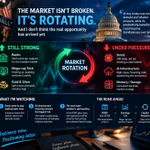
The market isn’t broken. It’s rotating. And I don’t think the real opportunity has arrived yet.
The Fed’s latest messaging around AI was important: AI may create near-term demand and inflation pressure, while its productivity benefits could become disinflationary over time.
That explains a lot of what we’re seeing.
Money is still moving — just not into the most crowded AI hardware names.
Banks and mega-cap tech are holding up, while semis and AI infrastructure remain under pressure. Gold and silver strength adds another layer: investors are still demanding protection rather than aggressively chasing risk.
For me, three things matter now:
1. Semis need to stop making lower lows.
A bounce means little unless buyers can reclaim key levels with volume.
2. AI infrastructure financing remains the biggest risk.
The recent volatility in high-capex AI names shows that the market is questioning the economics of leveraged compute expansion, not the long-term AI thesis.
3. The next major window is approaching.
As the October FOMC gets closer, rate expectations will become increasingly priced in. After that, attention shifts toward earnings and whether mega-cap tech can actually justify current AI spending.
So I’m not chasing today’s green candles or trying to catch every falling hardware name.
I want the market to show me that the selling is finished first.
The setup I’m watching is simple:
Rate expectations stabilize → hardware finds support → earnings confirm AI demand → capital rotates back into the strongest names.
That is the transition I want to trade.
Patience now. Positioning later.

🚨 The biggest mistake in a hot market? Confusing momentum with certainty.
Retail traders are watching $MU, $TSLA, $AEHR and $HOOD closely, with bold price targets and bullish calls everywhere.
But here's what matters:
$MU : Is AI-driven memory demand strong enough to justify the valuation? Watch earnings, guidance, and margin trends—not just price targets.
$TSLA : A bounce isn't automatically a reversal. Watch key resistance, volume, and whether buyers can sustain momentum.
$AEHR : High-upside semiconductor plays can also carry high volatility. Position sizing matters.
$HOOD : A breakout is more convincing when supported by volume and improving fundamentals.
My rule: Never buy a ticker just because someone says it's about to explode.
Check the thesis. Define your risk. Know what would prove you wrong.
The goal isn't to catch every rally. It's to survive long enough to capture the right ones.
Trade the setup, not the hype.
Which of these 4 stocks has the strongest risk/reward setup right now? 👇

$ASTN (the 2x leveraged inverse ETF) is now up more than 77% for us.
With leveraged products, the priority is protecting what you’ve already made rather than trying to squeeze out every last dollar. These vehicles move fast in both directions, and gains can reverse just as quickly as they appeared.
A simple rule that has served well: once you’re in the green, there’s nothing wrong with taking money off the table at any time. You don’t need to nail the exact top to have a successful trade. Lock in the profits, manage the risk, and don’t let greed turn a winning position into a losing one.

📊 Revisiting $ASTN — A Trade Setup Worth Watching
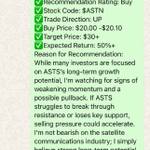
On October 8, I shared $ASTN with a reference entry of $20.00–$20.10 and a target of $30+.
🎯 Target Level: $30+
📈 Potential Upside: 50%+
My focus has never been on chasing a stock simply because its story sounds promising. The real question is whether price action supports the opportunity.
I’m watching three key factors:
Resistance: Can buyers push through key levels with conviction?
Momentum: Is buying pressure strengthening or starting to fade?
Support: Will the stock hold its important levels, or could a breakdown trigger further selling?
Strong long-term potential and short-term price weakness can coexist. Recognizing that difference is essential to making disciplined decisions.
I’ll keep tracking $ASTN and reassess as new price action develops. The goal is not to predict every move, but to stay prepared for what the market does next.
Trade with a plan. Manage risk before chasing returns.

Too early to flip fully bearish — but selective positioning matters.The broader market is still under pressure, yet declaring a full shift to a bearish stance feels premature. At the same time, some names are structurally better positioned to hold up (or even benefit) if the pullback deepens.
I’m focusing on stocks with relative strength, defensive characteristics, or favorable setups for a weaker tape. I’ll share the full market research, specific names, and the exact strategies I’m using inside the group.If you’re looking for more than generic “buy the dip” talk and want actionable ideas with context, that’s where the deeper work is happening.
Market still under pressure — don’t chase the first bounce.S&P 500 and Nasdaq remain in a corrective phase. The next meaningful supports sit at the 60-day moving averages:
S&P 500 ≈ 7,670
Nasdaq ≈ 26,400 These levels are where the real test happens. Watch for:
Genuine buying interest (not just short covering)
Improving volume and fund flows
If the averages hold with conviction, stabilization becomes more likely. A clean break raises the odds of a deeper pullback.Until then, the higher-probability approach is simple: stay patient, keep risk tight, and wait for confirmation rather than trying to front-run the bottom.
📊 Revisiting $ASTN — A Trade Setup Worth Watching
On October 8, I shared $ASTN with a reference entry of $20.00–$20.10 and a target of $30+.
🎯 Target Level: $30+
📈 Potential Upside: 50%+
My focus has never been on chasing a stock simply because its story sounds promising. The real question is whether price action supports the opportunity.
I’m watching three key factors:
Resistance: Can buyers push through key levels with conviction?
Momentum: Is buying pressure strengthening or starting to fade?
Support: Will the stock hold its important levels, or could a breakdown trigger further selling?
Strong long-term potential and short-term price weakness can coexist. Recognizing that difference is essential to making disciplined decisions.
I’ll keep tracking $ASTN and reassess as new price action develops. The goal is not to predict every move, but to stay prepared for what the market does next.
Trade with a plan. Manage risk before chasing returns.
$TSLA — Let the Pullback Come to You. 🎯
Tesla is on my watchlist, but I’m not interested in chasing every bounce.
The better opportunity may come when price retests support, selling pressure fades, and buyers begin to regain control.
Here’s what I’m watching:
Support holding on a pullback
Volume confirming renewed buying interest
A clear risk level if the setup fails
With the October 21 earnings report approaching, volatility could create opportunities — but also increase risk.
The goal isn’t to catch every move. It’s to enter when the risk/reward makes sense.
Stay patient. Trade the setup, not the excitement.
$CRWV: A 25%+ pullback doesn’t automatically make a stock cheap.
CoreWeave is a pure-play AI infrastructure story, but the market is pricing more than AI demand. It is also pricing financing costs, execution risk, and the ability to turn massive infrastructure spending into sustainable profits.
Here’s what matters now:
Bull case: AI compute demand keeps expanding and contracted capacity converts into revenue.
Bear case: Higher yields raise financing pressure while heavy capital spending limits the path to profitability.
What I’m watching: Can CRWV hold the $76 area, stabilize, and reclaim resistance with stronger volume?
A move toward $100 would be a potential recovery scenario—not a guarantee. A break below support would mean the setup needs to be reassessed.
The bigger lesson from today’s inflation shock: in AI, a great growth story and a great entry price are two different things.
Watch the business. Respect the chart. Manage the downside.
3 stocks. 3 different setups. Here’s what I’m watching today. 📊
$FCEL — Below $14.50 is the zone I’m monitoring for a potential entry. $13.50 is my stop-loss level.
$AAOI — The chart is showing weakness. If $93.50 breaks, downside pressure could increase. I want to see whether buyers can defend this level.
$HOOD — Sideways trading may be losing momentum. A volume-backed breakout could signal the next move.

$TSLA : $370 is the dip-buy zone I’m watching.
I’m more interested in buying a controlled pullback than chasing a bounce.
Tesla recently tested the $368–$370 area before recovering, making this a level worth watching. The key is whether buyers step in again and price stabilizes.
My plan:
Start small near $370
Scale in only if price action confirms support
If support breaks, reassess instead of averaging down blindly
Tesla’s next earnings report is scheduled for October 21, so volatility could increase as the event approaches.
Patience beats chasing. Let price confirm the setup.

Given the current unfavorable market conditions, we can only engage in short-term trading to generate profits. Please manage your position sizes carefully. Will we continue today? Please contact me for more information.
🎉 Congratulations to everyone who followed our $AIXI trading strategy!
💎 AIXI Trade Update
Yesterday, we shared an entry range of $2.00–$2.10. Today, AIXI surged to an intraday high of $3.99, representing a gain of over 89% from our entry range.
✅ Target exceeded
✅ Significant upside captured
✅ Time to consider taking profits and protecting gains
A great trade is about more than finding the right entry — it’s about managing risk and knowing when to secure profits.
One strategy completed. Stay disciplined, stay patient. More opportunities ahead. 👀
$MU (Micron): If the price falls below $1,000, consider building a position in stages or adding to existing positions rather than investing the full amount at once. Before adding to your position, observe how the price reacts near the support level.
$TSLA (Tesla): $375 is the key price level I’m watching. If the price pulls back this week to fill the gap, it could present a potential trading opportunity, but this needs to be confirmed.
$INTC (Intel): Keep an eye on the $100 range; consider building a position in stages or adding to your holdings around $100. There’s no need to rush—a new pullback may still occur after a rebound.
Strategy: Build positions in stages, respect support levels, and strictly manage risk. Price levels are merely trading opportunities worth watching, not guarantees.